Languages
Monday, October 26, 2026



News and Views from the Global South
HIV/AIDS
SWAZILAND: Patients Fail to Adhere to TB Treatment
Every five minutes she gives a hacking cough. Ndlaleni Ndzinisa (70) says she has continuously suffered from tuberculosis for the past five years. Because she cannot afford to pay for transport to the nearest hospital, she has repeatedly failed to adhere to her tuberculosis (TB) treatment.HEALTH-MALAYSIA: Divided Over HIV Testing
A raging debate over mandatory HIV screening has exposed fear and ignorance within government, despite years of awareness campaigns to eradicate prejudice against people living with the virus and acquired immune deficiency syndrome (AIDS).HEALTH-AFRICA: Maximising the Benefits of AIDS Funding
Significant new investments in the fight against the AIDS pandemic could have positive impacts on broader health systems in Africa if governments handle them right.AIDS-LATIN AMERICA: Neglect, Ageism Put Older People at Risk
AIDS prevention campaigns tend to target the young, who make up a large percentage of those infected with the disease. But experts in Latin America say that people in older age ranges with an increasingly active sex life are being neglected, and are at risk because of lack of information.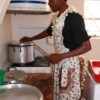
GENDER-SOUTH AFRICA: 'A Real Man Does Provide Care'
Sonwabo Qathula puts on his apron and starts peeling a pile of butternuts, while a pot of rice boils on the stove next to him. The 50-year-old is preparing lunch for poor and orphaned children who attend a rural school in the Eastern Cape.POLITICS-US: Scientists Hail Return to Fact-Based Policies
Key appointments announced by President-elect Barack Obama suggest that science will soon make a major comeback in the U.S. government.AIDS-SOUTH AFRICA: Balancing Individual Rights Against Public Health
Public health and individual human rights are poor friends. What may be good for society may be bad for the individual, or the other way round. And nothing sharpens this tension as starkly as AIDS.POLITICS-US: Conservative Pastor’s Star on the Rise
For a president who had little to do but pardon turkeys on Thanksgiving and throw the switch on the national Christmas tree, little to look forward to but packing his bags and evacuating the White House, and less positive accomplishments to look back on than most presidents, this year's World AIDS Day was clearly a high point. And Pastor Rick Warren was there to share the spotlight with him.HEALTH-ZIMBABWE: Shady Dealings With Antiretrovirals
The current political and economic crisis in Zimbabwe is dealing a blow to the provision of free treatment and care to people living with HIV/AIDS (PLWHAs).RIGHTS: Universal HIV Testing Raises Hopes and Fears
While prospects remain dim for a successful HIV vaccine in the near future, public health experts and AIDS advocacy groups are pinning their hopes on a new strategy released by the Geneva-based World Health Organisation (WHO) that could end the disease's endemic phase within a decade.CARIBBEAN: Despite Successes, Too Many Dying of AIDS
Every day, 55 people in the Caribbean are infected with the HIV virus and 38 of them die of the disease. That's 20,000 new infections and 14,000 deaths annually.HEALTH-AFRICA: Breaking the Cycle of HIV Transmission
According to the United Nations Children's Fund, early diagnosis and treatment greatly increase survival rates for HIV-positive newborns. but fewer than one in ten infants born to HIV-positive mothers in 2007 was tested for HIV within two months of birth.
Q&A: “Less Funding Could Lead to Millions of AIDS Deaths”
The global economic crisis is threatening to undermine yet another key development goal set by the United Nations: reversing by 2015 the AIDS epidemic still devastating millions of people worldwide.AUSTRALIA: Do More Regionally to Stop HIV/AIDS Gov’t Told
While HIV infection rates remain relatively low in Australia, the peak non-governmental organisation representing the country’s community-based response to HIV/AIDS wants the government to do more to fund prevention measures here and in the region to counter rising infection rates.Q&A: Escalating Violence Against Women in Swaziland
Still wearing a campaign t-shirt with the slogan "FED UP: with violence against women", Dlamini-Shongwe, the public relations officer for the Swaziland Action Group Against Abuse (SWAGAA) is fresh from the Nov. 25 launch of the16 days activism against gender-based violence at Jubilee Park in Manzini.HEALTH-AFRICA: Cervical Cancer Strikes Poor Women Hardest
Of the 490,000 women worldwide who are diagnosed with cervical cancer each year, 80 percent live in the developing world. Every year, 55,000 women in sub-Saharan Africa alone develop this disease, which is ten times more likely to affect women living with HIV.CHILE: 512 HIV-Positive People Not Notified
Chilean Health Minister Álvaro Erazo reported Thursday that 512 people who tested positive for HIV were not notified by the public health system.FILM: Swazi Grandmothers Shore Up a Crumbling Society
In a country barely the size of the U.S. state of New Jersey, a disease has taken hold. Nearly 40 percent of Swaziland's population is HIV-positive, and the other 60 percent lives at constant risk for the disease.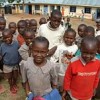
DEVELOPMENT: A Global Health Model, Village by Village
Working for sustainable development in Kenya, which ranks 148th out of 177 countries on the United Nations development index, is a daunting task. The country not only has a 6.1 percent rate of HIV/AIDS infection among its 37 million people, but nearly 60 percent of Kenyans live on less than two dollars a day.Q&A: Major Challenges Will Be Met
When Barbara Hogan replaced South African health minister Manto Tshabalala-Msimang in September, her appointment was praised from all quarters. Hogan, who previously chaired Parliament’s finance portfolio committee, is known as an intellectual who stands up for what she believes in and finding hands-on approaches to solving difficult political issues.CHILE: Achievements in AIDS Fight Marred by Irregularities
Irregularities like delays in notifying 25 people that they were HIV-positive, which led to the deaths of at least two of them, have cast a shadow on Chile's exemplary image in the field of AIDS prevention and treatment.« Previous Page — Next Page »





The Week with IPS

NEXT STOP - SDGs
Tracking global progress towards a sustainable world
Tracking global progress towards a sustainable world
