Languages
Tuesday, October 27, 2026



News and Views from the Global South
HIV/AIDS
HEALTH-AFRICA: Time for Joint Action on HIV/AIDS and Violence
The war against HIV/AIDS, it is emerging, will not be won unless sexual and gender-based violence is tackled.DEVELOPMENT: U.N. Prods Drug Firms to Cut Prices for Poorest
The world's poorest nations continue to suffer from high prices for life-saving drugs and a shortage of generics - specifically to treat HIV/AIDS - despite assurances by the some of the major pharmaceutical companies to help lower costs.
SWAZILAND: Torn Social Fabric Leaves Many Exposed
An abandoned straw hut slumps amidst overgrown bushes on a somewhat deserted homestead. Only a foot path leading past it indicates that the place is still occupied. Beside it is the mis-shapen tent that is Joseph Mathe's new home.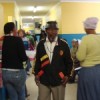
SOUTH AFRICA: Nurse Shortage Cripples Health System
In the impoverished informal settlement of Du Noon, 20 kilometres north of Cape Town, sick residents rely on a single clinic staffed by six nurses to meet their health needs.
UGANDA: Women Wield Fair Trade Tools to Beat Poverty
Producing baskets and mats in central Uganda has traditionally been women’s work. Women made these items for use in homes. The National Association of Women Organisations in Uganda (NAWOU) has changed this practice into a powerful force fighting poverty.
AGRICULTURE-SWAZILAND: Young Farmers Improving Food Security
When her friends go out to play with skipping rope during break, 12 year old Noncedo Masina takes her watering can and goes to work on her plot at the school vegetable garden.HEALTH: Goal to Halt AIDS by 2015 Recedes Further
What if HIV/AIDS was just another chronic disease instead of a widespread epidemic? This could be the case if the world community takes serious action, according to Human Rights Watch and other activists. But today, the Millennium Development Goal (MDG) on HIV/AIDS is nowhere near being realised.RIGHTS-SWAZILAND: Women Challenge King Mswati
Hard on the heels of the signing of the Gender Protocol at the Southern African Development Community (SADC) heads of state summit, Swazi women have challenged King Mswati III on the monarchy's lavish lifestyle in the face of abject poverty and disease.HEALTH: Global Agenda Increasingly Disease-Driven
At the end of last month, U.S. President George W. Bush signed a global health package that effectively tripled U.S. spending over the next five years to fight HIV/AIDS, malaria and tuberculosis in poor countries, to 48 billion dollars.
HEALTH: Safe Sex With HIV – and Without a Condom?
The Swiss Federal Commission for HIV/AIDS set off a small firestorm of debate by asserting that people living with the virus can have sexual relations without a condom and without endangering their uninfected partners, under certain conditions.HEALTH-US: HIV On The Rise
A new study shows that the annual number of HIV infections in the United States is greater than was previously believed. The findings place increased scrutiny on the country’s lack of a national HIV/AIDS program as well as the current Presidential candidates’ plans to combat the epidemic.HEALTH-UGANDA: Fight Against AIDS Faltering?
Uganda's approach to the fight against HIV/AIDS is under scrutiny by activists. The country has won international acclaim for its 20-year campaign against the AIDS pandemic, but the latest numbers lead some activists believe Uganda is now losing ground.HEALTH: AIDS Meet – Fine Words, Few Concrete Actions
Governments, international bodies and civil society renewed their commitment to fighting HIV/AIDS at the 17th International AIDS Conference, but they will have to work hard in order for this commitment to be reflected in concrete policies, especially on prevention.
Q&A: “Latin America Needs a Regional Agenda” on AIDS Funding
If the economic status of Latin America and the Caribbean continues to improve, the region’s share of assistance from the Global Fund to Fight AIDS, Tuberculosis and Malaria is likely to drop to half the present level, under the current eligibility requirements, says Lelio Mármora, the Fund’s portfolio manager for this region.
MIDEAST: On HIV and AIDS, the Good News from Palestine
Palestinians from all ranks of society have pulled together to tackle the issue of AIDS, despite the increasing factional violence and chaos in the Palestinian territories.HEALTH: Conflicts Make Women More Vulnerable to HIV
"I’m a survivor, and if I can live through all that has happened to me, so can other women," said Floride Nyiraneza, 42, who is HIV positive and a widowed mother of four.HEALTH: Keeping Hope Against AIDS Alive in the Labs
"We need to get away from this home-run mentality to research. Science is incremental," said Alan Bernstein, executive director of the Global HIV Vaccine Enterprise, referring to unrealistic public expectations with regard to the search for an AIDS vaccine and for vaginal microbicides that could help prevent infection.HEALTH: Indigenous People Speak Out Clearly on AIDS
"In my community, living with HIV is synonymous with death," Fernando Solís, a 34-year-old member of the Cuna ethnic group in Panama, told IPS. Solís, who was diagnosed four years ago, is now working in prevention efforts among other young indigenous people, which he described as "the key to eradicating the epidemic in our communities."
HEALTH: Global Village or Sexual Minority Ghetto?
Dealing with transgenders (TGs) can be confusing. Even the organisers of the 17th International AIDS Conference underway in this city failed to accommodate the third gender by providing them separate toilets.
Q&A: "Seven Million People Still Lack AIDS Treatment"
A greater commitment to universal access to anti-HIV therapies and to the defence of health workers in impoverished countries are two achievements noted by Argentine physician Pedro Cahn as president of the scientific society that organised the XVII International AIDS Conference.
HEALTH: Time To Base Public Policy On Rights
Preaching abstinence to the young has not worked, nor has sex work been eradicated. Experts gathered here for the 17th International AIDS Conference say it is time to put public policies under the microscope and see why they have failed.« Previous Page — Next Page »





The Week with IPS

NEXT STOP - SDGs
Tracking global progress towards a sustainable world
Tracking global progress towards a sustainable world
