Languages
Tuesday, October 20, 2026



News and Views from the Global South
India

India’s Liberal Abortion Law, Nullified by Social Stigma
Arti Zodpe is from the Tamasha (folk dance-drama) theatre in Sangli, in India’s Maharashtra state. After evening performances, some of the singers and dancers offer sex work services to the audience.
How Encroachments, Willows and Silt Ate up Half of Kashmir’s Own Sea
Warming himself with a kangri (a firepot) kept under his pheran (a long winter cloak worn by Kashmiris), 66-year-old Mohammad Subhan Dar sat chatting with a bunch of his fellow villagers on a January afternoon on the edge of the road overlooking Wular Lake in Saderkote-Bandipora, northern India.
India’s Outdoor Workers on the Frontlines of Climate Change
Last June when more than half of India was reeling under daily temperatures topping 40 degrees Celsius, Nursing Behera’s 11-month-old son burned both his legs when a pot of boiling water fell on him.
Leprosy Re-emerges as a Global Health Challenge
Fifteen years ago, Sattamma – a daily labourer in the Rangareddy district of southern India’s Telangana state – was abandoned by her husband after she was diagnosed with Hansen’s Disease.
India’s Electric Mobility Needs Enabling Infrastructure to Pick up Speed
Dogged by intractable air pollution debilitating large northern swathes from mainly urban vehicle emissions, India earlier this year announced targets for a 40 percent non-fossil component in its fuel-mix by 2030 as part of its Nationally Determined Commitments (NDC) to the Paris accord on climate change. It aims for full electrification of public transit systems and of one-third private vehicles by 2030.
Seeing Through the Smog: Can New Delhi Find a Way to Limit Air Pollution?
Ankita Gupta, a housewife from south Delhi, is anxious about whether she should send her 4-year-old daughter to kindergarten. Outside visibility is poor as smog — a combination of emissions from factories, vehicle exhausts, coal plants and chemicals reacting with sunlight — has settled over the city, surpassing dangerous levels.
Mother Earth’s Café Dares Climate Crises in India
The sun has barely risen when Phlida Kharshala shakes her 8-year-old grandson awake. He hoists an empty cone-shaped bamboo basket on his back, sets the woven strap flat across his forehead and off they go into the wilderness.
India has a Groundwater Problem
A majority of India’s water problems are those relating to groundwater—water that is found beneath the earth’s surface. This is because we are the largest user of groundwater in the world, and therefore highly dependent on it.
50 Days of Kashmir Under Lockdown – in Pictures
It is 50 days into the lockdown in Kashmir since roads were blocked off, schools shut, and internet and communication services stopped.
Kashmir: How Modi’s Aggressive ‘Hindutva’ Project has Brought India and Pakistan to the Brink – Again
August is immensely important in the history of the Asian subcontinent, marking the month that India and Pakistan gained independence from the British in 1947. Now, in 2019, it has once again proved momentous, when, ten days before India’s Independence day celebrations, prime minister Narendra Modi’s government revoked the autonomy of Indian-administered Kashmir – a status provided for under the Indian Constitution.
A Rural Sanitation Model That Works
Research and experience across more than two decades in rural Odisha, India, show that an effective rural sanitation model requires both financial assistance and an integrated water supply.
What Standardised Testing Doesn’t Tell Us About Learning
When we look at learning outcomes for children, we only look at standardised tests, ignoring any indigenous knowledge, language, or problem solving strategies they might have.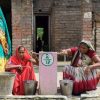
India’s Most Significant Innovations Have Roots in Civil Society
When we look at some of the things we take for granted in India today, there is a common thread to all of them. Every single one. They all originated from civil society.
Modernity Triumphs over Feudalism in India
“We worked for the poor and they voted us back to power,” was the explanation that Prime Minister Narendra Modi made to newly-elected legislators on Saturday, May 25, on the spectacular win scored by his nationalist Bharatiya Janata Party (BJP) in India’s just concluded general elections.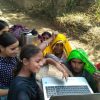
Rural Education: Moving Past “Poor Solutions for Poor People”
Communities are treated as passive recipients, giving them no say in the functioning of their schools. Here's why this needs to change.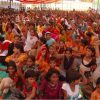
Want Social Change? Give Communities More Agency
No external force can bring about real change in society. Only the community itself can.
Moving Beyond Just Building Toilets
One of the most laudable initiatives of the current government’s regime is the Swachh Bharat Mission (SBM) that was launched on Oct 2, 2014, with a larger vision of a clean India. The critical aspect of the mission was that—unlike many of the movements that preceded it—this had a measurable outcome (making India open defecation free) and a firm timeline (by 2019).
The Bond that is Educating Girls Across India
Barely five months into the start of Sneha's year at a government school in Bhilwara, a town in India's desert state of Rajasthan, the bubbly 15-year-old was pulled out by her parents. They wanted her to stay at home instead, to look after her four younger siblings and to cook and clean for the family as her parents worked on their farm.
Bringing Informal Workers to the Forefront of Our Economy
The image of the ‘struggling’ daily wage labourer in India is one that stakeholders from across the development sector aspire to transform. Financial security, quality living conditions, and opportunity to thrive are the buzzwords in a conversation about the needs of this bracket. These workers—usually associated with the informal or unorganised sector—are assumed to represent the outliers of the national economy.
India Uses Tech to Power its New Battle Against Malnutrition
Kanaklata Raula from Kaptipada village in India’s Mayurbhanj District is on duty 24x7. The 52-year-old community health worker from Odisha state rides a bicycle for hours each day, visiting community members who need nutrition and reproductive healthcare.
Why India’s Solar Water-Drawing ATMs and Irrigation Pumping Systems Offer Replicable Strategies
At New Delhi’s Savda Ghevra slum settlement, waterborne diseases have become less frequent thanks to solar-powered water ATMs that were installed here as a social enterprise venture three years ago.« Previous Page — Next Page »





The Week with IPS

NEXT STOP - SDGs
Tracking global progress towards a sustainable world
Tracking global progress towards a sustainable world
