Languages
Saturday, October 10, 2026



News and Views from the Global South
Inter Press Service (IPS)

Central Asia Bets on a New Water–Land Pact to Survive Environmental Degradation
As ministers, diplomats and development officials assembled in Samarkand Congress Centre for a ceremonial family photograph, the mood carried unusual symbolism. Behind the smiles and formalities stood a region confronting a harder reality: rivers are shrinking, soils are tiring, temperatures are rising, and the old ways of managing land and water are no longer working.
UN Urgently Calls for Increased Aid in Yemen Following IPC Warnings of Food Insecurity
In Yemen, increasing funding constraints on humanitarian operations have put millions of civilians in dire need of life-saving assistance amid overlapping crises. Acute food insecurity is a persistent issue, as recent reports from the Integrated Food Security Phase Classification (IPC) give a stark warning of conditions without urgent intervention.
India: How a Tool Bank Beats Poverty in Rural Maharashtra
Dharashiv is one of the poorest districts in the western Indian state of Maharashtra. Located in the semi-arid region of Marathwada, it has no major river and is not blessed with good reservoirs.
Violence, Climate Shocks, and Hunger Push The Sahel To The Brink of Collapse
Over the past few years, the humanitarian crisis in Africa’s Sahel region has expanded considerably, largely driven by a surge of violence—particularly in the Central Sahel. Although the crisis has been described by the United Nations (UN) as having “largely faded from the headlines” since its wake in 2012, millions of people across the region are in dire need of humanitarian assistance as civilian displacement, climate shocks, and widespread hunger rapidly spill across borders.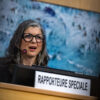
Trump Administration Weaponises Sanctions Against Human Rights
For a few days in May, Francesca Albanese could live more easily. On 13 May, a US federal judge ruled that sanctions the Trump administration imposed on her violated her right to free expression. The government was forced to remove the UN Special Rapporteur on the Occupied Palestinian Territories from its sanctions list. But the reprieve lasted barely a week. On 27 May, after an appeals court suspended the ruling, the US Treasury restored sanctions.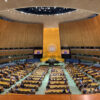
The Moral, Practical, Necessary Invigoration of Nuclear Sanity
Martin Luther King Jr. , when he received the Nobel Peace Prize, reminded us of “The fact that most of the time human beings put the truth about the nature and risks of the nuclear war out of their minds because it is too painful and therefore not ‘acceptable’, does not alter the nature and risks of such war. The device of ‘rejection’ may temporarily cover up anxiety, but it does not bestow peace of mind and emotional security.” I have devoted many decades of my life to not ignoring the risk of nuclear annihilation and since 1995 have attended every Review Conference of the Nuclear Nonproliferation Treaty to learn and hopefully contributed to a saner safer world.
Amid Rising Military Tension in War Zones, World’s Nuclear Powers are Modernizing Their Arsenals
As ongoing military conflicts in Europe and the Middle East continue with no signsof winding down, there is increasing focus on nuclear weaponsamid heightened risks of escalation.
South Africa: Activists Call for Greater Access to Newly-Launched HIV Prevention Drug
As South Africa officially launches the rollout of a groundbreaking HIV prevention drug, civic groups in the country have slammed the plan, saying it will not reach anywhere near enough people.
World Bank Enables Corruption in Bangladesh
The World Bank considers corruption a major obstacle to eradicating global poverty. The Bank officially has a zero-tolerance policy against fraud and corruption in its projects. Concerned with widespread corruption in Bangladesh, the Bank and the Government agreed on the Governance-oriented Country Assistance Strategy (GCAS) in 2006 and the Bank’s subsequent Country Partnership Strategy (CPS) ostensibly has been more selective on governance and anti-corruption (GAC) issues. Ironically, however, the Bank’s funding enables corruption. The Bank’s recent decision to advance a US$350 million loan allegedly for enhancing energy security is a glaring example.
New Geopolitics Threatens More Food Crises
Recent geopolitical trends threaten more food crises, especially in developing countries. A new IPES-Food report urges a strategy of ‘resilient self-reliance’, proposing available opportunities to improve equity, sustainability and solidarity.
GAZA: ‘If Civilians Can Get This Close to Establishing a Humanitarian Corridor, Then Governments Can Do It’
CIVICUS discusses the interception of the Global Sumud Flotilla on its mission to bring humanitarian aid to Palestinians in Gaza with Musa Roshdy, a humanitarian activist who took part in the flotilla.
Downfall of a Superstar
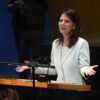
This is the downfall of a diplomatic superstar. Germany’s defeat in the election to the UN Security Council is the consequence of a foreign policy that has proven disastrous in recent times, failing to uphold either the values or the interests of the Federal Republic.
Billions Lost as Secret Financial Networks Fuel Forest Destruction in Brazil and Cameroon
A new report has found that billions of dollars linked to illegal deforestation are flowing through global supply chains, with secrecy around land ownership and company records helping timber, soy, and beef products enter international markets unchecked.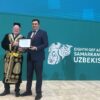
Make Last Sprint Towards 2030 a ‘Turning Point’ for Nature Finance, Eighth GEF Assembly Told
"While pressures on public budgets are growing and geopolitical tensions rising, it can be tempting to see environmental finance as optional. It is not,” GEF Interim CEO and Chair Claude Gascon told the closing plenary of the Eighth GEF Assembly in Samarkand, Uzbekistan, today.
As Global Demand for Gold Grows, UN Mercury Head Warns Toxic Fumes Put Women in a Motherhood Dilemma
Ask any woman miner in the Katoro goldfield in Tanzania’s northern Geita region, and she will tell you that she touches toxic mercury with her bare hands when extracting gold from crushed ore.
UN Climate Resolution: Time to Protect Activists
Ahead of World Environment Day, the UN General Assembly made a vital commitment to protect people from climate impacts, adopting a resolution on the climate change obligations of states. The resolution follows up on the International Court of Justice (ICJ) advisory opinion issued last year, which found that states have a legal duty to prevent activities that cause environmental harm. Most states voted for the resolution despite a concerted campaign by the Trump administration to block it.
Europe Must Not Turn Its Back on Rural Women’s Empowerment
In the hard-to-reach rural community of West Pokot, Kenya, 156 young women crossed a threshold that once seemed out of reach. Their graduation from HER Lab, a workforce skills programme for marginalized rural young women, was more than a ceremony. It demonstrated the power of targeted investment, trusted local partnerships and women’s economic empowerment.
Tanzanians Seek Stronger GEF Support to Cushion Vulnerable Communities
In the opulent conference halls of Samarkand, far from the drought-hit fields of East Africa, Tanzanian delegates have warned that unless global climate finance is directed to rural communities, environmental destruction will only accelerate, deepening the vulnerability of those least responsible for the crisis.
PERU: ‘For 20 Years, Voters Have Had to Choose the Lesser of Two Evils’
CIVICUS discusses the outlook ahead of Peru’s runoff presidential election with David Hidalgo, journalist and executive director of OjoPúblico, a Peruvian digital investigative journalism outlet.

At GEF’s Eighth Assembly, Uzbekistan Signals New Role as Donor
In a significant policy shift symbolising rising environmental ambition, Uzbekistan on Thursday announced that it will become a donor of international environmental funding to the Global Environment Facility (GEF), as the Eighth GEF Assembly opened in the historic city of Samarkand.
Iran War Exposes Limits of US Power Projection
The outcome of the current Iran war is still in doubt, but one consequence is already becoming clear: it has weakened America’s capacity to project power. Many are asking who won. The more important question may be what the war has cost.« Previous Page — Next Page »





The Week with IPS

NEXT STOP - SDGs
Tracking global progress towards a sustainable world
Tracking global progress towards a sustainable world
