Languages
Monday, October 12, 2026



News and Views from the Global South
International Cooperation - More than Just Aid
CUBA: Food Security Focus of New UN Programmes
Three new international cooperation agreements channeled through the United Nations system in Cuba are aimed at strengthening food security, especially in the poorest parts of the country.TRADE-SOUTH-EAST ASIA: Rice Tariffs Snarl ASEAN Single Market
Rice, the staple dish across South-east Asia, has emerged as an apt symbol of the region’s commitment – or lack of it – to unveiling a free trade area for its 10 members when the New Year dawns.
DEVELOPMENT: ‘Global Poverty Is Not Acceptable’
The economic crisis is a fresh reason to meet Millennium Development Goal targets, not an excuse to miss them, said European Commission president Jose-Manuel Barroso, opening the dialogue at the fourth edition of the European Development Days (EDD).EAST TIMOR: Seasonal Changes Cause for Alarm
If you order a beer, sit back and relax at one of the expat bars dotted along the coastal Pantai Kelapa road in this capital, you cannot help but notice the view: the stony beach, the swimming children and the grounded fishing boats. But that view is morphing — a visible sign of how climate change could be affecting East Timor.PAKISTAN: Beyond the Storm, Eco-Friendly Dream Homes
"I don’t think I will ever miss the old home; it never protected us from floods and storms!" said Dadi Ibrahim, a widow. Her only association, she said, with her dilapidated hut is the "fond memories" of living there with her late husband.INDIA/CHINA: Hopes for Early Border Settlement Recede
Hopes for an early settlement of the ‘world’s oldest standing border dispute’ receded last week after Asian neighbours China and India engaged in a tit-for-tat spat that ran counter to the spirit of a formal dialogue they are engaged in.AFRICA: "Grasp the Benefits of Trade with BRIC Emerging Markets"
While economists at a prominent South African bank are excited about burgeoning investment by Brazil, Russia, India and China (BRIC) in Africa, they are vague on the question of the extent to which it will benefit the majority of Africans. Ensuring this, they believe, is the responsibility of African states themselves.CLIMATE CHANGE: New Financial Scheme Turns Heat on Rich Nations
A new financial mechanism to help the developing world deal with the challenges posed by climate change looms as a major hurdle on the road leading up to a United Nations summit in Copenhagen in mid-December.ENVIRONMENT: Developing Nations Refuse to Ditch Kyoto Protocol
As the countdown continues towards a United Nations climate change summit in Copenhagen in December, a seemingly intractable tussle between negotiators from the developing and developed world has begun to take shape over international commitments to slash greenhouse gas (GhG) emissions.ENVIRONMENT: India Warms Up to Copenhagen
With the clock ticking away on the United Nations Framework for Climate Change Committee (UNFCCC) summit in Copenhagen in December, the fractiousness between the developed and the developing nations on who ought to do more to control climate change is getting increasingly strident.VIETNAM: Preparation Mitigates Impact of Typhoon Ketsana
Three days may have been a small window of opportunity, but it was enough time to save thousands of lives.
PERU: Guinea Pigs Spell Independence for Women
In a rural village in the Peruvian Andes, very near yet so far from the popular tourist destination of Cuzco, the guinea pig, a rodent native to the region, has become "woman’s best friend" – an important means for women to earn money to support their families, as well as to learn how to defend their rights.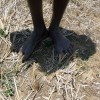
SRI LANKA: Mixed Hopes amid Unpredictable Weather Shifts
As the world awaits with bated breath the much-anticipated outcome of the upcoming Copenhagen Climate Change Summit in December, the impact of which will reverberate across the globe, Sri Lanka, like many other countries, has been reeling under sharply contrasting weather conditions.SOUTH AMERICA-AFRICA: Coming Together to Fight Poverty
A declaration that puts an accent on the positions of the developing South and expresses a renewed commitment to cooperation in the fight against poverty and for development was signed by the leaders who met over the weekend in the second South America-Africa summit, on the Venezuelan island of Margarita.SRI LANKA: Coastal Village Rises Up from Ravages of War, Disaster
Vakarai is a dust bowl of a village, right at the edge of the coast in Sri Lanka’s east. The last three decades have not been too good for this fishing village — located about 300 kilometres east of the capital Colombo — and its inhabitants, mostly from the minority Tamil community.ENVIRONMENT: China Backpedals on Emissions But Still Noncommittal
Although pledging to break away from its highly polluting economic path, China has managed to stick to its guns and not compromise on what it believes is its national agenda.SOUTH AMERICA-AFRICA: New Summit to Boost Cooperation
Heads of state and other officials from 54 African and 12 South American nations will meet for the Second Africa-South America Summit this Saturday and Sunday on Isla Margarita, Venezuela, to boost cooperation in a score of areas with potential for greater bi-regional exchange.
INDIA/CHINA: Dalai’s Planned Visit to Border State Sparks Row
The Dalai Lama’s planned visit to Arunachal Pradesh appears to be a simple, pastoral response to Buddhist flocks in that north-eastern Indian state.SPAIN: Debt Write-Off, Development Funds for Bolivia
Bolivian President Evo Morales wound up a three-day official visit to Spain Tuesday with a financial aid commitment from the Spanish government - in the form of a debt-for-development swap - and a reciprocal agreement to allow Bolivians and Spaniards resident in each other's countries to vote in local elections.
BRAZIL: Art is the Best Education
A broad range of projects in Brazil are using ballet and folk dances, classical and popular music, theatre, circus arts, capoeira - an Afro-Brazilian combination of dance and martial arts - fashion, visual arts and the audiovisual media to reach disadvantaged and at-risk children.DEVELOPMENT-BHUTAN: ‘GDP Fuels Consumerism’
A tiny kingdom located at the eastern end of the Himalayas and bordered by China and India used to be one of the most isolated countries in the world until it became a full-fledged democracy in 2008.« Previous Page — Next Page »





The Week with IPS

NEXT STOP - SDGs
Tracking global progress towards a sustainable world
Tracking global progress towards a sustainable world
