Languages
Sunday, November 8, 2026



News and Views from the Global South
IPS UN Bureau Report

IPBES, IPCC Joint Winners of the Gulbenkian Prize for Humanity 2022 Dedicated to Climate Change
IPBES’ assessment report on the Sustainable Use of Wild Species, released in July 2022, painted a troubling picture of the ongoing global biodiversity crisis that could paralyse economies and endanger food security and livelihoods.
Reform Needed As Big Business, Not Vulnerable Communities Benefit from Post-Pandemic Support
Governments and international financial institutions must adopt new ways of providing post-pandemic support, say campaigners after a report found that in many poorer countries, big business benefitted most from Covid-19 recovery funds. At the same time, vulnerable communities have been “left behind.”
University Outreach Project Teaching Tissue Culture to Potato Farmers
Until a few years ago, Kenyan potato farmer Richard Mbaria used to harvest just four tonnes of the crop from an acre of land thanks to poor quality seeds, combined with an attack on the crop by pests and diseases.
UN Censures 42 Nations for Retaliating Against Human Rights Activists & Journalists
The United Nations has singled out 42 countries (out of 193 member states) for condemnation-- virtually blacklisting them-- for retaliating against human rights activists and journalists
Addressing the Cow in the Room, Lowing for Nutrition and Livelihoods
Meat, milk, and eggs are bad for you, and livestock is bad for the environment. Growing negative narratives about cattle’s contribution to climate change are shrinking the growth of the strategic livestock sector on which the livelihoods of more than 1.3 billion people in the world depend.
Pakistan’s Transgender Legislation in the Line of Fire
It has taken four years for some politicians to oppose a landmark law protecting the rights of transgender persons, saying it's against Islam and the country's constitution.
Energy Transition: Is it Time for Africa to Talk Tough?
Thirty-year-old Difasi Amooti Kisembo is one of the demonstrators near the EU delegation offices in Kampala. He and a handful of others have traveled from Uganda’s oil and gas-rich Albertine region’s district to Uganda’s capital Kampala to express their displeasure with an EU Parliament’s resolution against the planned construction of the East African Crude Oil Pipeline.
Lives Hang in the Balance as Kenya’s ASAL Region Ravaged by Severe Prolonged Drought
The sight of children begging for water from motorists along the Garissa highway in the northeastern part of Kenya signals that all is not well. Unable to go to school on an empty stomach, drought-affected children wait for good Samaritans along the road, begging for water and food.
UN Plans a New Mobility Scheme Where Staffers will be Forced to Work Overseas
The United Nations is planning to introduce a new “mobility policy” under which staffers based in New York and other Western capitals will be mandated to serve in overseas missions and field services in Asia, Africa, the Middle East and Latin America, including the UN’s 12 peacekeeping operations.
UN’s High-Level Meeting of World Leaders Falls Short of Gender Empowerment
When the UN’s high-level meeting of world leaders concluded last week, the head count seemed lopsided: 190 speakers, including 76 Heads of State, 50 Heads of Government, 4 Vice-Presidents, 5 Deputy Prime Ministers, 48 Ministers and 7 Heads of Delegations—overwhelmingly male.
What Stray Dogs Need in Thailand: Family and Love
When I started living in Thailand, I noticed something peculiar that I had never seen in other countries I had visited before. It was the stray dogs. I ran into so many stray dogs when jogging on the streets.
Poverty Impacts on Efforts to End Child Marriage, say Parliamentarians
Child marriage continues to be a scourge in many African countries – despite legislation and efforts of many, including parliamentarians, to keep girls in school and create brighter futures for them. This was the view of participants in a recent webinar held under the auspices of the African Parliamentary Forum on Population and Development (FPA) and UNFPA East and Southern Africa Regional Office (ESARO).
Hard Hit By Climate Change, Villagers Raise a Forest on Their Own
Some ten years ago, Sheemanto Chatri, a 39-year-old farmer hailing from India's northeastern state of Meghalaya, was reeling with distress. The unseasonal rainfall had washed away all the crops he had cultivated after year-long labor in his far-off hamlet.
Korean Slums: The Shadows of Society, or the New Light for the Future?
Have you watched Parasite? In 2021, everyone seemed to be watching it. But I wonder how many of them paid attention to the old man who found a little shelter in a hidden basement behind the kitchen of a mansion. However hidden it was, that's where he could meet his basic needs. That was his little slum.
Deadly Smoke: Feeding Children Kills Cafeteria Staff
During my summer break this year, I read a news article about five school cafeteria workers who had died of lung cancer. Due to these incidents, a union of cafeteria workers, wearing their aprons and holding their lunch trays, held a protest in front of the President’s office on a scorching summer day. And it made us think about the devastating working conditions for the school lunch employees. Isn’t it so disheartening that we eat our school lunch at the expense of their health?
Aged Persons Haunted by Abuse in Zimbabwe
At his house in Mabvuku, a high-density suburb in Harare, the Zimbabwean capital, 86-year-old Tinago Murape claims his grandchildren starve him. Not only that, but Murape, who now walks with the support of a walking stick, said his three grandchildren – grown-up men with their wives and children living in his house, accuse him of bewitching them.
Women’s Financial Inclusion, Empowerment in Kenya
A two-year-old child cries hysterically as his mother attends to customers standing in front of her stall to buy vegetables on the outskirts of the Kenyan capital Nairobi. The mother, 25-year-old Esther, who refuses to give her surname for fear her husband will know that she has spoken to strangers about family issues, sells spinach, onion, tomato, garlic, and green pepper at a street corner to supplement her husband’s “meager” construction wage. It has been four years since she started the business, and she says it is beginning to feel like an eternity.
Sindh’s Faulty Drain Cannot Cope With Climate-Induced Deluge
Last week, for at least six days, hundreds of flood-affected villagers from around the outskirts of Pangrio, a sleepy town in the Sindh province, blocked the main artery – the Thar Coal Road – connecting Badin to neighbouring district of Tharparkar – not allowing any traffic to pass.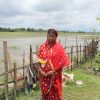
Women Advocates for Harvesting Rainwater in Salinity-Affected Coastal Bangladesh
Like many other women in Bangladesh's salinity-prone coastal region, Lalita Roy had to travel a long distance every day to collect drinking water as there was no fresh water source nearby her locality.
Pacific Community’s Agricultural Gene Bank Wins Global Award
Safeguarding plentiful, nutritious supplies of food for the present generation of Pacific Islanders and those who come in the future is a frontline goal in the wake of the pandemic and the continual threat of climate extremes to island farming. But the region, where 50 to 70 percent of people depend on agriculture and fisheries for sustenance and income, is now one step ahead in that objective. The region’s agricultural gene bank, established by the development organisation, Pacific Community (SPC), is now acclaimed as world-class and a leader in building future food supplies.
Refugees Most Vulnerable in Ongoing Food Insecurity Crisis – UN
Representatives from UN agencies and several countries called for more substantive action to support refugees and internally displaced people amid the ongoing global food crisis.« Previous Page — Next Page »





The Week with IPS

NEXT STOP - SDGs
Tracking global progress towards a sustainable world
Tracking global progress towards a sustainable world
