Languages
Sunday, November 8, 2026



News and Views from the Global South
IPS UN Bureau
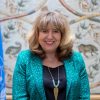
Biodiversity: Roll Up the Sleeves and Do Something, says Astrid Schomaker, New UNCBD Head
“We are living in a time where nature is regularly raising its hand and saying, 'Look, I'm here and I'm in trouble,' and then bringing us all sorts of natural disasters to the table," says Astrid Schomaker, Executive Secretary of the United Nations Convention on Biological Diversity (UNCBD), in an exclusive interview with IPS.
Explainer: COP16—What’s It About and What Does It Need to Achieve?
‘Peace with Nature’ is the theme for the 16th meeting of the Conference of the Parties (COP16) to the Convention on Biological Diversity (CBD), which will take place in Cali, Colombia, between October 21 and November 1, 2024.
Climate Activists Target Culture Greenwashing
Civil society is working on all fronts to tackle the climate crisis. Activists are protesting in numbers to pressure governments and corporations to cut greenhouse gas emissions. They’re using non-violent direct action and high-profile stunts, paying a heavy price as numerous states criminalise climate protest.
Research: Disease and Climate Stress Resistant Wheat Varieties for Global South
Groundbreaking research indicates that the wild relatives of wheat could be turned into an all-time food security crop capable of cushioning vulnerable populations from starvation and hunger, thanks to its ability to withstand both climatic stress and diseases. Wheat is a staple for over 1.5 billion people in the Global South.
Fast-Acting Interventions Needed for Sudanese Refugee Children as Needs Outpace Response
As peace eludes war-torn Sudan, thousands of displaced people fleeing the deadly battle between the Sudanese Armed Forces (SAF) and Rapid Support Forces (RSF) have found refuge in neighboring countries, including Egypt.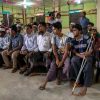
Conditions Grow Dire in Myanmar
On August 21st, Spokesperson for the Secretary-General Stéphane Dujarric spoke at a press briefing at the United Nations Headquarters about the ongoing Rohingya genocide taking place in Myanmar. Dujarric detailed high levels of hostility and displacement in the Shan, Mandalay, and Rakhine regions, which have significantly intensified since late June of this year.
Rohingya Refugees Must Not Be Forgotten
Seven years ago, a brutal campaign of violence, rape and terror against the Rohingya people ignited in Myanmar’s Rakhine State. Villages were burned to the ground, families were murdered, massive human rights violations were reported, and around 700,000 people – half of them children – fled their homes to seek refuge in Bangladesh.
Tackling the World’s Planetary Emergency
The world is facing a triple planetary crisis of climate change, pollution, and biodiversity loss. Climate change continues to pose an existential threat to humanity, with recent science estimating that we have possibly less than six years left to change course and rapidly reduce greenhouse gas emissions to have a chance of avoiding the worst of the climate crisis.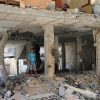
Gaza War: Displaced Palestinian Families Struggle to Access Basic Services
The latest Israeli evacuation order on August 17 led to the displacement of over 13,000 individuals, Secretary General’s spokesperson Stéphane Dujarric told a press conference at the UN headquarters.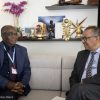
Conditions In Zimbabwe Worsen From El Niño Drought
Half of Zimbabwe's crops were destroyed and about 7.6 million people are at risk of acute hunger as a result of the El Niño weather phenomenon.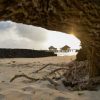
In Samoa, Protecting the Ocean is Our Way of Life
In Samoa, we use a simple phrase to capture our way of life: Fa’asamoa. At the core of this concept is respect for others, devotion to family and a deep appreciation for the preservation of our natural resources. Importantly, Fa'asamoa has enabled us to sustainably fish our vibrant coral reefs for millennia, in a way that provides good health and prosperity for everyone in our communities.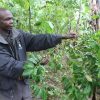
Uganda Coffee Smallholders Grapple With EU Regulations on Imports
In Kubewo village in eastern Uganda, children often go to work with their parents in the coffee gardens. Earnings from Arabica coffee are used, their parents and grandparents say, to pay for children’s education and other expenses for the family.
Absence of Reproductive Care Haunts Syrian Displaced Women
Pregnant women in northern Syria's camps for internally displaced people fear about their health and the health of their unborn children because of a lack of basic medical care and a healthy diet. These conditions exacerbate the illnesses and challenges faced by women, particularly amid the region's widespread poverty, food insecurity, and the remoteness of hospitals and health centers from the camps.
UK: ‘Many in the Climate Justice Movement Are Finding Creative and Imaginative Ways to Protest’
CIVICUS speaks with Chris Garrard, co-founder and co-director of Culture Unstained, about the campaign to end fossil fuel sponsorship of cultural institutions, which oil companies use to try to present a positive public image.
Bridging the Gap: How Self-Awareness Can Unleash Youth Potential
Imagine a world where every young person has the tools they need to succeed, regardless of their age, area of residence, ethnicity, college name, or the title on their resume. It’s a world where dreams are limitless, and potential knows no bounds.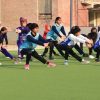
Climate Change Poses Yet Another Stumbling Block for Pakistani Sportswomen
Goalkeeper Rehana Jamali, 17, is jubilant. Her team came in second in the All Sindh Women Hockey Tournament, held last month.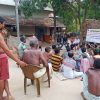
Transforming India’s Villages Through Innovative Water Harvesting Techniques
Brij Mohan, a 37-year-old farmer from Deoria, a modest village in India’s northern state of Uttar Pradesh, has a story of resilience and transformation. Mohan, the lone breadwinner for his family, has two children, the eldest just 10 years old.
Biden’s Convention Speech Made Absurd Claims About His Gaza Policy
An observation from George Orwell -- “those who control the present, control the past and those who control the past control the future” -- is acutely relevant to how President Biden talked about Gaza during his speech at the Democratic convention Monday night.
Neglected for Years, Mpox Now a Public Health Emergency of International Concern
There is a deadly outbreak of a new and graver variant of mpox in the Democratic Republic of Congo (DRC), and at least one case has been confirmed in nearly 12 African countries, including those like Kenya, Burundi, Uganda, and Rwanda that were previously unaffected. Suspected mpox cases across these countries have surpassed 17,000, a significant increase from 7,146 cases in 2022 and 14,957 cases in 2023.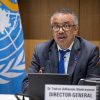
The Troubling Truth of Mpox
On August 15th, the Deputy Spokesperson for the Secretary-General, Farhan Haq, stated at a press briefing at the United Nations Headquarters that the Mpox epidemic continues to surge in the Democratic Republic of Congo and spreads throughout Africa. The alarming frequency of these cases constitutes a global health concern. Mpox, formerly known as monkeypox, is an epidemic that has grown exponentially in severity over the past two years. Originating in Central Africa in 1970, rates of infection have risen significantly since late 2023, with a new variant of the infection, known as clade 1 Mpox, infecting over 17,000 people in the Democratic Republic of Congo. These cases have generated increasing alarm, so much so that the World Health Organization has declared Mpox to be a worldwide public health emergency. Shortly after this declaration, the first case of clade 1 Mpox was reported in Sweden which greatly elevated global concern of a worldwide epidemic.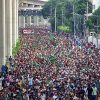
Does the Uprising in Bangladesh have Similarities with Arab Spring?
“I hope the outcome [of the recent revolution in Bangladesh] would be different. I hope the end result will not be the same,” says Shireen Huq, women’s rights and human rights activist and Founder of Naripokkho organization, to IPS about the many similarities with the Arab Spring.« Previous Page — Next Page »





The Week with IPS

NEXT STOP - SDGs
Tracking global progress towards a sustainable world
Tracking global progress towards a sustainable world
