Languages
Wednesday, September 30, 2026



News and Views from the Global South
Iran

Pakistan’s “Other” Insurgents Face IS
The media tend to portray Balochistan as “troubled”, or “restive”, but it would be more accurate to say that there´s actually a war going on in this part of the world.
Pro-Israel Hawks Take Wing over Extension of Iran Nuclear Talks
Buoyed by the failure of the U.S. and five other powers to reach a comprehensive agreement with Iran over its nuclear programme after a week of intensive talks, pro-Israel and Republican hawks are calling for Washington to ramp up economic pressure on Tehran even while talks continue, and to give Congress a veto on any final accord.
Iranians Keep Hope Alive for Final Nuclear Deal
In the United States, the negotiations aimed at a final deal between world powers and Iran over its nuclear programme—in a crucial phase this week—are far from the minds of average people. But for many Iranians, the talks hold the promise of a better future.
OPINION: Why Israel Opposes a Final Nuclear Deal with Iran and What to Do About It
Nov. 24 is the deadline for six world powers and Iran to reach a final deal over its nuclear programme. If there is no deal, then the talks are likely to be extended, not abandoned.
OPINION: Will There be Peace Between Iran and the West?
In just a few days, a meeting is scheduled that will be decisive for the security of the Middle East and of the whole world.
OPINION: Rivalry Between Sunnis and Shiites Has Deep Roots
When the Islamic State of Iraq and Syria (ISIS) suddenly emerged in Iraq, it declared as one of its first targets the Shiites and what it called the Safavids. The Safavid dynasty (1501-1736) was one of the most powerful Iranian dynasties after the Islamic conquest.
Resolving Key Nuclear Issue Turns on Iran-Russia Deal
U.S. and Iranian negotiators are working on a compromise approach to the issue of Iran’s uranium enrichment capabilities, which the Barack Obama administration has said in the past Iran was refusing to make concessions on.History of Key Document in IAEA Probe Suggests Israeli Forgery
Western diplomats have reportedly faulted Iran in recent weeks for failing to provide the International Atomic Energy Agency with information on experiments on high explosives intended to produce a nuclear weapon, according to an intelligence document the IAEA is investigating.
Obama Blasts Brutality and Bullying, but Not by Israel
When U.S. President Barack Obama addressed the U.N. General Assembly Wednesday, he was outspoken in his criticism of Russia for bullying Ukraine, Syria for its brutality towards its own people, and terrorists of all political stripes for the death and destruction plaguing Iraq, Syria, Yemen and Somalia.
ISIS Complicates Iran’s Nuclear Focus at UNGA
Iran’s foreign minister arrived in New York last week with his sights set on a final deal on Iran’s nuclear programme. But a pressing regional conflict is hanging heavily over the already strained negotiations as Iran and world powers resume talks on the sidelines of this week’s U.N. General Assembly.Nuclear Deal with Iran Likely to Enhance U.S. Regional Leverage
A successful agreement on Iran’s nuclear programme could significantly enhance U.S. leverage and influence throughout the Greater Middle East, according to a new report signed by 31 former senior U.S. foreign-policy officials and regional experts and released here Wednesday.
U.S. Ground Troops Possible in Anti-ISIS Battle
U.S. combat troops may be deployed against the Islamic State of Iraq and Syria (ISIS) if the strategy announced by President Barack Obama last week fails to make substantial progress against the radical Sunni group, Washington’s top military officer warned here Tuesday.
For These Asylum Seekers, the Journey Ends Where it Began
"Of course I'm scared, but what else can I possibly do?" asks Ahmed, a middle-aged man seated on the carpeted floor of a hotel located on the southern edge of Afghanistan. He is bound for Iran, but he still has no idea when or how he’ll cross the border.
OPINION: A New European Foreign Policy in an Age of Anxiety
The appointment of Italian Foreign Minister Federica Mogherini as the new European Union foreign policy chief offers the opportunity for an overhaul of EU foreign and security policy.
Obama Mulling Broader Strikes Against ISIS?
This week’s video-taped beheading of a U.S. journalist by the Islamic State of Iraq and al-Sham (ISIS) has spurred renewed calls for President Barack Obama to broaden Washington’s military efforts to strike the terrorist group, including in Syria.
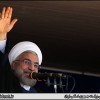
Iran, One Year Under Rouhani
When Hassan Rouhani was declared Iran’s president last year, large crowds gathered in the streets of Tehran to celebrate his surprise victory. But while hope for a better life persists, Iranians continue to face harsh realities.
Israel Lobby Galvanises Support for Gaza War
Pro-Israel activists assembled a huge crowd and a long list of congressional leaders and diplomats to declare their unconditional support for Israel’s military operations in the Gaza Strip on Monday, largely downplaying tensions between Jerusalem and Washington.
OPINION: The Affinity Between Iraqi Sunni Extremists and the Rulers of Saudi Arabia
Which story line sounds the more credible – that linking the rebel movement ISIS (the Islamic State in Iraq and Syria) to policies pursued by Iran or that linking the Sunni extremist force to Iran’s adversary Saudi Arabia?
Zarif and Kerry Signal Momentum on Nuclear Pact
As the negotiations on the Iranian nuclear programme approach the Jul. 20 deadline, both U.S. Secretary of State John Kerry and Iranian Foreign Minister Mohammad Javad Zarif have signaled through their carefully worded statements that they are now moving toward toward agreement on the two most crucial issues in the talks: the level of Iranian enrichment capability to be allowed and the duration of the agreement.
Khamenei Remarks Show Both Sides Maneuvre on Enrichment
Iran’s supreme leader Ali Khamenei’s comments on the nuclear talks Monday provided an unusual glimpse of diplomatic maneuvering by the U.S.-led coalition of five nuclear powers and Germany on the issue of enrichment capability to be allowed in a comprehensive agreement.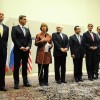
U.S. Demand for Deep Centrifuge Cut Is a Diplomatic Ploy
With only a few weeks remaining before the Jul. 20 deadline, the Barack Obama administration issued a warning to Iran that it must accept deep cuts in the number of its centrifuges in order to demonstrate that its nuclear programme is only for peaceful purposes.« Previous Page — Next Page »


The Week with IPS

NEXT STOP - SDGs
Tracking global progress towards a sustainable world
Tracking global progress towards a sustainable world
