Languages
Tuesday, September 22, 2026



News and Views from the Global South
LDCs
School Lunches Make For Happy Pupils in Congo
It's noon at Jean-Félix Tchicaya Primary in Pointe Noire, the economic capital of Congo. Students are settling into their chairs, but not to resume their lessons. They are waiting eagerly for the hot meal that's served in the classroom each day, their plates already laid out on their desks.Malawi Lays Out Its Agenda at U.N. Development Conference
Escalating fuel prices, climate change and the impact of the global financial crisis are the challenges currently compromising development in Malawi. The Southern African country wants to see a bold plan of action addressing these problems agreed upon at the Fourth U.N. Conference on Least Developed Countries (LDC-IV) currently taking place in Istanbul, Turkey.NIGER: Caring for the River, Reaping the Benefits
In anticipation of growing sorghum during the coming rainy season, Hamadou Abdou and his son are busy preparing the soil on the family's farm in Bougoum, a village in the west of Niger.
CAMBODIA: Understanding of Climate Change Sketchy, But Concern Real
The rains were kind to Cambodian farmer Tep Van last year, when the monsoon season doused his land with enough water to soak his fields and grow his precious rice crop. But he’s not sure he can count on the same luck this year.WORLD: Better Global and Local Governance Keys for LDCs
The world’s poorest citizens must struggle for more democratic governance and demand that their leaders fulfill their duties and responsibilities if their countries are to graduate from the group of 48 least developed countries, say civil society representatives.POPULATION: Promise Rises With a Problem
On the face of it, a rapidly rising population among the Least Developed Countries (LDCs) spells the usual doom about adequate resource distribution. But the least developed are also among the youngest in the world - and well channelled, they can be a valuable asset, United Nations Population Fund (UNFPA) head Babatunde Osotimehin told IPS.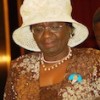
ECONOMY: Malawians Keen to Build Trade Ties with India
Building on historical relationships, Malawians have set their sights on strengthening trade and investment relations with India in sectors as diverse as agriculture, telecommunications and pharmaceuticals.TRADE: Glencore: Profiteering From Hunger and Chaos
The rapid rise in prices for food, fuel and commodities has been disastrous for the world's poor, including Indonesian market vendor Lia Romi. But it's a bonanza for multinational trading firms such as Glencore.ECONOMY: Looking for Development Leverage
Given a few incentives, private companies can be attracted to invest in poor countries that before were not on their radar. Donor countries are betting on this new avenue of public-private-partnerships (PPPs) to channel funds, technology and business knowledge to the 48 Least Developed Countries (LDCs) - the impact can be huge, but many challenges remain.
DR CONGO: Sowing the Seeds of Food Security in Bandundu
Subsistence farmers in the Democratic Republic of Congo's southwestern Bandundu Province are seeing their harvests double, thanks to an ambitious programme of support by the government.
DEVELOPMENT: Investment, Not Charity for LDCs
Least Developed Countries do not need charity; they want more and smarter investments. This is the point of departure for the Fourth U.N. Conference for the world’s poor countries (LDC-IV) begins in Istanbul, Turkey.
DEVELOPMENT: Time For New Approaches says Civil Society
The dominant approaches to development have failed the world’s poorest citizens and now the paradigm must change. This is the strong message coming from over 2,000 non-governmental organisations gathered at the civil society forum for the Fourth U.N. Conference on the Least Developed Countries (LDC-IV) in Istanbul, Turkey.
DEVELOPMENT: Plotting a World Without LDCs
Malawi's gross domestic product has grown by more than six percent in each year since 2005. The country's most recent Welfare Monitoring Survey finds unemployment stands at just one percent. At a glance, Malawi makes being a landlocked, least developed country almost desirable.
AFRICA: Investment Growth Benefiting Only Some Poor States
While foreign direct investment in least developed countries (LDCs) in Africa has risen sharply over the past decade, most of it went to resource-rich economies and had little impact on employment creation.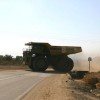
DEVELOPMENT-ZAMBIA: ‘Real Changes Needed in Policy and Implementation’
Zambia has enjoyed economic growth of around six percent per year over the past decade, says Patrick Mucheleka, but the government is failing to translate this into social and economic development for the majority of citizens. The upcoming conference on least developed countries in Turkey offers an opportunity to recalibrate the country's approach to development.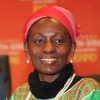
Q&A: Translating Southern Successes Into LDC Solutions
"In South-South cooperation we are all partners," Josephine Ojiambo, ambassador of Kenya to the U.N. and president of the U.N. General Assembly High-Level Committee on South-South Cooperation, told IPS. "SSC specifically shies away from the donor-client relationship."OP-ED: Major Salvaging Needed for LDC IV in Istanbul
Next Monday the United Nations is convening the decennial global conference focusing on the challenges faced by "the poorest and weakest segment of the international community humanity". This week-long high level hosted by Turkey in Istanbul is the fourth in the series of ten-yearly UN gatherings since 1981 when the first one was convened in Paris.
TRADE: “A Doha Round Collapse Is a Betrayal of Poor Countries”
"It would be bad news for poor countries in Africa if the Doha Round of trade talks fails. This round was meant to rebalance the rules of world trade in favour of developing countries. We have put a lot of resources and hopes into this process and a collapse would be a big betrayal for us."WORLD: Finding Funding for LDCs Amidst Global Financial Crisis
Representatives of the world’s poorest nations are preparing to assemble a new "programme of action" to reduce grinding poverty. Among proposals that could emerge from the U.N. Least Developed Countries Conference in Istanbul next month is a global tax on financial transactions that would generate billions of dollars a year for development assistance.
Least Developed Countries Stagnate Under Ailing Strategies
A report released Tuesday by the International Labour Organization (ILO) for the Fourth Conference on the Least Developed Countries (LDCs) slated to take place in Istanbul, Turkey in early May expressed a strong critique of the snail's pace of development, but stopped just short of calling for radical new policies to be implemented.
Q&A: Looking to a World Without LDCs
Maximising time, energy and resources toward improving living conditions for millions of people in the poorest countries of the world - the so-called Least Developed Countries (LDCs) - means that the "business-as-usual" approach must yield to a holistic strategy, says Arjun Karki, a longtime expert on grassroots, democratic peace-building and development.« Previous Page — Next Page »


The Week with IPS

NEXT STOP - SDGs
Tracking global progress towards a sustainable world
Tracking global progress towards a sustainable world
