Languages
Tuesday, September 22, 2026



News and Views from the Global South
LDCs
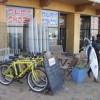
AFRICA: Bike-Share Systems Already Thrive
One winter morning in central Cape Town, despite the gale force wind and the threat of rain, Jacques Sibomana, who was going to be ‘up and down the city all day’, decided he’d rather cycle than brace against the wind on foot.SOUTH SUDAN: Fuel Shortages Grip Country
South Sudan is facing severe fuel shortages less than three weeks before it gains independence from the rest of the country. Many gas stations have shut down and those that remain open have people lining up overnight for fuel.DR CONGO: Publish All Mining, Oil and Forest Contracts
Civil society and the government are agreed: the Democratic Republic of Congo must make public the details of all mining, forestry and oil contracts.ENVIRONMENT: Congo Basin Slow to Adopt REDD
Only two of the eleven countries that share the Congo Basin have validated their plans to participate in the forest conservation process known as REDD+.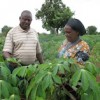
KENYA: Cassava Offers Food Security in Drought
After substituting her maize crop with cassava, Jemima Mueni has enough money to pay school fees for her children and enough food to last until the end of the year, despite the current drought.BURKINA FASO: Mutiny Suppressed, But Questions Remain
Despite decisively putting down the most recent mutiny by rebellious soldiers, the Burkinabé government is facing questions over its ability to provide a long-term resolution to a crisis that has gripped the country for several months.OP-ED: Climate Talks: Voices of the Vulnerable Must Be Heard
Last week, the world received a warning. A disturbing report from the International Energy Agency, the respected international authority on energy policy, found that CO2 emissions in 2010 were the highest ever recorded.
WORLD: Tropical Forest Summit Opens
Heads of state from the Amazon, Congo and Borneo-Mekong basins are meeting in the Congolese capital, Brazzaville: leaders hope to reach an accord on sound management of valuable rainforest ecoystems, but civil society actors believe the problems faced by local populations may be ignored.TANZANIA-INDIA: A Rewarding Relationship
The Indian prime minister, Dr Manmohan Singh, concludes a three-day visit to Tanzania on May 28. Singh arrived in Dar es Salaam from the Ethiopian capital, Addis Ababa, where he took part in the Second India-Africa Forum Summit, which began on May 20.
Illegal Logging Spreading in Madagascar
The transitional authorities in Madagascar are struggling to overcome the problem of illegal logging of precious wood. In spite of an April 2010 decree that prohibits the logging, transporting, trading and export of precious woods, felling in the forests is still continuing.
ZAMBIA: Making the Most of Limited Capital
Proponents of microfinance often portray it as the empowering extension of credit to vulnerable but diligently self-employed poor people - often women - who support each other to improve their livelihoods as well as repay their loans. The image is true, to some extent, but in many parts of Africa, microfinance institutions have somewhat sharper teeth.
ZAMBIA: Microfinance Beyond the Reach of the Poor
According to the World Bank, less than eight percent of Zambian adults have bank accounts. For the millions who make their living in the informal economy, this prevents them from earning interest on any savings they have or securing credit needed to expand small businesses beyond mere survival.
DEVELOPMENT: Women Leading Bangladesh Away from the LDC Tag
Women entrepreneurs and workers will soon help Bangladesh shake off the Least Developed Country (LDC) label, business leaders say.
DEVELOPMENT: Chinese Step In, Efficiently
For Jany Chen from Shanghai, concern often-raised in Europe and North America about the Chinese invasion of Africa is a lot of wasteful talk that deserves to be flushed down the toilet. Efficiently.LDC Meet Ends, Blame Game Begins
Mission not accomplished. This is in three words what more than 200 eminent speakers and panelists from over 70 participating countries in effect told their peers, the media and delegates who attended the U.N. Least Developed Countries (LDCs) Fourth Conference May 9-13 in Istanbul.DEVELOPMENT: New Action Programme, and New Name for the Poorest
A new 10-year blueprint for assisting the poorest countries on the planet to join the league of the more fortunate ones was approved Friday at the closing of the Fourth U.N. Conference on the Least Developed Countries (LDC-IV) held May 9- 13 here.
DEVELOPMENT: Programme of Action Adopted for World’s Poorest Nations
"The future for least developed countries lies in trade, productive capacity and governance more than in aid," said Cheick Sidi Diarra, United Nations High representative for the Least Developed Countries, responding to criticism of the plan of action put forward as the U.N. conference on the world's poorest nations drew to a close in Istanbul.
DEVELOPMENT: South-South Axis Strengthens
The glass isn’t exactly half-full, but it certainly is not entirely empty either. Within the broad failure of the weeklong Fourth U.N. Conference on the Least Developed Countries (LDC-IV) in Istanbul that concluded Friday, many delegates are taking heart in a strengthening South-South front that has emerged.
DEVELOPMENT: Market Forces Rise Above Declarations
Upstairs in halls where the conference of the Least Developed Countries (LDCs) is being held, all the right things were being said about the misery of poverty and the virtue of opportunity and development. Several floors below, what are called ‘market forces’ were at work.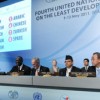
DEVELOPMENT: Civil Society Rejects ‘Toothless’ Istanbul Plan of Action
Civil society groups have vowed to mobilise citizens of the world’s poorest nations to take to the streets, rejecting the Istanbul Programme of Action agreed today by the Fourth U.N. Conference on the Least Developed Countries.
LDCs Seek Mini Trade Deal
Leaders from the Least Developed Countries are making a strong push in Istanbul for a mini trade deal for their 48 impoverished nations - ahead of any worldwide agreement under the Doha Round.« Previous Page — Next Page »


The Week with IPS

NEXT STOP - SDGs
Tracking global progress towards a sustainable world
Tracking global progress towards a sustainable world
