Languages
Sunday, November 8, 2026



News and Views from the Global South
Millennium Development Goals (MDGs)

SOUTHERN AFRICA: Small Amounts of Cash Make a Big Difference
After being diagnosed HIV-positive Margaret Bikyele could not even manage the simplest of household chores, let alone being able to work to generate an income for her and her two sons.
WHO – Maternal Deaths Fall
The number of women dying from pregnancy related causes around the world is falling. Sub-Saharan Africa remains one of the most dangerous place for pregnant women, despite recording a 26 percent reduction in maternal mortality rates.SOUTH AFRICA: CSOs Urge Binding Commitment on Socio-Economic Rights
A grouping of six civil society organisations (CSOs) has called on the South African government to ratify the International Covenant on Economic, Social and Cultural Rights (ICESCR).Brazil Brings Scarce Good News to Anti-Poverty Summit
When Brazilian President Luiz Inacio Lula da Silva addresses a meeting of world leaders next week, he is expected to proudly claim that his country has already met – and exceeded - one of the key U.N. development goals: reduce by half the proportion of people living in extreme poverty and hunger.MEXICO: Experts Denounce Slant in Corn Subsidies
The Mexican government's subsidies for corn (maize) production since 1994 have benefitted large- and medium-scale growers, to the detriment of small farmers, according to a new study by Mexican and U.S. researchers.
Michelle Bachelet’s Appointment to Head UN Women Widely Applauded
A level of enthusiasm seldom expressed at United Nations appointments welcomed the naming of former Chilean President Michelle Bachelet as the first head of UN Women, the new agency created to raise the profile of gender and women's issues.
Financing Public Health in Africa
Campaigners for increased health financing welcome the commitment by African Union member states to direct more resources to health. But the needs of the continent seem to dwarf available budgets.
KENYA: Primary School Teachers Test Poorly in Mathematics
Like many primary school teachers in Kenya, Nemwel Mokua is not coping. He has to teach at least six subjects a day, which include a mix of arts, mathematics and science.World Bank Boosts Ag Lending Ahead of MDG Meet
With the Millennium Development Goals review summit just one week away, the World Bank is the latest international player to announce its strategy to help achieve those goals by their 2015 deadline.Summit Failure on Water, Sanitation Would Be Recipe for Disaster
A weeklong international conference here has transmitted a strong political message to next week's U.N. summit meeting of world leaders: what good is the fight against poverty, hunger, maternal mortality and child deaths if water and sanitation are not given the high priority they deserve?
KENYA: TB Patients Held in Prison
When a doctor instructs a patient to take one tablet three times a day, she often has no way to ensure the instructions are followed.Irrigation Transforms Lives in Southern Zimbabwe
More than a million people will need food aid in Zimbabwe this year. As the government looks to boost agriculture production, one rural community is leading the way by using irrigation schemes to improve food security and income.ZIMBABWE: Big Market, Bigger Challenges for Matabeleland Farmers
Most fruits and vegetables sold in Bulawayo are imported from South Africa, because farms immediately around Zimbabwe's second city cannot meet demand. Locals are paying high prices as a result.Women, Children Top U.N.’s Anti-Poverty Agenda
All eight of the U.N.'s Millennium Development Goals (MDGs) are critical to development, but numbers four and five on child and maternal health are the real priority areas for this year. That was the main takeaway from a series of briefings with U.N., NGO and country officials in which IPS participated this week.INDIA: Cereals Rot in the Rain While the Poor Stay Hungry
When India's Supreme Court reacted to the news that thousands of tonnes of grain were rotting in the rain due to lack of granary space and ordered the government to distribute the surplus free of cost to the hungry, it seemed like the logical thing to do.
“Orange” Maize Could Save Eyesight of Millions of African Children
'Orange' maize, a variety of the common cereal crop, could improve the lives of millions of malnourished people by providing increased vitamin A in their diet, according to a new study released here this week.Africa’s Water Security Hinges on Better Infrastructure
As Africa continues its seemingly endless struggle for water security, why is the beleaguered continent lagging behind Asia and Latin America - despite commitments and declarations by political leaders?Global Development Blueprint Reveals Urgent Uphill Battle
A document outlining the U.N.'s strategy to achieve the Millennium Development Goals (MDGs) by 2015 was finalised Thursday after months of heated negotiations.Local Decisions Have Big Impact on Ecosystems
What do New York City, Vienna, Quito and Rio de Janeiro have in common? They all get their high quality drinking water through aqueducts connected to protected areas in nearby hills and mountains.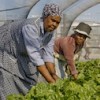
SOUTH AFRICA: Greening Project Creates Income and Food Security
Frances Mandla is visibly filled with pride. Together with her colleague, Nouniform Nqevu, she stands tall and smiling in front of a wide bed of lush spinach. The harvest will be their ticket to a better life. A life where there is enough money to buy food, clothes and pay school fees.
AFRICA: Governments Failing to Take the Threat of HIV Seriously
Experts worry that African governments are failing to take the threat of HIV seriously enough by not dedicating enough of their resources to prevention of mother-to-child transmission (PMTCT) efforts.« Previous Page — Next Page »





The Week with IPS

NEXT STOP - SDGs
Tracking global progress towards a sustainable world
Tracking global progress towards a sustainable world
