Languages
Monday, November 9, 2026



News and Views from the Global South
Millennium Development Goals (MDGs)
DEVELOPMENT: Political Will the Missing Link for MDGs
Despite numerous factors that threaten the achievement of the Millennium Development Goals by 2015 - a global financial crisis, a food crisis, climate change, natural disasters – U.N. Secretary-General Ban Ki-moon said this week that his main concern is "political will".WEST AFRICA: Stopping the Polio Virus
The World Health Organisation (WHO) and its partners hope to eliminate the circulation of the polio virus in West Africa as soon as June by launching the first round of national synchronised immunisation days against the debilitating disease.HEALTH-US: Maternal Deaths on the Rise
Despite the fact that the United States spends more on maternal health than any other country in the world, deaths in childbirth among U.S. women are on the rise and already surpass the morbidity rates in most developed countries.DEVELOPMENT: Bad Water More Deadly Than War
Bad water kills more people than wars or earthquakes, declares Anders Berntell, executive director of the Stockholm International Water Institute (SIWI).
Q&A: Tapping Women’s Enterprise to Topple Rural Poverty
Employees at the International Fund for Agricultural Development (IFAD) may have cause to fear for their jobs after Yukiko Omura was appointed vice president of the United Nations' rural poverty agency in February.
POLITICS-RWANDA: Woman Vies for Top Job
On average women constitute 18.8 percent of representatives in parliaments across the world according to the Inter-Parliamentary Union (IPU). This gender imbalance has been subject to much feminist criticism and many campaigns for change have been staged to address the status quo. The situation is however different in Rwanda.EDUCATION-SIERRA LEONE: Government Ignores Demands for Additional Teachers
Ismail Conteh has been teaching for the past year-and-a-half at a primary school in Sierra Leone’s capital Freetown – without receiving a single cent. He is one of hundreds of teachers recruited by schools to match the ever-growing number of pupils.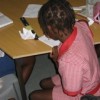
NAMIBIA: “If You Kiss for Five Minutes You Get It”
"At home we have a bar," says grade seven learner David Bravo* (14). "When my mother puts on the music I cannot concentrate on (my) schoolwork anymore. Sometimes, in the middle of the night, I just sit there and watch the people."AFRICA: Corruption Carries High Cost, World Bank Says
Poverty is on the rise in Sub-Saharan Africa (SSA) and various forms of corruption threaten to undermine the impact of investments made to meet the Millennium Development Goals (MDGs) in the continent, said the World Bank in a report released Monday on Africa's development.DEVELOPMENT-KENYA: Rapid Population Growth Threatens Development
Margaret Atieno, a 38-year-old mother of six, says she wanted to avoid her last pregnancy. But consistent stock-outs of contraceptive devices at her health care centre in rural Siaya, western Kenya, gave her no choice but to fall pregnant once again, albeit the fact that she did not want another child.HEALTH: U.S. AIDS Fund Flat-Lining, Groups Complain
The debate between those who favour investment in AIDS treatment and those who favour investment in its prevention came to the forefront Thursday at a U.S House of Representatives hearing on U.S. investments in HIV/AIDS in Africa.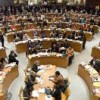
RIGHTS: Gender Confab Marked by Political Uncertainties
When a two-week meeting on gender empowerment concluded at U.N. headquarters Friday, there were several lingering questions crying out for answers.DEVELOPMENT-CAMEROON: Are Women the Magic Bullet for “Electoral Apathy”?
A support network for women's political participation, is challenging head-on what it calls "electoral apathy", after noting a growing trend in electoral abstention.EGYPT: Population Growth Overtakes Literacy Rise
Literacy programmes are teaching millions of Egyptians to read, but are struggling to keep up with the country's high population growth.KENYA: Proposed Constitutional Amendment Sets Back Women’s Rights
Lillian Mutuku, a 34-year-old mother of three, describes her home in Katine area, in Kenya’s Eastern province Tala, as a harsh place to live. The soil is poor, she says, the sun beats down mercilessly and vegetation is sparse.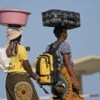
RIGHTS: Africa’s Success Stories in Gender Empowerment
Whenever gender empowerment is a vibrant topic of discussion internationally, some of the countries in Europe, Asia and Latin America are invariably singled out for their success stories in politics, education, health care or civil liberties even as Africa is mostly left out of political reckoning - and wrongly so.EDUCATION-TANZANIA: Pregnant Teens Forced Out of School
Pregnancy is the leading cause of dropouts for school girls in Tanzania. And a national law forbidding young mothers to return to school after giving birth did not make it any easier for them to continue their education.
EDUCATION-URUGUAY: Gardens of Knowledge
"Nature is wise, and if we take the time to observe it, we can learn so much" is the underlying philosophy of a number of innovative programmes being carried out in Uruguayan schools that are using gardens as a teaching resource, explained Edith Moraes, director of the national Primary Education Board.
LATIN AMERICA: Abortion – Still Illegal, Still Killing, Despite Growing Awareness
Although most of the governments in Latin America today are described as progressive, abortion is only legal in one country, while in five countries it is banned under all circumstances, even when the mother's life is at risk.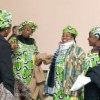
RIGHTS: “Famine Marriages” Just One Byproduct of Climate Change
The negative fallout from climate change is having a devastatingly lopsided impact on women compared to men, from higher death rates during natural disasters to heavier household and care burdens.
PERU: Suspension of Mining Operation Merely a Placebo
Although the Peruvian government reported that it had suspended the exploration activities of the Afrodita mining company in the country's northern Amazon jungle region to avoid further protests by local indigenous people, officials took no actual steps to bring the firm's work to a halt.« Previous Page — Next Page »





The Week with IPS

NEXT STOP - SDGs
Tracking global progress towards a sustainable world
Tracking global progress towards a sustainable world
