Languages
Monday, November 9, 2026



News and Views from the Global South
Millennium Development Goals (MDGs)

INTERNATIONAL WOMEN’S DAY: ‘We Will Demonstrate, As They Celebrate’
‘Equal rights; equal opportunities’ may be the theme for this year’s International Women’s Day, but while women around the world celebrate, a group of Ugandan women are protesting against the suppression of their rights.HEALTH-SOUTH AFRICA: Five Years to Children Born Free of HIV
A world where all children are born free of HIV infection is possible in only five years if donors continue to fund global efforts to combat the virus.TRINIDAD: Women Demand a Real Gender Policy
A few days after she created history by becoming the first woman to be elected as opposition leader and the leader of a major political party in Trinidad and Tobago, Kamla Persad Bissessar was kicking mad at the "misunderstanding" of the role of women and their contribution to society.
Q&A: Qualified Women Have Better Chance in Top Jobs
Irina Bokova, who was elected director-general of the U.N. Educational, Scientific and Cultural Organisation (UNESCO) last September, heads the Paris-based agency at a time when the world body has placed a high priority on gender empowerment.
SOUTH AFRICA: Community Fears World Cup Will Cause Homelessness
While South African parliamentarians attended a swanky pre-International Women’s Day celebration at Cape Town’s International Convention Centre, a group of destitute women in decaying Kewtown, just seven miles away, worried about looming homelessness.
INDIA: No Stopping Reserved Seats for Women in Parliament
With assured backing from India's main opposition groups, the ruling Congress party hopes to see voted through in the upper house of Parliament Monday a bill reserving 33 percent of seats in national and provincial legislatures for women.
RIGHTS-SWAZILAND: Property Rights At Last for Women
A recent court ruling has finally given Swazi women the right to own and administer property in their own names.CUBA: A Good Old Age in Old Havana
In the centre of Old Havana, historic buildings are being restored without neglecting the occupants who are their heart and soul. The priority is to care for elderly residents with programmes that could become a model for the rest of Cuba, whose population is ageing fast.CENTRAL AMERICA: Women Make Headway in Politics – and Want More
The victory of Laura Chinchilla in Costa Rica's presidential elections, and the growing participation of women in Central American parliaments, point to their progress in the region's spheres of political power. But they still have a long way to go, experts say.
RIGHTS: Arab Women Caught Between Extremes
The status of women in a predominantly male-chauvinistic Arab world continues to fluctuate from one extreme to another.RIGHTS: U.N. Women’s Agency Remains Politically Paralysed
A longstanding proposal for the creation of a special U.N. agency for women - officially called a "gender entity" - is apparently moving at the sluggish pace of a paralytic snail.
DR CONGO: Will Poultry Project Live up to Expectations?
For some seven million Congolese living in Kinshasa the only meat and poultry they could buy to eat since the 1980s was frozen imports from Western countries, distributed locally by a few local businessmen.
MIDEAST: Gap Lingers Between Women’s Political and Legal Rights
Last year, Kuwaitis elected their first female members of Parliament. Yet in countries like Yemen, child marriage remains common and personal status laws still discriminate against women in matters concerning marriage, divorce and child custody.GUATEMALA: Off Track for Millennium Development Goals
Guatemala knows that when it comes time to demonstrate compliance with the Millennium Development Goals (MDGs), a set of global anti-poverty and development target to be met by 2015, it will make a poor showing.CHILE: Cost of Rebuilding Still Unclear
Chile has begun to think about the costs and challenges of rebuilding a large part of the areas hit by the Feb. 27 earthquake and tsunami, while rescue and aid operations continue.
RIGHTS-US: “He” the People?
Despite having equality on paper, women continue to be shut out of most leadership positions in the United States, and some experts say that the persistence of language in which male is the default gender is an overlooked factor.
PERU: Relocating Entire Villages for Mines, Dams
Hundreds of Peruvian communities were displaced as they fled the 1980-2000 civil war. Today the government is pushing for urgent passage of a law that would facilitate the relocation of entire villages or neighbourhoods in mineral or energy-rich areas.HEALTH: Neoliberalism not Liberal Enough for AIDS Investments
Neoliberal economic ideas have grown increasingly dominant over the last 30 years. During that same time, the spread of HIV/AIDS has reached an epidemic crescendo.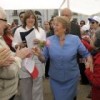
CHILE: First Woman President Scores Points on Gender Front
When Chile elected Michelle Bachelet as its first woman president in 2005, thousands of women celebrated the historic victory as their own personal triumph, proudly marching in the streets wearing mock presidential sashes. Today, men and women both recognise the concrete and symbolic progress achieved in gender issues under her administration.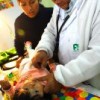
BOLIVIA: Cash for Checkups to Slash Maternal Deaths
A social programme in Bolivia that prevents the deaths of two mothers a day from complications related to pregnancy and childbirth is making headway despite administrative difficulties, and has the potential to cut the alarmingly high maternal mortality rate in this country by up to 80 percent in just five years.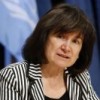
RIGHTS: Rise and Fall of Gender Empowerment
The 45-member Commission on the Status of Women (CSW), presiding over one of the largest gatherings of women at the United Nations, listened Monday to dozens of speakers spelling out the successes and failures of gender empowerment worldwide.« Previous Page — Next Page »





The Week with IPS

NEXT STOP - SDGs
Tracking global progress towards a sustainable world
Tracking global progress towards a sustainable world
