Languages
Friday, November 13, 2026



News and Views from the Global South
Millennium Development Goals (MDGs)

DEVELOPMENT-WEST AFRICA: History Just Waiting to Repeat Itself
Two years ago, several West African states found themselves in the grip of severe food shortages - with some three million people affected in Niger alone. Children died, aid officials wrung their hands, people marched in Niger's capital, Niamey, to demand food...But were lessons learned - really learned - to ensure that the crisis does not recur?PERU: Escalating Conflicts Put Pres. Garcia on the Spot
Three people dead, several injured, and fire at an airport: the results of a wave of protests in Peru, regarded as the worst social crisis since Alan García became president nearly one year ago. Thousands of teachers, workers and peasant farmers continued the mobilisation Thursday.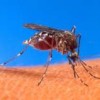
HEALTH: South-east Asia Grapples With Dengue
End June saw health officials in Singapore confronted with a worrying trend in the affluent, squeaky-clean city-state. During two separate weeks that month, dengue fever cases had reached epidemic levels.ENVIRONMENT-INDONESIA: Plastic Bottles Plus Sun Rays = Potable Water
Used plastic bottles and sun rays are all that the impoverished residents of Bintaro, South Jakarta, need for their families to have clean potable water.
WORLD POPULATION DAY: U.S. Funding Continues to Stumble
As the United Nations commemorated World Population Day Wednesday, the United States remains the only major donor that continues to cut off funds to the only international agency focusing primarily on population: the U.N. Population Fund (UNFPA).SUDAN-EU: New Warning of Famine in Darfur
A famine is looming in Darfur, according to members of the European Parliament who have just returned from a visit to the war-ravaged Sudanese province.ENVIRONMENT-MEXICO: Critics Sceptical of Gov’t Reforestation Statistics
Two hundred and fifty million trees are to be planted in Mexico from now until November, in a programme that will make the country the "world leader in reforestation," the government has announced. But independent observers warn that valuable native forests are still being destroyed.
WORLD POPULATION DAY: Enlightened Men Prescribed for Maternal Health
What is a common factor in ensuring that women do not marry too young, do not have more children than they can cope with, do not die giving birth - and contract HIV in smaller numbers? Men.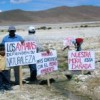
CHILE: Aymaras Don’t Want to Disappear
Twenty years ago, close to 100 indigenous Aymara people lived in the village of Cancosa, but today only 10 remain. The same is true of many indigenous communities in the Chilean Altiplano, as their members have moved out in search of jobs and educational opportunities.DEVELOPMENT-INDONESIA: Poverty, Trauma – Aceh's War, Tsunami Legacy
The road that links Iskandar Muda airport to the provincial capital of Banda Aceh buzzes with renovation work. The trucks loaded with construction material and the taxies that ply up and down the road, once bristling with security check points, are sure signs of Aceh’s recovery.ENVIRONMENT-COTE D’IVOIRE: The Knock-on Effect of Disappearing Forests
Sogbéné Soro claims to be able to treat a variety of ailments: leprosy, diarrhea and ringworm to name a few. But, this traditional healer is finding it increasingly difficult to ply his trade. "I am faced with a shortage of certain plant species that have medicinal properties," he told IPS.
Q&A: Science Ignores AIDS in Women, Says Nobel Nominee
Science has yet to provide rigorous studies of how HIV/AIDS or the impacts of antiretroviral medications affect women's bodies in particular, Argentine activist Patricia Pérez, nominated for the 2007 Nobel Peace Prize, told Tierramérica.Q&A: “The Sahel Should Already Have Been Green”
For 'newTree-nouvelarbre', a non-governmental organisation (NGO) that works largely in Burkina Faso, good fences don't only make good neighbours - they also make a line of attack against land degradation.FINANCE: Development Banks Lag on Sexual Health – Report
Despite strong verbal commitments to reproductive and sexual health, the so-called multilateral development banks (MDBs) that lend to poor nations have spent relatively little money on such projects and, in some cases, have followed policies on the ground that in fact impeded women's empowerment and improved public health, a new study charges.POLITICS: Global Compact with Business ‘Lacks Teeth’ – NGOs
The U.N.'s Global Compact with international big business "at the moment is so voluntary that it really is a happy-go-lucky club," says Ramesh Singh, chief executive of ActionAid, a non-governmental organisation.WEST AFRICA: Shared River Basins, Common Problems
Nigeria and Niger, in West Africa, are neighbouring states. But the two countries have more than a border in common; they are also share a number of river basins that are under threat, and the responsibility for conserving them.DEVELOPMENT: New Partnership Needed to Achieve MDGs
A "new partnership" between rich and poor countries is required if the United Nations goals of reducing extreme poverty by 2015 are to be realised, according to an official who helped devise those objectives.DEVELOPMENT: The Poor Need Better Contraception
The use of contraceptives in poor countries needs to be actively promoted, the Dutch minister for development assistance has said.HEALTH: Focus on Orphans, Stigma at HIV/AIDS Meet
Having won over conservative communities in three Sri Lankan districts, an international non-governmental organisation (NGO) is confident that the problem of stigma and discrimination faced by people living with HIV/AIDS (PLWHA) can be overcome.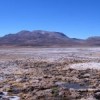
CHILE: Aymaras Vow Mining Co. Will Restore Wetland
The Aymara community of Cancosa on the Chilean Altiplano region of Tarapacá, bordering Bolivia, will spare no effort in its struggle to rehabilitate a wetland dried out by the Cerro Colorado Mining Company (CMCC), an affiliate of the Anglo-Australian BHP Billiton company.DEVELOPMENT-EUROPE: Commission Sets Policy Against Health and Education
The European Commission has decided that its development aid activities should not focus on health and education, a senior official with the EU executive has admitted.« Previous Page — Next Page »


The Week with IPS

NEXT STOP - SDGs
Tracking global progress towards a sustainable world
Tracking global progress towards a sustainable world
