Languages
Thursday, November 19, 2026



News and Views from the Global South
Politics
SWAZILAND: Dreams of Free Education Deferred
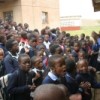
Ten-year-old Tembuso Magagula sat outside her classroom with her shoulders hunched against the cold today, tears streaming from her eyes. Her long-awaited first day of school had turned into a nightmare.POLITICS: Iraqi Body Softens Stance on Banned Candidates
A decision by Iraq's controversial Accountability and Justice Commission (AJC) Monday to remove 59 candidates from a list of over 500 candidates banned from running in the March parliamentary elections appears to be a sign that the AJC is softening its stance following widespread domestic opposition and a visit by U.S. Vice President Joseph Biden to Baghdad last week.POLITICS: U.S. Taking New Tack on Afghan Poppies
Counter-narcotics and counterinsurgency often go hand-in-hand in Afghanistan, where the opium poppy trade bankrolls much of the Taliban's operations and greases political corruption.POLITICS: Behind Cautious Signal, a Decision for Afghan Peace Talks
Gen. Stanley A. McChrystal's very cautiously-worded support for a negotiated settlement with the Taliban leadership in an interview published Monday is only the first public signal of a policy decision by the Barack Obama administration to support a political settlement between the Hamid Karzai regime and the Taliban, an official of McChrystal's International Security Assistance Force (ISAF) command has revealed in an interview with IPS.IRAN: Is a Ceasefire in the Making?
As Iran nervously awaits the 31st anniversary of the Islamic Revolution on Feb. 11 - the day that has traditionally drawn the largest public demonstrations - a subtle change in public discourse can be detected.ASIA: As Economy Turns, Turning Off Stimulus Tap Is a Challenge
As the global financial crisis triggered alarms across Asia, Singapore responded with a government programme to aid its vulnerable workforce. The affluent city- state pumped in three billion U.S. dollars in an employment protection programme.CULTURE-INDIA: Globalised Ice Cream Please, Big Scoop
"Passport Please." That's what everyone thought they'd ask if you queued up at that exclusive new ice cream shop in one of those smart new malls of fashionable south Delhi.CLIMATE CHANGE: ‘Copenhagen Accord Not Legal, Kyoto Protocol Is’
While the BASIC bloc countries - Brazil, South Africa, India and China - will submit their plans for voluntary mitigation actions by the Jan. 31 deadline stipulated by the Copenhagen Accord, they have taken care to emphasise that the agreement, reached at the end of the December climate change summit in the Danish capital, has no legal basis.AFGHANISTAN: In Run-up to Meet, US, Britain Push Reconciliation
On the eve of a major international conference on Afghanistan, senior U.S. and British officials are hinting that they are more open to a political settlement with elements of the Taliban than at any time since Washington helped oust it from power nine years ago.WORLD SOCIAL FORUM: Talk vs Action – the Tug-of-War Continues
A call issued by social movements to evolve towards a more active role in generating concrete action marked the opening session of a seminar assessing the 10 years of the World Social Forum (WSF) Monday in this southern Brazilian city, the birthplace of the annual global civil society gathering.U.S.: Obama Unveils Broad Banking Industry Reforms
U.S. President Barack Obama has delivered his plans for far-reaching banking and financial industry reforms, which mark a noticeable shift to the left in the administration's domestic policy and an acknowledgement of the public anger at Wall Street for its role in the financial crisis.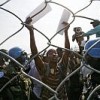
HAITI: Military Playing Large Role in Relief Efforts
As international attention turns to the long-term reconstruction of earthquake-stricken Haiti, U.N. officials pledged that the Haitian government would have full involvement and authority over the process.
ZIMBABWE: One Million Casualties of Land Reform
The seizure of large commercial farms - almost all white-owned - has continued despite the formation of a unity government in Zimbabwe. The country's farm workers say they are the biggest losers.RIGHTS-US: Indefinite Detention “Defies Common Sense”
U.S. President Barack Obama's decision to detain 47 of the just-under 200 remaining prisoners at Guantánamo without trial indefinitely is drawing scorn from legal experts and human rights advocates, who charge that the government simply does not have enough evidence to convict the detainees it says cannot be tried but are "too dangerous to release."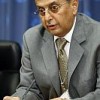
DEVELOPMENT: Yemen to Lead South in U.N. Negotiations
The republic of Yemen, categorised by the United Nations as one of the world's "least developed countries" (LDCs), will lead the largest single coalition of developing nations this year: the 130-member Group of 77 (G77).
Q&A: “U.S. Should Invest in New U.N. Women’s Agency”
One year after U.S. President Barack Obama's inauguration, how has his administration fared in terms of advancing an agenda for women's rights around the world?CAMBODIA: ‘Abuse Rampant in Drug Detention Centres’ – Human Rights Watch
A staff member "would use the cable to beat people. On each whip, the person’s skin would come off and stick on the cable," said M’noh*, 16, of his detention in Choam Chao Youth Rehabilitation Centre, a government-run facility for drug dependents in the Cambodian capital, Phnom Penh.PAKISTAN: Home-Based Workers Struggle to Climb Out of Poverty
Razia Khatoon, 36, crouches over a huge wooden frame, her eyes squinting in the dimly lit room inside a squatter settlement in Orangi town in Karachi, Pakistan’s largest city.Q&A: ‘With More Political Space, Women Can Do More as Peacemakers’
As a political activist and president of the women's wing of the Awami National Party (ANP), Zahira Khattak has been working relentlessly for the empowerment of women in the war-torn North West Frontier Province (NWFP) in Pakistan. She believes that by empowering them, they can contribute more to the peace efforts in the region.
WORLD SOCIAL FORUM: Back Seat Driver of Social Change
The World Social Forum (WSF) is only "a tool" and must not be confused with the global movement for another world, says Chico Whitaker, one of the founders of this meeting which is celebrating its tenth year with a seminar to assess its track record Jan. 25-29, in its southern Brazilian place of origin, Porto Alegre.WORLD SOCIAL FORUM: Positive Reviews, On Balance
Nearly a decade after its inception, and in spite of some reverses, on balance the World Social Forum (WSF) has proved a resounding success as a platform for planet-wide debate, from the point of view of the people most affected by the world's problems.« Previous Page — Next Page »


The Week with IPS

NEXT STOP - SDGs
Tracking global progress towards a sustainable world
Tracking global progress towards a sustainable world
