Languages
Monday, August 24, 2026



News and Views from the Global South
SADC

SOUTH AFRICA: “Children are Dying Needlessly”
By the time Thandi Khumalo* brought her seven-month-old daughter to the Red Cross Children’s Hospital in Cape Town, help came too late. The infant had developed acute diarrhoea and kwashiorkor, a condition caused by severe protein and calorie deficiency, and died a few days after being admitted.SOUTHERN AFRICA: Removing Barriers to Trade
Cecilia Gondwe waits in the shade of a tree at the Mwanza Border Post between Malawi and Mozambique. Somewhere inside, a clearing agent is completing elaborate paperwork on her behalf.
ZAMBIA: Election Violence Could Mean Fewer Women Participants
There are growing fears that increasing numbers of women candidates and voters may not participate in the 2011 general elections because of an upsurge in election-related violence.SOUTHERN AFRICA: Boost Cross-Border Trade for Food Security
Small-scale traders on either side of the Mwami Border Post between Zambia and Malawi are key to meeting local demands that larger importers do not.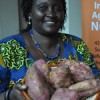
Developing More Top African Women Research Scientists
In a tiny village near Kisumu city in Kenya, scientific researcher Mary Anyango Oyunga spends most of her time educating women about something they have always done – grow sweet potatoes.MALAWI: Innovative Campaigning by Women Candidates
You will find Beauty Kasonda on her campaign trail at funerals, weddings, church functions or just about any local gathering in her community. Kasonda does not have the sort of funding her male counterparts have for campaigning in the country’s November 2010 elections but she is not letting that stop her.SOUTHERN AFRICA: Realising Trade in Virtual Water
The vegetables Omphemetse Monyi sells at the Francistown bus rank come from 400 kilometres away in South Africa. One approach to development might seek to replace her suppliers with local farmers, but Southern Africa's water managers are considering the merits of reinforcing a regional trade in "virtual water".
MADAGASCAR: Women Form Own Political Parties for Fair Representation
Brigitte Rasamoelina and Yvette Sylla are women with two different approaches to politics in Madagascar. One formed a political party, while the other decided to legalise her organisation as an association. But both women are considering running in Madagascar's November elections.ZIMBABWE: Rural Children with HIV a ‘Lost Cause’
Eleven-year-old Irene Thembo* lies curled like a foetus on a white wooden bench for outpatients at a clinic in rural Zimbabwe. The orphan, whose parents died of HIV-related illnesses, is terribly sick.SOUTHERN AFRICA: Youth Vulnerable to Violence
James Banda, 27, is an unemployed youth although he occasionally is hired to act as a bus conductor at Lusaka’s Kulima Tower Bus Station. He may not have a permanent job, but it is easy to find him. Anyone looking for him just has to go to the bus station and ask. Everyone knows who he is. Banda, or ‘ba-Jay’ as people call him, is a young man who commands a lot of respect from his friends – he is a thug for hire.ZIMBABWE: Pregnant Teens Shun HIV Treatment for Fear of Stigmatisation
At a local maternity clinic in one of Bulawayo’s high density suburbs, midwives are at pains to explain to a pregnant 15-year-old girl why she must be tested for HIV before she gives birth.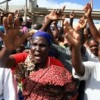
ZAMBIA: Calls for Political Parties to Field 50 Percent Female Candidates
With women having achieved little in terms of representation in decision-making positions in Zambia, a national women’s lobby group is hoping to change this in the 2011 general elections.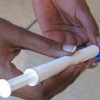
AFRICA: Antiretroviral Gel Lowers HIV Infection and Offers Hope to Women
When women from the predominantly rural Vulindela district in KwaZulu-Natal first began participating in an HIV-prevention trial many were unable to negotiate the use of condoms or even discuss safe sex with their partners. But as they used the discreet antiretroviral (ARV) microbicide gel, for the first time women - who bear the brunt of the HIV epidemic in Africa - were in control of an HIV-prevention method.SWAZILAND: HIV – Long Distances Place Expectant Mothers at Risk
Affectionately known as Gogo Zondo by the community of Ndvwabangeni in northern Swaziland, Margaret Zondo is a traditional health practitioner who helps treat the sick and delivers babies.
SOUTH AFRICA: Trauma of Children Caring for HIV-Positive Parents
Nine-year-old Nomasonto* had no choice but to switch roles with her mother and care for the HIV-positive woman who gave birth to her. Instead of worrying about homework and going out to play with her friends, Nomasonto’s daily concerns were now a matter of life and death.
INDIAN OCEAN ISLANDS: Women Join Forces for Political Equality
"Instead of moaning all the time, why don’t you create your own (political) party?" some men asked Brigitte Rabemanantsoa Rasamoelina, a female politician from Madagascar. She accepted the challenge and in February formed Ampela Mano Politika, a political party which started with only 22 female members and now has over 5,000 female members ... and 10 men.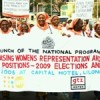
MALAWI: Women Candidates Desperate to Finance Freebies for Voters
Mable Malinda wants to contest the local government elections but the independent candidate who is using her life savings to fund her campaign only has 500 dollars left in her bank account. She has already spent three times as much buying handouts for voters – an unofficial requirement when contesting elections in Malawi.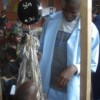
MALAWI: Concerns over Cost of New HIV/AIDS Treatment Regime
As government implements a new HIV/AIDS treatment regimen according to latest world standards, a major grouping of non-governmental organisations are concerned that the high cost of the new medication will mean government will no longer be able provide free treatment to as many people as before.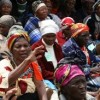
SWAZILAND: Women MPs Limited by the Patriarchal System
Minah Ndzinisa spends every day selling fruit and vegetables at the outdoor Mbabane Market, braving the rain, wind and cold for almost 20 years. "I was in the same cold even in the 1990s when we used to have only one woman Member of Parliament."ZAMBIA: Parents’ Fears Slowing Uptake of Paediatric AIDS Treatment
Diana Banda* is quickly running out of excuses to give her six-year-old son about why he has to take a schedule of drugs every day.MADAGASCAR: Calls for Equality to be Written into New Constitution
Madagascan female activists are asking that the right of women to participate directly in politics be included in a new draft of the country’s Constitution, so that there can be 30 percent of female politicians in parliament by 2012 and 50 percent by 2015.« Previous Page — Next Page »


The Week with IPS

NEXT STOP - SDGs
Tracking global progress towards a sustainable world
Tracking global progress towards a sustainable world
