Languages
Monday, August 24, 2026



News and Views from the Global South
SADC

NEPAL: Himalayas Unsettled by Melting Glaciers, More Avalanches
For the last two climbing seasons, Dawa Sherpa has missed scaling the summit of Mt Everest. But the climate ambassador for the World Wildlife Fund (WWF) and two-time Everest summiteer may not be relishing the thought of bearing witness once more to the impact of rising temperatures on the world's highest peak.ZIMBABWE: Neonatal Circumcision Yet to Gain Ground
Judith Sikhosana recently gave birth to a healthy baby boy. And while she has strictly followed the advice of health workers about the post-natal care for her child, there is one thing she is yet to understand: why nurses want her baby to be circumcised.Progress in Prevention of Mother-to-Child Transmission of HIV
The number of pregnant women being tested for HIV and accessing treatment in Sub-Saharan Africa has shown significant progress – indicating that virtual elimination of mother-to-child transmission of the virus by 2015 is possible.MALAWI: Village Chief Leads Fight For Maternal Health
In Ntcheu, a rural district in central Malawi, villagers have taken the fight against the country's high maternal mortality rate into their own hands. They have almost eradicated maternal deaths in the area by urging pregnant women to give birth in hospitals, under medical supervision.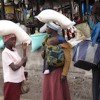
AFRICA: Women Traders Confronting Sexual Harassment at Borders
Harassment and sexual exploitation by border officials seeking bribes constitute the biggest obstacles for female informal cross-border traders in Africa, according to a United Nations Development Fund for Women (UNIFEM) research study.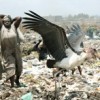
SOUTH AFRICA: Coal – A New Solution to Fuel Problems?
A new solution to power and fuel problems worldwide may be developed by using a resource long characterised as dirty and non-renewable: coal.
AFRICA: Liberalised Services Still Require Proper Regulations
With African countries' trade remaining inordinately dependent on natural resources exports, their economies could benefit from liberalisation of trade in services but only as long as proper domestic regulatory frameworks are put in place, some trade experts argue.SOUTHERN AFRICA: Social Protection, a Human Right?
Without contributions from well wishers and government grants of between 68 and 104 dollars per month per child, the House of Mother and Child in Ennerdale, south of Johannesburg, would barely be able to provide for the 18 vulnerable children who call the place home.
SOUTHERN AFRICA: Small Amounts of Cash Make a Big Difference
After being diagnosed HIV-positive Margaret Bikyele could not even manage the simplest of household chores, let alone being able to work to generate an income for her and her two sons.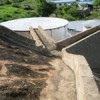
Harvesting Water to Save Crops and Lives
Peter Kivuti, a 51-year-old farmer from Eastern Kenya, never relied on meteorological weather predictions all his life - until three years ago. It was then that rainfall in the region become less predictable.
AFRICA: Governments Failing to Take the Threat of HIV Seriously
Experts worry that African governments are failing to take the threat of HIV seriously enough by not dedicating enough of their resources to prevention of mother-to-child transmission (PMTCT) efforts.
ANGOLA: More Mothers Survive Childbirth
As darkness falls on a cool evening in Luanda, a group of women sit huddled under threadbare blankets outside one of the city’s few maternity hospitals. "I have to be here," Paula Silva, 45, said, shivering slightly.BOTSWANA: HIV-positive Mothers Not Convinced to Exclusively Breastfeed
"An HIV-positive woman must never be encouraged to breastfeed because regardless of what the doctors or researchers say - it is too dangerous for the baby," says Koziba Kelatlhe an HIV-positive mother who was advised by health workers not to breastfeed her child.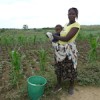
SOUTHERN AFRICA: Growing Seed Security
Farmer Obed Dlamini, like many of his colleagues from Swaziland, finds it difficult to find quality maize seeds each planting season. Not only are the seeds expensive but they are often not available.
AFRICA: ‘Welcome to My Taxi – Let’s Do Business with My Cellphone’
In cities across Africa, being an entrepreneur requires no office, business card or investors. All it takes is a cell phone, according to Adele Botha, a researcher at the Council for Scientific and Industrial Research (CSIR) in South Africa.
SOUTH AFRICA: ‘Tea Bag’ Filter Provides Safe Drinking Water
Though it may look like a tea bag, straining water through this recently developed filter could provide a cheap, easily replenished source of water for those who need it most.MALAWI: Women Candidates Hard Hit by Election Postponement
News that Malawi’s November local government elections are to be postponed yet again has hit female candidates hard – and mostly in their pockets. And it could mean that the country will have less female candidates to vote for when they finally go to the polls.
MALAWI: Campaign Against Female Vice President a Campaign Against Equality
The future of women’s political representation in Malawi has come into question as the ruling Democratic People’s Party (DPP) launched a smear campaign against its own member, the country’s female Vice President Joyce Banda. Many had hoped Banda would become the country’s first female president in 2014.ZIMBABWE: Children Crossing Borders in Search of HIV Treatment
A new type of migration is taking place in Zimbabwe. While in the past people crossed the borders into South Africa and Botswana seeking work and fleeing from their repressive circumstances, now a silent migration of HIV-positive children seeking antiretroviral treatment (ART) is taking place.
SWAZILAND: Finding Ways to Care for HIV Orphans
In the poor, drought-stricken community of Kangcamphalala, AIDS orphan Nomvula Dladla* is in tears. The 17-year-old has been told that her aunt, the only surviving relative she could live with, passed away a few hours ago of an HIV-related illness. And if she had been living anywhere else in the country, it would have made Dladla destitute.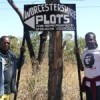
SOUTHERN AFRICA: Land Reform Underfinanced and Failing
Mavis Muchena sits on the veranda of her mud hut, a middle-aged single mother of four with a face worn beyond her years and hands creased from working the soil. She should represent the future of a renewed farming boom in Zimbabwe, but instead she represents its failure.« Previous Page — Next Page »


The Week with IPS

NEXT STOP - SDGs
Tracking global progress towards a sustainable world
Tracking global progress towards a sustainable world
