Languages
Monday, August 24, 2026



News and Views from the Global South
SADC

WATER: Early Rains Rekindle Interest in Rainwater Harvesting
In Thembekie Gwebu’s yard under the roof leaves stands a curious giant green plastic container with a plastic pipe connected to the gutter. She has been asked a number of times by curious visitors and passers-by what the contraption is, and she happily explains.
WATER: Miracle Man Eases Village’s Water Woes
Hermes Chimombo, a welder in his 50s, is a revered man in the impoverished Naotcha Township. Armed with rudimentary tools and a passion to ease people’s suffering, he has tapped a spring in the mountain above the slum to provide water for its 25,000 residents.
Southern Africa Collectively Gearing Up For REDD
The Southern African Development Community (SADC) is moving to support its member countries to tap into benefits from the reducing emissions from deforestation and forest degradation (REDD) framework.ZIMBABWE: Sixteen Days of Activism Not For All, Say Police
Hundreds of residents from civil society organisations marched in the streets of Bulawayo on Dec. 1 to mark the 16 days of Activism Against Violence Against Women and Girls . But sex workers and members of gay groups were barred by police from joining the demonstration.
CLIMATE CHANGE: Don’t Look to South Africa for Leadership
South Africa is Africa’s largest economy and the continent's biggest emitter of greenhouse gases. The country’s emissions per capita are on par with those of the United Kingdom, and more than twice as high as China’s emissions by the same measure.MALAWI: Traditional Birthing House Rises From the Rubble
Cecilia Tomoka's birthing centre stood unused for three years before the 2009 earthquake flattened it. Now she's rebuilding the house - and her practice - as Malawi's government lifts a ban on traditional birth attendants.
TRADE-SOUTHERN AFRICA: EPA Talks Will Miss Latest Deadline
While a trade deal between the European Union and Southern African countries is close it will not be concluded before the end of this year. In the meantime, South Africa remains in pursuit of an ambitious regional integration agenda.
SOUTH AFRICA: Draft Bill Is ‘A Charter for Rogues’
A coalition of civil society groups marched to South Africa's Parliament on Oct. 27 to protest against the draft version of a new Protection of Information Bill. "This bill is a betrayal of all the democratic principles we fought for," anti-apartheid stalwart Kader Asmal told the crowd.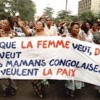
DR CONGO: ‘An Opportunity to Say Never Again’
Civil society in the DRC's eastern province of South Kivu is determined that meaningful action will follow from the publication of the U.N.'s Mapping Project, a report detailing some of the most serious human rights violations by state and non-state actors in the DRC between 1993 and 2003.
Without Investment in Agriculture, Africans Stay Hungry
Inadequate access to water, recurring floods and droughts as well as a lack of political will to invest in small-scale agriculture perpetuate hunger across Africa, the continent’s food security experts say.
Could Water-Efficient Maize Boost Africa’s Food Security?
As controlled field trials of a genetically modified (GM) crop are about to begin in five African countries amidst promises of improved crops grown under poor conditions, critics are charging organisations with selling out the interests of African farmers.NAMIBIA: Increase Needed in Social Grants for Foster Children
Seventeen-year-old Jason* wants to be a pilot and his 14-year-old foster sister, Gracie*, wants to be a lawyer. In the impoverished district of Rehoboth, south of Windhoek, dreams such as these do not always come true.
SOUTH AFRICA: Satellite Preparing Scientists for New Space Industry
Though practically invisible to the naked eye, a uniquely South African satellite has been orbiting the earth for the past year, creating an archive of images and jumpstarting what its creators hope will be a space revolution in the country.AFRICA: Hunger Intensifying But Cash Transfers Improving Lives
Chronic hunger is intensifying in Africa, despite the world’s commitment to address this Millennium Development Goal and reduce world hunger by half by 2015.TRADE-SOUTHERN AFRICA: “Parochialism” Stymies Integration Efforts
The Southern African Development Community (SADC) has set ambitious targets for regional integration. But the goal of creating a customs union by 2010 has been postponed and the adoption of a single regional currency by 2018 may be missed due to national concerns.DEVELOPMENT: Welfare of Poverty-Stricken Families Depends on New Policy
For HIV-positive Tereza Chatsilizika, the monthly cash grant of 10 dollars she receives means that she can educate her disabled daughters and put food on the table.BOTSWANA: Not All Women in Local Government Making a Difference
Florence Shagwa, a female councillor at the Gaborone City Council, considers her three-year business qualification worthless.ZIMBABWE: Free Maternal and Child Care Needed From Government
Mother-to-be Agnes Ncube budgets up to 100 dollars each month from her informal roadside business just so she can pay for the maternal services at her local government clinic.SOUTHERN AFRICA: Ignoring Patriarchy, Female Politicians Rise
In Malawi, if both a girl and boy are born into a poor family, it will naturally be the boy in whom all the financial resources are invested.
MALAWI: Richer Soil First Defence Against Climate Change
Malawi has directed local government officials to develop local response strategies to the effects of climate change.
Q&A: “Gender Not a Limiting Factor in Politics”
In the rural KwaZulu Natal town of Jozini, Thembeni Madlopha-Mthethwa has been the town’s mayor for a decade. And in contrast to the rest of the country, which has experienced numerous civil strikes and service delivery complaints, Jozini has rarely had any such problems.« Previous Page — Next Page »


The Week with IPS

NEXT STOP - SDGs
Tracking global progress towards a sustainable world
Tracking global progress towards a sustainable world
