Languages
Sunday, August 23, 2026



News and Views from the Global South
SADC

Mauritian Women Dreaming of Active Politics
"We have had enough of the training given to us in cooking, sewing and household works... We now have another dream: of participating actively in the development of our island at decision-making level," says Marie-Anne Laganne, a political trainer at Women In Politics.
SOUTHERN AFRICA: A Region of Winners and Losers, Not Partners
As Southern Africa prepares itself for another year of economic partnership agreement (EPA) negotiations with the European Union, trade analysts say any deal should be about more than just liberalised trade.Malawi Business Keen on Power From Mozambique
The feasibility study looking at connecting Malawi's electricity grid to Mozambique's Cahora-Bassa hydropower station was completed 15 years ago; a price for power was long ago agreed by the respective governments: but somehow the project is yet to go ahead.SOUTHERN AFRICA: Energy Pie Greater Than the Sum of its Parts
Two million compact fluorescent lamps will be distributed to households and industry in Malawi by June, in just one of several measures to bridge the gap between electricity supply and demand. Across Southern Africa, energy shortfalls threaten to choke development.
TRADE: South African Imports Filling Zimbabwean Shop Shelves
When the government of national unity (GNU) was formed two years ago, Zimbabweans expected that the days of shop shelves being filled with imported consumer goods would soon be over.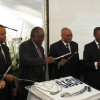
TRADE: South Africa Losing Interest in SADC Customs Union
A schism about the division of revenues in the world’s oldest customs union threatens to derail the process of regional economic integration in Southern Africa.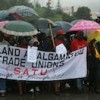
AFRICA: Swaziland in Crisis as Customs Union Revenue Is Slashed
Apart from the looming job losses in Swaziland’s public sector, small and medium enterprises (SMEs) have also warned of retrenchments following the government’s decision to suspend procurement from small businesses.SOUTHERN AFRICA: Together Against the Rising Water
A decade after heavy floods wrecked havoc in Southern Africa, the region is better prepared to monitor and respond to seasonal flooding. This is thanks as much to the growing strength of transboundary institutions as it is to technical improvements.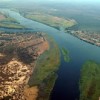
Floodwaters Rising Across Southern Africa
As South Africa declares a national disaster due to flooding, other countries in the region hold their breath while water levels continue to rise.
Mozambique Prepares for Worst Floods in 10 Years
Flood alert levels are on orange in parts of Mozambique as disaster management services mobilise to respond to flooding potentially as bad as the catastrophe in 2000.ECONOMY: South Africa Prepares to Head Into the BRIC fold
South Africa’s inclusion in the BRIC group of powerful emerging economies has sparked intense debate, with some saying it has done itself a disservice by trying to punch above its weight, and others lauding the inclusion as a step towards becoming a more important player on the global stage.ZIMBABWE: In the Eye of the HIV/Aids Storm
Teenage commercial sex workers are finding themselves at the centre of the HIV/AIDS storm amid concerns of widespread lack of condom use and a spike in the number of infections among this demographic, despite the country’s continuing HIV/AIDS campaigns, which health authorities say has seen a drop in prevalence in the past few years.
ECONOMY: Namibia Embarks on Nuclear Policy
Namibia is set to develop its rich uranium resources and intends to pursue uranium enrichment locally. It also plans to build its own nuclear electricity plant.
Cassava Combating Rural Hunger in Zambia
In Zambia, a silver lining has emerged for widespread rural hunger and poverty, thanks to homegrown agricultural research. Local scientists have successfully developed four new, early-maturing and high- yielding cassava cultivars in an ambitious research project conducted in the cassava-rich Luapula Province, under the on-going Root and Tuber Improvement Programme (RTIP).HIV/AIDS: Fund Rejection Worries Health Campaigners
Health rights activists in Malawi are expressing concern over the recent rejection of the country’s proposal for close to six hundred million dollars to the Global Fund to fight HIV, tuberculosis and malaria between 2011 and 2016.
HUMAN RIGHTS: Mauritian Sex Workers Demand Rights
"Sex workers rights are human rights", close to a hundred people shouted during a recent march in Rose-Hill, a major town in Mauritius. Their aim was to sensitise the population, particularly the parliamentarians, to the state of sex workers on the island.
AGRICULTURE – SOUTH AFRICA: Small Scale Farmers Face Uphill Battle
Just before sunrise 39-year -old Alan Simons, an emerging small-scale farmer, gets ready for his usual nine-hour day of harvesting, packing and deliveries. In his black Nissan van he drives ten kilometres to the seaside town of Strand outside of Cape Town to pick up his six workers, all of who are women.MALAWI: Women Claim Equal Share of Family Property
Seated on a wooden bench at her Katoto township house in Mzuzu, Grace Mkandawire’s face reflects the traumatic experiences she has endured since her husband’s death in 1998. She looks lost and confused and as she narrates her story there is fear, hatred and resignation that Malawi’s Marital Property Law of (1882) disenfranchises poor women like her.
POLITICS- NAMIBIA: Numbers of Women in Government Declining
Twenty years after independence, representation of women in senior government structures and in Parliament is declining in Namibia. According to the latest demographic survey results of August 2010, out of a population of around 2 million, women outnumber men 10:9. In 2001, the ratio was 94 males per 100 females.
MAURITIUS: They Do Politics Differently
"I do politics every day, but partisan politics? No, thank you," says Jane Ragoo, long-time trade unionist and social worker. She believes in working to bring about change in society and improve people’s lives but has no interest in clambering onto a truck to campaign for office.
AGRICULTURE: Desperation Over Subsidies
As the rains start to fall in Malawi, marking the beginning of the growing season, government is continuing to implement the fertiliser and seed subsidy programme which has since made the country a bread basket in the Southern African Development Community, SADC.« Previous Page — Next Page »


The Week with IPS

NEXT STOP - SDGs
Tracking global progress towards a sustainable world
Tracking global progress towards a sustainable world
