Languages
Saturday, October 17, 2026



News and Views from the Global South
Southern Africa

DR CONGO: Beauty of a Bean Wins Farmers’ Hearts
Smallholder farmers in Bandundu Province are boosting their harvests with the help of the sweetly-named velvet bean.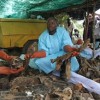
Hundreds of Bodies Removed From Zimbabwe Mass Grave
The identity of as many as a thousand decomposing bodies in an abandoned mine in Mount Darwin, 100 kilometres north of Harare, may never be known. "War veterans" associated with the ruling Zimbabwe African National Union-Patriotic Front party are removing them with no regard for preserving evidence.
ZIMBABWE: Fighting Past Fear to Treat TB
In the dusty streets of Bulawayo’s densely populated townships, Susan Nkiwane is making house calls today. She is one of a group of twelve women who form a fragile web of support for TB sufferers in her community.
Questions Abound Over Whether IBSA and BRICS Can be Complementary
The IBSA Dialogue Forum, a South-South alliance of India, Brazil and South Africa, could be better suited to the needs of Southern Africa for South-South cooperation than the BRICS (Brazil-Russia-India-China-South Africa) loose alliance of emerging economies. But Southern Africa will have to beef up its markets to truly benefit.
MOZAMBIQUE: Linette Olofsson – A Life Spent in Politics
There is no way one can have a conversation with Linette Olofsson without being dragged into her collection of images about her community agricultural project in central Mozambican Province of Zambezia.
SOUTH AFRICA: Firebrand Politician Enters Mayoral Race
The woman described by former South African President Nelson Mandela as his "favorite opposition politician", Patricia de Lille, has thrown her hat in for the position of mayor of Cape Town.
ZAMBIA: Young Voters Push Grassroots Issues to the Fore
Concina Haajila was only a year old in 1991 when Zambia turned from 27 years of autocracy and dictatorship to political pluralism and democratic governance. During the past 20 years she and millions of her peers have grown to adulthood and become disenchanted with the politics of their nation which have swung from an issue base to hero worship and personal purse enlargement.
MALAWI: Enterprising Approach Underlies New Sanitation Campaign
The market can do better: a sanitation and hygiene campaign to be launched in Malawi plans to apply this tenet to improve cleanliness and public health in the country's cities.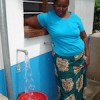
U.N. Water Conference Focuses on Cities
As a U.N. conference on water opens in South Africa today, the country's Council for Scientific and Industrial Research has repeated warnings that the country faces a water supply crisis. Experts attending the three-day conference will consider the challenges posed by growing demands, migration and water resources potentially limited by careless use and climate change.
MOZAMBIQUE: Educator in the Foothills of Her Political Career
If women like Judith Mussacula realise their aspirations to become the next generation of Mozambican politicians, the country's future will be in safe hands.
Swazi Government Challenged
Swaziland's autocratic government is facing a growing challenge as a sharp decline in customs revenue forces budget cuts. Thousands of protesters brought the Swazi capital of Mbabane to a standstill Friday as they took to the streets to oppose imminent salary cuts to civil service wages - and demand changes to the country's government.POLITICS-ZAMBIA: Days of Male Domination Numbered
Elizabeth Phiri was so incensed when she was overlooked as a parliamentary candidate for the Patriotic Front in a 2008 by-election on the basis of her gender that she quit the party. Four years on, she has rejoined the party but remains pessimistic - but other women politicians see reasons to hope the 2011 elections will be different.
Investment in African Economies Shifting Away from Raw Materials
Local and foreign investment on the African continent is slowly moving away from agriculture and raw materials to manufacturing, services, communication and tourism, despite poor infrastructure and low skills levels.Malawi Donor Funding Threatened by Rights, Governance Issues
Malawi is bracing itself for difficult economic times following a decision by the country’s main donors to withhold financial aid amounting to $400 million. Donors say they are responding to a range of governance and human rights issues in the country.
AFRICA: ‘We Cannot Leave Lives of Nationals to Development Partners’
As donors retreat from funding HIV prevention and treatment, the vulnerability of national programmes reliant on external funding has become apparent. Without long-term sustainability, the lives of millions could be at risk.SOUTH AFRICA: Convention To Secure Decent Work for Domestic Workers
Despite formal recognition of domestic workers' rights in South Africa, they still face a struggle for fair treatment.
Zambezi Floods Displace Thousands in Namibia
Thousands of people and livestock in the Caprivi Strip have had to be evacuated as annual floodwaters rise in the Zambezi. However, loss of life has been kept to a minimum as informal warning systems prove to be effective.
AFRICA: Responsible Travel Means Not “Haggling Over Wooden Beads”
Tourism as a concern found its way onto the agenda of the 1992 Earth Summit in Rio de Janeiro because of its potential for development but also due to its adverse effects on some populations and natural resources, particularly in Africa.SOUTHERN AFRICA: Plumbing Grey Data for Clear Water
They come like pilgrims to the Department of Geological Surveys office in Lobatse, 120 kilometres south of the Botswanan capital. In the sparsely furnished offices there, they pore over charts, trying to take the guesswork out of choosing where to sink a borehole.
ZAMBIA: The Extended Family – Blessing or Burden?
Peggy Kapanda has bad memories of the time she spent living with her uncle when she was young. She was treated as a second-rank child. But this only motivated her to do a better job herself. At her small home in John Laing compound, in Zambia's capital Lusaka, she and her husband take care of two other children in addition to their own three young boys.MALAWI: Uncertainty Over Role for Traditional Birth Attendants
When the ban on traditional birth attendants was lifted last year, pregnant women quickly appeared at Dorothy Chirwa's door in Malombe village in Mangochi, a district on the southern shores of Lake Malawi. Chirwa was among the thousands of TBAs banned from providing women with care in 2007.« Previous Page — Next Page »





The Week with IPS

NEXT STOP - SDGs
Tracking global progress towards a sustainable world
Tracking global progress towards a sustainable world
