Languages
Saturday, October 24, 2026



News and Views from the Global South
Southern Africa
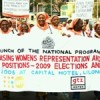
MALAWI: Women Candidates Desperate to Finance Freebies for Voters
Mable Malinda wants to contest the local government elections but the independent candidate who is using her life savings to fund her campaign only has 500 dollars left in her bank account. She has already spent three times as much buying handouts for voters – an unofficial requirement when contesting elections in Malawi.ZAMBIA: Women Welcome Equality Commission
The Zambian National Constitution Conference (NCC) concluded its business recently with the adoption of a clause for the creation of a Gender Equality Commission.Football Leaves Legacy of Hope in Namibia
Throughout the 2010 World Cup in South Africa, organisers have insisted that the legacy of the event goes far beyond the sporting spectacle. In the dusty streets of a Windhoek township, Deon Namiseb believes this is true.
MALAWI: Concerns over Cost of New HIV/AIDS Treatment Regime
As government implements a new HIV/AIDS treatment regimen according to latest world standards, a major grouping of non-governmental organisations are concerned that the high cost of the new medication will mean government will no longer be able provide free treatment to as many people as before.ZAMBIA: “Privatisation Like Grabbing Goods Fallen from a Truck”
Zambia has sold more than 262 state-owned enterprises in the past 18 years, with the latest being the beleaguered telecommunications company Zamtel.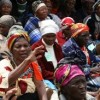
SWAZILAND: Women MPs Limited by the Patriarchal System
Minah Ndzinisa spends every day selling fruit and vegetables at the outdoor Mbabane Market, braving the rain, wind and cold for almost 20 years. "I was in the same cold even in the 1990s when we used to have only one woman Member of Parliament."MOZAMBIQUE: Women at Forefront of Resisting Climate Change
The Mozambican government has adopted various policies to address the effects of climate change, with special attention to women as studies show that they are more adversely affected by this phenomenon.ZAMBIA: Parents’ Fears Slowing Uptake of Paediatric AIDS Treatment
Diana Banda* is quickly running out of excuses to give her six-year-old son about why he has to take a schedule of drugs every day.MADAGASCAR: Calls for Equality to be Written into New Constitution
Madagascan female activists are asking that the right of women to participate directly in politics be included in a new draft of the country’s Constitution, so that there can be 30 percent of female politicians in parliament by 2012 and 50 percent by 2015.ANGOLA: Drilling Ever Deeper, Hoping for the Best
While BP struggles to contain an oil spill that U.S. government estimates indicate is now the largest ever in the Gulf of Mexico, questions are being asked about how well prepared Africa's oil-producing countries are for a similar incident.ZAMBIA: Need to Mainstream Gender Equality into all Policies
Despite the adoption almost a decade ago of a national gender policy that aims to ensure fair participation of men and women in the development process, most of the Zambian government’s policies still remain gender blind, say civil society and women's rights associations.
DEVELOPMENT-ZIMBABWE: Selling Scrap Metal to Scrape By
Gugulethu Mkhwananzi is another one of the many unemployed women who have become features of everyday life in Bulawayo’s poor working class suburbs as she moves from house to house, looking for "rusted gold", or scrap metal.Doubts Over Zimbabwe Diamonds
Three days of tense deliberations by members of the Kimberley Process have failed to reach consensus on whether diamonds from Zimbabwe's Marange fields should be certified as conflict-free. Zimbabwe has already announced that it intends to resume exports of the precious stones immediately.ZIMBABWE: ‘We Too Want to be Wealthy’
Saddled with debts of more than $7 billion, Zimbabwe is anxious to resume diamond exports, suspended in May amidst international condemnation of alleged human rights violations in the Marange diamond fields. But the treatment of people living in the fields themselves suggests the country's record on rights bears further examination.
WORLD CUP: United For Africa – Making it Last
Perhaps Africa's World Cup began in earnest on Jun. 16, when a despondent green and gold-clad crowd began leaving the Loftus Versfeld stadium even before the end of South Africa's heavy defeat to Uruguay. Migrant African fans felt the first touch of cold post-tournament reality.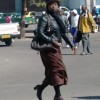
ZIMBABWE: A Chance for Women’s Voices to be Heard?
As Zimbabwe embarks on writing a new constitution with the countrywide collection of public submissions starting on Jun. 23, not all women are upbeat about the process.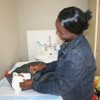
SWAZILAND: Focus on Infants in HIV Prevention
A proud mother, Nonhlanhla Mabuza cuddles her one-day-old baby boy, at the circumcision clinic of Raleigh Fitkin Memorial (RFM) Hospital. A day after delivering her second son, Thabiso Dlamini, the 20-year-old mother is not only beaming because she has just successfully delivered her tiny little tot – her bundle of joy has just undergone male circumcision.
ANGOLA: Changing More than Policies
She may have been little-known in political circles until now, but by putting herself forward as the first female independent presidential candidate, Luisete Macedo Araújo (50) has thrust herself into the limelight.Artists Refuse Silence on Zimbabwe Atrocities
In a bold attempt to stoke public debate on national healing, an art exhibition is challenging the government to publicly acknowledge one of the most hideous episodes in Zimbabwe's history.MALAWI: Changing the Face of Politics
The face of politics is changing in the southern African country of Malawi. And civil society is making plans to ensure that it changes even more.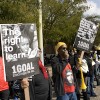
AFRICA: Renewing the Promise of Education for All
The World Cup is wreaking havoc with a key millennium development goal in South Africa: as the football tournament hit its stride, not a single child across the nation attended school.« Previous Page — Next Page »





The Week with IPS

NEXT STOP - SDGs
Tracking global progress towards a sustainable world
Tracking global progress towards a sustainable world
