Languages
Thursday, September 17, 2026



News and Views from the Global South
Southern Africa

Angola’s Small-Scale Farmers Welcome Investment, Urge Careful Targeting
Think small to overcome big problems - that was the message to African governments being urged to do more to increase food security and reduce hunger and malnutrition on the continent.
SOUTHERN AFRICA: Cash Transfers Transforming Lives of the Poor
When Letesia Mbewe was nominated as a beneficiary in a cash transfer pilot project in Zambia’s Chipata district, she had no idea the project would change her life and that of her three children.
Decent Work Still a Dream for South Africa’s Domestic Workers
The abuse of domestic workers, the majority of whom are women, is still widespread in South Africa despite calls for the government to intensify the implementation of the domestic workers law.SOUTH AFRICA: Public Sector Struggling with Shortages of 80 Drugs
South Africa is experiencing a shortage of over 80 different drugs in its public health sector, including flu vaccinations and medication for tuberculosis and high blood pressure. The severity of shortages varies from province to province and hospital to hospital, depending on the leadership and skills levels of management.
BIODIVERSITY: Odds Stacked Against San Harvesters of Devil’s Claw
Nguni Diyasen gently loosens the earth with a hoe and then widens the hole with her bare hands. Fifty centimetres down she uncovers the light brown root of a devil's claw. Used to treat arthritis and rheumatism, the plant also constitutes her only income.
MAURITIUS-POLITICS: Voting for the Future
Incumbent Prime Minister Navin Ramgoolam has won the Mauritian election, retaining a third term of office.
Residents Hope 2010 Flooding Prompts Govt Action in Luanda
The water seeped into Feliciana Teresa Matia’s home from beneath its mud floor and when her 20-year-old son Francisco got up to go to work, grabbing a metal pole for guidance in the dark, he was electrocuted.
Greater Support Needed For Botswana’s Women Farmers
On the outskirts of Botswana’s capital, Gaborone, Charity Molefhi is learning the ropes of the horticulture industry.
SOUTH AFRICA: Teenagers’ Health at Tremendous Risk
"I sometimes drink alcohol because it makes things funny," 15-year-old Senelo* giggles shyly. "I go to unlicensed taverns. They sell alcohol without asking questions."Broken Promises on Zimbabwe Press Freedom
Fourteen months after Zimbabwe's government of national unity was formed, harassment, arbitrary arrest and general intimidation of journalists remains common.Ramping up Malaria Prevention in Angola
Crouched on an upturned plastic box, Eva Angelino bounces 11-month old Odelina on her knee, trying to stop her crying. Mother and daughter are waiting in line outside a public health centre not far from the city centre of Angola’s capital Luanda.RIGHTS: Zambia Pushes Anti-Counterfeit Bill Despite Health Danger
Zambia is pushing forward with formulating an anti-counterfeit draft law which will include medicines, despite the controversy that has surrounded similar laws in East Africa and despite having existing legislation which has been used to successfully prosecute counterfeiters of medicines.
SOUTHERN AFRICA: Some For You, Some For Me: Sharing the Inkomati River
At Ekuvinjelweni village, in South Africa's Mpumalanga Province, the Komati River flows clear and fast through the mountains.Savings Spurned in Zimbabwe Water Purification
Zimbabwe spends an estimated 100 million dollars a year importing aluminium sulphate for water treatment plants. But a local entrepreneur has developed a technique to extract the needed compound from kaolin and flint clays abundantly available within the country.Fears of Military Takeover in Madagascar
The deadline the Malagasy Armed Forces gave transitional authorities to find a solution to the political crisis that has paralysed Madagascar for over a year will expire at the end of April.ENERGY: Eskom Loan “Will Help” South Africa’s Poor Neighbours
The 3.75 billion dollar World Bank loan for a new coal-fired power station in South Africa is essential for economic growth in neighbouring low income countries, according to Dr Mohamed Abdelrahman, energy advisor for the New Partnership for Africa's Development (NEPAD), a programme of the African Union.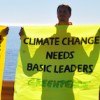
CLIMATE CHANGE: No Deal in Sight, Say Leading Economies of the South
Environment ministers from Brazil, South Africa, India and China are sceptical that a legally-binding agreement on climate change will be reached in Cancun, Mexico in December.
Q&A: The State of HIV Prevention Vaccines
An HIV vaccine is possible if the world works together as a global community with the objective of finding one, but it will take some years to develop.
TRADE: SACU Reaches 100th Year Despite Recent Divisions
Leaders rallied behind the Southern African Customs Union (SACU) at its 100th birthday bash on Apr 22, adamant that it remains the region’s best shot at economic sovereignty. Details on how to accomplish this, however, remain sketchy.
SOUTH AFRICA: Children Help to Assess Water Health
Miss, Miss, there are tiny creatures here in the water!" a Grade 7 pupil shouts excitedly, trying to draw attention to his water sample. At first, the liquid looks clear, but upon closer examination, one can make out a tiny aquatic invertebrate.
SOUTHERN AFRICA: Sharing the Okavango
Each January, a giant pulse of water from heavy summer rains over the south of Angola enters the Okavango River system and begins a five-month journey through Namibia to a richly biodiverse swamp in Botswana's Kalahari desert. The river is a rarity, scarcely disturbed by human development along its 1,100 kilometre length: shaping its future is the delicate task of the Okavango River Basin Commission.« Previous Page — Next Page »


The Week with IPS

NEXT STOP - SDGs
Tracking global progress towards a sustainable world
Tracking global progress towards a sustainable world
