Languages
Monday, October 19, 2026



News and Views from the Global South
Southern Africa

POLITICS-SOUTH AFRICA: 'One Miracle at a Time'
The African National Congress comfortably won almost two-thirds of the total vote in South Africa's recent elections, to retain power at the national level and in eight of the country's nine provinces.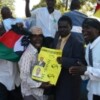
POLITICS-MALAWI: Poverty Uppermost in Voters’ Minds
When Malawians go to vote on May 19, they are expected to put their cross next to the party they believe will do most to reduce poverty. Political campaigns in the run-up to the presidential and parliamentary elections have centred around poverty, agriculture, food security and employment.HEALTH-AFRICA: Global Financial Crisis Leads to HIV Budget Cuts
International donors and African governments are likely to cut health budgets due to the global financial crisis. Health experts fear that increasing unemployment and poverty will lead to less food security and quality of nutrition, which will in turn put more stress on already weak health systems.
HEALTH-SWAZILAND: New Effort To Control TB
Swaziland saw a 5.6 percent increase in tuberculosis cases between 2008 and 2007. Out of a population of one million, 10,000 are infected with TB, one of the highest rates of TB infection in the world.MEDIA-ZIMBABWE: Promises But Little Action on Press Freedom
While journalists welcomed a pledge by the government to reform the country’s closed media space, fears run deep over a horde of laws that continue to make Zimbabwe a media minefield where a ‘wrong’ story can land a journalist behind bars.RIGHTS-ZIMBABWE: Women Call for Truth, Justice and Reconciliation
Women’s rights groups have urged the establishment of a Truth, Justice and Reconciliation Commission in Zimbabwe as part of bringing to justice people who committed human rights violations - including sexual abuse against women - during the run-up to a second-round presidential vote in June 2008.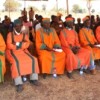
MALAWI: Separating the ‘‘Ultra-Poor’’ from the Poor – Why?
A group of civil society organisations in Malawi is pushing for changes to the country’s controversial social cash transfer scheme which has caused tension in communities as it attempts to separate the poor from the ‘‘very poor’’ in a country where some 65 percent of people live on less than a dollar a day.
SOUTH AFRICA: Protecting Migrant Farmworker Rights
Migrant farm workers in South Africa are entitled to the same workplace rights as any other employee. But the reality across the country suggests the opposite.
BOTSWANA: Deep Divisions Remain Over Media Law
While the international theme for World Press Freedom Day was "Fostering Dialogue, Mutual Understanding and Reconciliation", the Botswana government and the media seemed to take the opposite route - taking turns to snub each other’s calls for dialogue.MADAGASCAR: Education Hampered by Lack of Clean Water
Because most schools in Madagascar have no access to running water, lack of hygiene and sanitation have become a major problem for children on the Southern African island. Many pupils fall sick regularly, are unable to attend classes and hence don’t perform well at school.
ZIMBABWE: Recognise Rights of Gays and Lesbians
Zimbabwe is trying to rebuild itself as a nation where rights to freedom of expression and association are protected. Amongst the chorus of voices raised in support of a new constitutional order are the country's gays and lesbians.
RELIGION-NAMIBIA: Finding Sanctuary in Islam
Daisy Duck is the first to greet visitors to the Soweto Islamic Centre, from a television in the lounge of this former pre-primary school in Katutura, Windhoek’s oldest township. Beyond a kitchen is a humble, light-filled prayer room, the ground covered with carpets.
POVERTY-MOZAMBIQUE: Researchers Ponder Value of Cash Transfers
Their mud huts perch precariously on the eroded, high embankment of the Zambezi river, in the provincial capital of Tete, in central Mozambique. But watching their homes be washed away by erosion or floods is just another risk for the residents of Matundo and Matheus Sansao Muthemba bairros. Their lives are as precarious as their homes.
Q&A: ‘We Are Past the History of Acrimony and Polarisation’
The Zimbabwean Prime Minister will address Parliament on May 13, reflecting on both progress and frustration of three months at the head of the country's power-sharing government. Tsvangirai spoke to IPS in Johannesburg on May 8; excerpts of the interview.
RIGHTS-SOUTH AFRICA: Khumbula Ekhaya (Remember Your Home)
With South Africa’s new president, Jacob Zuma, being inaugurated in a 9 million dollar extravaganza today, most of the country’s leaders are likely to still be recovering from the party by the time the sun rises on May 11.RIGHTS-ZIMBABWE: Journalists Spurn Govt Summit on Press Freedom
Media organisations this week dug in their heels over boycotting a national media conference in the resort town of Kariba. State-owned media reported that the much-postponed conference finally opened on May 8, with information minister Webster Shamu lamenting the deep divisions within the media fraternity in Zimbabwe.RIGHTS-ZIMBABWE: Activists Freed on Bail, Charges Remain
Eighteen political activists who were sent back to prison May 5 following their formal indictment on charges of terrorism have been released the following day after an intervention from the highest level.TRADE: EC Manufactured Bogus ‘African Business’ Support for EPAs
The exposure of the European Commission's (EC) manufacturing of African business support for the contentious economic partnership agreements (EPAs) has so far elicited little action by members of the European Parliament.
Q&A: 'Just Give Money to the Poor'
Cash transfers are the new darlings of proponents of welfare programmes. Mexico, Brazil, Bangladesh, lately New York City, and about two dozen developing countries presently dole out money to poor families, usually with conditions attached, such as taking their children to school and health checkups.LESOTHO: Help At Hand for Orphans
The Lesotho government - battling against the challenges presented by an ever-growing population of orphans whose parents have succumbed to the AIDS pandemic - has embarked on an ambitious programme aimed at alleviating the suffering of these vulnerable children, in partnership with the European Union and UNICEF.HEALTH-NAMIBIA: Eight Southern African Countries Team Up to Fight Malaria
Within the next twelve months, eight Southern African countries will synchronise their battles against malaria through cross-border collaboration. They hope to eliminate malaria in four of them by 2015.« Previous Page — Next Page »





The Week with IPS

NEXT STOP - SDGs
Tracking global progress towards a sustainable world
Tracking global progress towards a sustainable world
