Languages
Sunday, October 18, 2026



News and Views from the Global South
Southern Africa
ENVIRONMENT-ZIMBABWE: Farmers Go to War Against Lantana Camara
Armed with picks, axes and hoes, a group of enthusiastic villagers break into song: "Randana kamara wakaipa, Randana kamara wakashata.Watora ufuro hwezvipfuyo, wauraya mombe." ("Lantana camara, you are evil. You have taken over grazing land for our livestock, you have killed our cattle.")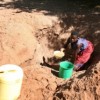
SOUTHERN AFRICA: Groundwater Still Underutilised
Despite the significant role groundwater could play in alleviating poverty, improving food security and contributing to overall development in Southern Africa, a lack of skills, finances and awareness of the resource means only a small percentage of the region's supplies are tapped into.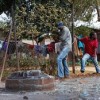
Q&A: Why Sanitation Is the Forgotten Sister
As part of the International Year of Sanitation in 2008, Zimbabwe developed a national strategy for sanitation, launched in February 2008. Just five months later, a cholera outbreak that was to claim over 4,000 lives began.ECONOMY-AFRICA: Economies Must Diversify, Reduce Focus on Mining
The global financial crisis has taught African governments a lesson. More than ever, they recognise the need to diversify their countries’ mining operations as a key defence against economic instability and cyclical swings.SWAZILAND: Donor Support For Health Sector Drying Up
As the global economic downturn begins to take its toll on developing countries, Swaziland's health system - already strained by the burden of HIV/AIDS - has come under severe threat. The third of the national health budget which comes directly from donor agencies is abruptly drying up.TRADE: EPA Signing Threatens Southern African Customs Union
Fears that accession to an economic partnership agreement (EPA) in Southern Africa will destroy regional integration seem to be coming true after Botswana, Lesotho and Swaziland (BLS) ignored a key provision of the Southern African Customs Union when they initialled their trade deal with the European Union last week.HEALTH-SOUTH AFRICA: Mental Illness in HIV-Positive Patients Largely Ignored
Although mental disorders, such as depression and dementia, are a commonly associated with HIV, they remain largely undiagnosed in South Africa. Lack of human and financial resources for mental health are the main reason for this, researchers say.SOUTH AFRICA: Wastewater Is a Resource
South Africa faces chronic water shortages, yet billions of litres are flushed away every year. Being one of the driest countries in the world, the conservation of water resources and managing wastewater should be a top priority for government.
POVERTY-ANGOLA: NGOs Sceptical of Govt’s Rural Development Plans
In an attempt to reduce rural poverty, Angola’s government plans to diversify its oil-focused economy by trying to restore the country’s once-booming agricultural sector.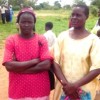
SOUTH AFRICA: Visa Waiver ‘‘Encumbering’’ Zimbabwean Trade
The South African government’s removal of visa requirements for Zimbabweans in April was aimed at easing entry for people still reeling from the crisis in Zimbabwe. But, for Alice Kakwindi, Grace Chimhosva and other cross-border traders, entering South Africa has subsequently turned into a nightmare.
ZAMBIA: Controversial Chinese Firm Given Another Copper Mine
The desperate need to find an alternative investor for the closed Luanshya Copper Mines (LCM) in Zambia’s Copperbelt has not prevented some Zambians from fiercely opposing the government’s decision to let Chinese-owned Non-Ferrous Metals Mining Company (NFCA) run the mine.ENERGY: South African Government Edging Towards Renewable Sources
South Africa is slowly moving towards exploring renewable energy sources, having set itself a target of three percent of energy being generated from renewable sources by 2013.
TRADE: COMESA on Track with Establishing Customs Union
Zimbabwe will finally host the 13th Common Market for Eastern and Southern African (COMESA) summit in the resort town of Victoria Falls in June where the regional grouping is expected to launch its customs union.TRADE: Southern Africa Still Kicking Against Controversial EPA
High-level talks at a Southern Africa Development Community (SADC) meeting in Gaborone last week failed to produce an agreement on the signing of the interim economic partnership agreement (EPA) with the European Union.
WATER-ANGOLA: Smart Relief Needed as Floodwaters Fall
The flood waters are starting to recede as the rainy season ends for another year, but while the emergency is over in southern Angola, the long term outlook is bleak.
Q&A: "A Threat to One is a Threat to All"
On May 24, one of the leading advocates of Africa's unity and liberation, Tajudeen Abdul Raheem, was killed in a car accident in Nairobi, Kenya.RIGHTS: More Calls to Ban Zimbabwe’s Blood Diamonds
Amid allegations of human rights abuses and government corruption, international calls are growing to ban or restrict the trade in diamonds from politically unstable Zimbabwe.ZIMBABWE: Long Road to Water Sustainability
As funds begin trickling in for Zimbabwe’s reconstruction efforts, the rebuilding of infrastructure battered by years of neglect is set to gobble a huge chunk.LESOTHO: Cultural Beliefs Threaten Prevention of Mother-Child HIV Transmission
A health centre in one of Lesotho’s poorest districts has scored significant success in implementing a prevention of mother-to-child HIV transmission (PMTCT) programme, but health experts warn that a number of factors, including cultural beliefs and stigma, threaten to derail it.
Q&A: Uncertainty of Hope: Portrait of Survival
Valerie Tagwira, a Zimbabwean doctor living in London, chose Operation Murambatsvina as the backdrop for her first novel, a painful story of domestic abuse, poverty and the fragility of survival in Zimbabwe's high-density suburbs.
ENVIRONMENT-TANZANIA: Villagers Fearful After Mine Water Discharged Into River
Water from a storage pond at Barrick Gold's North Mara mine in Tanzania is seeping through containing walls, leading local villagers to fear their water sources are contaminated.« Previous Page — Next Page »





The Week with IPS

NEXT STOP - SDGs
Tracking global progress towards a sustainable world
Tracking global progress towards a sustainable world
