Languages
Tuesday, November 10, 2026



News and Views from the Global South
Southern Africa
DEVELOPMENT-ZIMBABWE: Ground Realities Stall Basket Fund Take Off
In 2006, there was shared concern among donors and women’s organisations over the fragmented approaches to gender and women’s empowerment programmes in Zimbabwe.
POLITICS-ANGOLA: Some Parties More Equal Than Others
It seems like a playground game. Every day, Angola’s main opposition party sends teams out across Luanda to hang flags, posters and pictures of their leader Isaías Samakuva.RIGHTS-SWAZILAND: Women Challenge King Mswati
Hard on the heels of the signing of the Gender Protocol at the Southern African Development Community (SADC) heads of state summit, Swazi women have challenged King Mswati III on the monarchy's lavish lifestyle in the face of abject poverty and disease.SOUTH AFRICA: Rights Work Hampered by Closure Threat
The University of KwaZulu-Natal (UKZN) last week lifted a funding ban on its Centre for Civil Society (CCS) after national and international intellectuals protested loudly against the leftist centre’s potential closure. Yet, the uncertainty of the past few weeks has already impacted negatively on CCS’ operations.RIGHTS-ZIMBABWE: Hard Times Continue As Talks Drag On
There was jubilation at Gokwe Centre in Zimbabwe's Midlands province when the Herald newspaper published a story headlined "Deal Sealed" on August 13 - a clear indication of the hopes Zimbabweans have pinned on the deadlocked talks over power-sharing between ZANU-PF and the two MDC formations.RIGHTS-ZIMBABWE: Towards Parity For Women In Politics
In a highly contested election marred by violence and held under very difficult economic conditions, Zimbabwean women politicians defied the odds to participate as candidates in the March 29th elections.SOUTH AFRICA: Measuring the Carbon Footprint of Fruit and Wine
In an effort to stay competitive in a global market where increasing demands are made by consumers for 'green' products, South African fruit and wine farmers have launched an initiative to determine the environmental impact of their industries. The research could challenge the idea that exported products from the developing world have a higher environmental cost.
REFUGEES-ZAMBIA: Making a Home For Themselves
Zambia is home to over 90,000 refugees, many of whom have been in the country for up to 15 years. A voluntary repatriation programme is now drawing to a close, but many of the refugees will likely remain in a country where they have established themselves.
DEVELOPMENT-ZAMBIA: Sharing the Copper Windfall
Australian mining giant Equinox Minerals is developing the Lumwana Copper Mine (LCM) to take advantage of strong prices for copper on the international market. When it opens later this year, the mine will be the largest in Africa, but critics say Zambia's share of the profits of minerals is smaller than it should be.
ZIMBABWE: Farmers Can't Afford to Leave Markets – Literally
It is a wintry Tuesday evening at one of the tobacco auction floors in the Zimbabwean capital Harare. A group of small-scale tobacco farmers are preparing food for the night.POLITICS-SOUTHERN AFRICA: Ground-breaking Gender Protocol Signed
Gender activists breathed a sigh of relief when a long-delayed gender protocol was signed at the Southern African Development Community (SADC) summit this weekend. Women bear the brunt of social injustice and problems on the African continent, ranging from access to clean water, poor health care, access to economic opportunities or adequate protection before the law.
POLITICS-ZIMBABWE: Civil Society Demands More From Talks
A barrage of banners denouncing Zimbabwe president Robert Mugabe greeted passersby in the well-manicured gardens of Johannesburg's Sandton Convention Centre, where that country's political crisis is high on the agenda of the Southern African Development Community (SADC) summit.
POLITICS-SOUTHERN AFRICA: SADC Summit Under Way
A free trade agreement is one of the main points on the agenda at the Southern African Development Community (SADC) summit presently under way in Johannesburg, South Africa. The summit will also discuss political problems in Zimbabwe, Malawi and Lesotho and consider protocols on gender and poverty eradication.ZIMBABWE: No Joy As Talks Drag On
As Zimbabwe's tripartite talks dragged on this week, the public remained in the dark about progres. Frustration is running high on the streets as protracted talks could mean further tough times ahead as the economy continues its free fall.
DEVELOPMENT-AFRICA: Retailer Creates Jobs With Green Practices
Seven years ago, 54 subsistence farmers in the Umbumbulu district on the KwaZulu-Natal coast of South Africa were struggling to feed their families. They could barely pay their children’s school fees.
POLITICS-ANGOLA: Ambitious Plans For Women's Participation
Nearly a third of candidates in Angola's upcoming parliamentary elections are female, thanks to a new quota imposed by the government. The 30 percent rule was designed to bring more women into the country's parliament, but as campaigning gets under way, women continue to stay in Angola's political shadows, barely visible at rallies and with few holding senior party positions.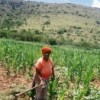
SOUTHERN AFRICA: Digging for Hope in Land Reform
Through the difficulties facing the land reform process in Zimbabwe, South Africa and Namibia, glimmers of hope are emerging. The challenge now is to seek lessons which enable newly settled farmers to create a livelihood.
TRADE: Malawi Still Hopeful That Investment Will Come
Malawi is on the prowl to extend its trade connections to different corners of the world, west and east. The small southern African country is hoping foreign investment will help it to become a producer and exporter rather than a consumer and importer economy, as is presently the case.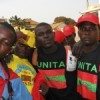
POLITICS-ANGOLA: Test of Lasting Peace – Campaigning Begins
Angola may not have had an election for 16 years, but it certainly knows how to campaign.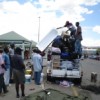
TRADE-SOUTHERN AFRICA: Great Expectations For Expanded Customs Union
A top businessperson and some economists in Namibia are optimistic that the proposed Southern African Development Community (SADC) Customs Union will break down trade barriers in the region and create competition that will benefit the ordinary consumer.EDUCATION-ZAMBIA: Will Teachers Come To the Party?
"Life in the rural areas is unbearable, and teachers are not to blame for their refusal to take up rural posting. It is unfair for government to post young teachers to hard-to-reach rural areas," said Freddie Chongo (25), a primary school teacher in Mumbwa District, some 170 kilometres west of Zambia’s capital Lusaka.« Previous Page — Next Page »





The Week with IPS

NEXT STOP - SDGs
Tracking global progress towards a sustainable world
Tracking global progress towards a sustainable world
