Languages
Monday, October 12, 2026



News and Views from the Global South
Sustainable Development Goals (SDGs)

Asia Looks to Innovation to Achieve Sustainability
Innovation in the fields of renewable energy, food production, water conservation, education and health will be crucial for the developing economies of Asia to meet the United Nations’ Sustainable Development Goals (SDGs).
Op-Ed: Overcoming the Twin Hurdles of Inequality and Climate Change
Two major injustices – inequality and climate change – are threatening to undermine the efforts of millions of people to escape poverty and hunger.
In Developing World, Pollution Kills More Than Disease
Pollution, not disease, is the biggest killer in the developing world, taking the lives of more than 8.4 million people each year, a new analysis shows. That’s almost three times the deaths caused by malaria and fourteen times those caused by HIV/AIDs. However, pollution receives a fraction of the interest from the global community.
Q&A: “Some Individuals Are Now as Wealthy as Entire Countries”
As it turns 50, the United Nations Conference on Trade and Development (UNCTAD) finds itself engaged in an ongoing struggle to reduce economic and social inequalities in the world.
Op-Ed: First Decolonisation, Now ‘Depatriarchilisation’
At the end of this week leaders of the Group of 77 and China will meet in Bolivia to commemorate the 50th anniversary of the group.
Civil Society Wants More Influence in New Development Agenda
Making international cooperation more effective requires a civil society with greater influence in the negotiations of the development agenda that the world’s governments are to adopt in 2015, civil society representatives said at an international meeting in Mexico.
WTO: Stingy with the Poor, Generous with the Rich
A fight taking place in the World Trade Organisation (WTO) negotiations towards the Bali Ministerial Conference shows how the rules on agriculture allow developed countries to continue to shell out huge subsidies while penalising farmers in developing countries.
World Bank, IMF Link Urbanisation with Development
Two of the world’s largest multilateral institutions have released new data linking greater urbanisation with higher levels of human development, and are announcing that they will place greater priority on issues of urbanisation in coming decades.
Q&A: Innovation Key to Sustainable Development Goals
Innovation, as the fruit of science and technology, will play a fundamental role in the Sustainable Development Goals that could go into effect in 2015, says Néstor Osorio, president of the United Nations Economic and Social Council.
Rio Summit’s Legacy Still a Question Mark
Academics gathered in Washington on Wednesday suggested that the mixed experience at the U.N. Conference on Sustainable Development, held in Rio de Janeiro in June, has increased the importance of citizen engagement and consumer accountability in issues of environment, renewable energy and sustainability.
OP-ED: Women and Girls at Heart of the Blue Revolution
World Water Week recently concluded in Stockholm with a special emphasis on the linkages between water and food security.
Women Spend 40 Billion Hours Collecting Water
As the weeklong international conference on water concluded Friday, it was left to one of the keynote speakers from the United Nations to focus on a much neglected perspective on water and food security: the role of women.
Africa Must Earn Its Climate Change Adaptation Finance
With the United Nations Climate Change Conference less than four months away, African countries need to present convincing arguments and successful adaptation projects to attract competitive funding for adjusting to changes in global weather patterns, climate finance experts say.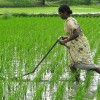
New Set of Sustainable Development Goals Looks Beyond 2015*
When world leaders from over 100 countries wind up their three-day Rio+20 summit in Brazil next week, they will leave behind the shattered remains of a slew of proposals that never got off the ground.
Rio+20: Concrete Goals the Only Recipe for Success
Goals drive action, and that's why establishing a set of Sustainable Development Goals is so important to put the world on a sustainable pathway, experts said Saturday under the tropical fig and palm forest that covers much of the ground at the Pontifical Catholic University of Rio de Janeiro.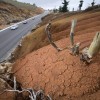
“Land Is Our Ally, But Its Patience Is Not Eternal”
Land degradation poses a threat to all life on Earth including humanity. To stop the enormous loss of life-giving land, the United Nations Convention to Combat Desertification (UNCCD) is pushing for a sustainable development goal of Zero Net Land Degradation (ZNLD) to be adopted at the upcoming Conference on Sustainable Development, known as Rio+20, in Brazil.« Previous Page





As world leaders look towards a world development agenda beyond 2015, they are faced with unfinished business in poverty eradication, education, gender equality and health. While some countries have made strides towards the Millenium Development Goals and managed to foster equitable growth, a trend of rising inequality within countries continues to accompany economic development. IPS reporting exposes progress and setbacks of the current MDGs and the preparation of a new post-2015 development agenda.

The Week with IPS

NEXT STOP - SDGs
Tracking global progress towards a sustainable world
Tracking global progress towards a sustainable world
