Languages
Friday, September 18, 2026



News and Views from the Global South
Syria

Syrian Refugees Face Hunger Amidst Humanitarian Funding Crisis
The United Nations’ food aid organisation, the World Food Programme (WFP), said on Jul. 1 that up to 440,000 refugees from war-torn Syria might have to go hungry if no additional funds are received by August.
Israel’s Deadly Game of Divide and Conquer Backfiring
Israel’s deadly game of divide and conquer against its enemies could be coming home to roost with a vengeance, especially as the Islamic State (ISIS) grows in strength in neighbouring countries and moves closer to Israel’s borders.
Germany’s Asylum Seekers – You Can’t Evict a Movement
In a move to take their message of solidarity to refugees across the country and calling for their voices to be heard in Europe’s ongoing debate on migration, Germany's asylum seekers have taken their nationwide protest movement for change on the road under the slogan: “You Can't Evict a Movement!”.
The U.N. at 70: Is It Still Fit for the Purpose?
Events are being organised around the world to celebrate the 70th anniversary of the founding of the United Nations, but a recent seminar held in the Austrian capital was not held to applaud the body’s past contributions.
Analysis: Global Politics at a Turning Point – Part 2
In the following months, reports of the use of chemical weapons by Syrian forces multiplied. The most serious was an allegation that the Syrian army had used sarin gas on Mar. 19, 2013 at Khan al Assal, north of Aleppo, and in a suburb of Damascus against its opponents. This was followed by two more allegations of small attacks in April.
Analysis: Global Politics at a Turning Point – Part 1
President Barack Obama’s Nowroz greeting to the Iranian people earlier this year was the first clear indication to the world that the United States and Iran were very close to agreement on the contents of the nuclear agreement they had been working towards for the previous 16 months.
Opinion: The West and Its Self-Assumed Right to Intervene
The ‘West’ is a concept that flourished during the Cold War. Then it was West against East in the form of the Soviet empire. The East was evil against which all democratic countries – read West – were called on to fight.
Opinion: Arab Youth Have No Trust in Democracy
The results of a survey of what 3,500 young people between the ages of 18 and 24 – in all Arab countries except Syria – feel about the current situation in the Middle East and North Africa have just been released.
U.N. Helpless as Crises Rage in 10 Critical Hot Spots
The United Nations is fighting a losing battle against a rash of political and humanitarian crises in 10 of the world’s critical “hot spots.”U.N. Secretary-General Calls for International Unity on Yemen and Syria
"Political negotiations, not military intervention, are the solution" said United Nations Secretary-General, Ban Ki-moon, on the rapidly deteriorating conflict situation in Yemen and recent developments in Syria at the Yarmouk refugee camp.At Least 18 Already Killed in Yarmouk Attacks: Amnesty International
At least 18 civilians have already been killed in the attack on the Syrian refugee camp of Yarmouk, according to Amnesty International.Situation in Besieged Yarmouk Camp ‘One of the Most Severe Ever’
The head of the United Nations agency for Palestinian refugees has described the situation inside the Syrian refugee camp of Yarmouk, under attack by Islamic State (IS) militants, as “one of the most severe ever” for the already spartan camp.
Recycling Revives Art of Glass-Blowing in Lebanon
In the Khalife workshop, in the southern coastal village of Sarafand, four men stand beside an oven, fixed in concentration despite the oppressive temperature. Blowing through a long tube, one of the group carefully shapes white-hot melted glass into a small ball, while two others coax it into the form of a beer glass. The fourth, the veteran of the group, cuts off the top of the glass, creating an opening from which beer will one day flow.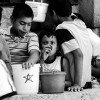
U.N.’s Next Stop: Humanitarian Summit to Resolve Exploding Refugee Crisis
As the world's spreading humanitarian crisis threatens to spill beyond the borders of Syria and Iraq into Libya and Yemen, the United Nations is already setting its sights on the first World Humanitarian Summit scheduled to take place in Istanbul next year.
Pledges for Humanitarian Aid to Syria Fall Short of Target by Billions
When United Nations Secretary-General Ban Ki-moon stood before 78 potential donors at the Bayan Palace in Kuwait Tuesday, his appeal for funds had an ominous ring to it: the Syrian people, he remarked, "are victims of the worst humanitarian crisis of our time."
U.N. Staffers Caught in Deadly Crossfire in Ongoing Conflicts
The deadly Syrian military conflict - now entering its fifth year - which has claimed the lives of over 200,000 mostly civilians, including women, children and aid workers, has not spared the United Nations either.
Cash-Strapped U.N. to Seek Funds for Syria at Pledging Conference in Kuwait
A cash-strapped United Nations, which is struggling to reach out to millions of Syrian refugees with food, medicine and shelter, is desperately in need of funds.
“My Number Was Six”
 Outwardly, Feras Fayyad is stoic in face of the immense turmoil both he and his country are going through. All of 30 years old, Fayyad, who runs Sout Raya, a radio station in Turkey, exudes calm. His voice is almost soothing.
Opinion: Foreign Policy is in the Hands of Sleepwalkers
The United Kingdom has been accused of “sleepwalking” into the Ukraine crisis – and the accusation comes from no less than the House of Lords, not usually considered a place of critical analysis.
Veto Costs Lives as Syrian Civil War Passes Deadly Milestone
As the long drawn-out Syrian military conflict passed a four-year milestone over the weekend, the New York-based Global Centre for the Responsibility to Protect (R2P) summed it up in a striking headline: 4 years, 4 vetoes, 220,000 dead.
Humanitarian Aid Under Fire Calls for New Strategies
In the face of the growing number of crises taking place at the same time worldwide, humanitarian aid organisations – many of which have already reached their financial and logistic limits – are in desperate need of global coordination.« Previous Page — Next Page »


The Week with IPS

NEXT STOP - SDGs
Tracking global progress towards a sustainable world
Tracking global progress towards a sustainable world
