Languages
Thursday, October 15, 2026



News and Views from the Global South
Active Citizens
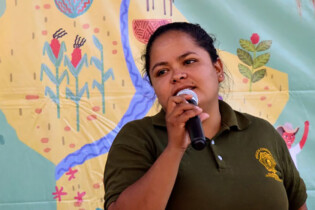
Kenia Hernández: Indigenous Rights Defender Imprisoned for Her Activism
Kenia Hernández is an Indigenous Mexican lawyer and human rights defender dedicated to advancing women’s rights and social justice.
Crisis and Opportunity at the UN
At this year’s highest-profile UN event, Donald Trump publicly mused over his ‘big decision’ about whether to ‘annihilate’ Iran. Israeli Prime Minister Benjamin Netanyahu, as dozens of delegates walked out, branded those who condemn genocide in Gaza ‘moral cowards’.
When Medicine Becomes a Tool for Torture: The Hidden Role of Medical Personnel in Russian Captivity
Medicine is supposed to protect human life and dignity. Yet testimonies from Ukrainians released from Russian captivity reveal a disturbing reality: medical personnel in places of detention have not only denied prisoners necessary treatment but, in documented cases, participated in torture and ill-treatment.
Sweden’s Far Right Falters
Four years ago, Sweden’s far right became the power behind a right-wing government. This time, it expected further gains and cabinet seats. But voters turned against it. In the 13 September general election, support for the far-right Sweden Democrats fell for the for the first time in the party’s history. Four days later, Prime Minister Ulf Kristersson resigned, leaving the way clear for the centre-left Social Democrats to negotiate a coalition. But the Sweden Democrats’ defeat will prove hollow if the next government maintains the hostility towards migrants that has come to characterise Sweden’s politics.
Renewables, Farmer Aggregation Offer Solutions to Africa’s Post-Harvest Losses
Post-harvest losses, particularly in rural areas, threaten the gains Africa is making in agricultural production and export capacity.
SUDAN: ‘It’s Shocking to Be Forced into Silence Simply Because You Are a Refugee’
CIVICUS discusses life as a refugee with an exiled Sudanese civil society activist who has asked to remain anonymous for security reasons.

How to Protect Coastal Communities From Tide-Related Loss and Damage in Bangladesh
Villagers rush to the vulnerable spot of the embankment—early warning of the rising tide has alerted them. Together, they save the village from tidal flooding by repairing the vulnerable embankment, which is at risk from the impact of low pressure in July this year. The message is clear: early warnings of the rising tide save lives and property.
BRICS: Growing Ambition, Zero Accountability
At the 18th BRICS Summit, held on 12 and 13 September in New Delhi, India’s Prime Minister Narendra Modi brought together presidents Xi Jinping of China, Vladimir Putin of Russia and Masoud Pezeshkian of Iran, along with Abu Dhabi’s Crown Prince, Sheikh Khaled bin Mohamed bin Zayed, representing the United Arab Emirates (UAE). Around the table sat longstanding rivals such as India and China and, in the case of Iran, Saudi Arabia and the UAE, states on opposite sides of an ongoing war. That the summit produced a joint declaration every member could sign was a modest multilateralist success.
BRAZIL: ‘Resistance Is Intergenerational, and Art Is How Energy Gets Renewed’
CIVICUS discusses the role of art in climate and rights struggles in the Brazilian Amazon with Tom Wheeler, executive director and co-founder of Treesistance. Treesistance is a platform operated by the Netherlands-based Sinchi Foundation that partners with Indigenous communities across four Brazilian states on cultural preservation and forest protection.
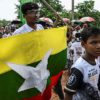
Myanmar: Corporate Complicity in the Spotlight
On 15 September, Norwegian police and security services raided the headquarters of Telenor in Oslo. Authorities accuse the multinational telecoms company, majority owned by the Norwegian state, of aiding and abetting crimes against humanity in Myanmar and breaching sanctions.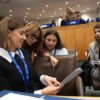
From Commitments to Action: Centering Lived Experience in NCD Responses
On September 21, just prior to the opening of the United Nations General Assembly Debate (UNGA81), the NCD Alliance held its fifth Multi-stakeholder Gathering, “Strategies for a Sustainable NCD and Mental Health Response,” during the UN High-level Week.
AI-Driven Climate Change Pushes Frontline Communities Further Into Environmental Degradation and Poverty
On September 21, Frontline Resource Institute (FRI) hosted its Climate Justice Hub at Fordham University at Lincoln Center in New York City under the theme “Building a Stronger Climate Coalition.”
From Vienna to New York: Nuclear Governance Faces New Tests Ahead of First TPNW Review Conference
The international nuclear order is facing another test as governments move from an inconclusive review of the Nuclear Non-Proliferation Treaty (NPT) in New York to renewed disputes over safeguards and nuclear security in Vienna—and toward the first Review Conference of the Treaty on the Prohibition of Nuclear Weapons (TPNW) later this year.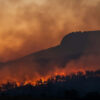
The Overlooked Fast Track for Cutting Planetary Warming
Among the three of us, we have 15 decades of high-level experience in climate science, policies and actions, and we have never been more alarmed than we are at this moment. The United Nations has just officially declared that the world has failed in limiting global warming to a safe level. During the last decade, heat-trapping pollutants nearly doubled the rate that heat is being added to the planet—a rate that will push temperatures across the 1.5°Celsius threshold in five years or less and breach the first barrier of the Paris Agreement. This will further destabilize natural climate systems and amplify weather extremes, which are already costing the world economy more than $ 2 trillion annually. At the current rate of warming, the global temperature is likely to cross 2° Celsius in about 15 years, the outer limit of the Paris Agreement, taking us into a climate not witnessed by homo sapiens, ever.
IRAQ: ‘Art Is the Only Weapon That Doesn’t Hurt or Kill’
CIVICUS discusses public art, gender-based violence and censorship in Iraqi Kurdistan with Tara Abdullah, a multidisciplinary visual artist from Sulaymaniyah who is currently based in Oslo, Norway as part of the Safemuse – Safe Havens for Artists residency.
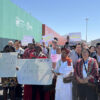
What Isn’t Named Isn’t Protected and being Named Isn’t Enough
Rightsholders came to Ulaanbaatar from across the world, carrying declarations, demands and years of experience defending the lands on which their communities depend. Indigenous Peoples, local communities, Afro-descendant Peoples, women and youth were equally clear about what they needed from COP17. But being in the room is not the same as having power in the room.
Life-Changing Humanitarians Empower Women Against Violence in Papua New Guinea’s Highlands
In the remote Highlands region of Papua New Guinea (PNG), humanitarians are life-saving beacons to women and girls facing myriad forms of violence. Despite years of awareness programmes and advocacy, the incidence of domestic and sexual violence is not declining. But Janet Kilea is one survivor who has rejected the fear and stigma of her experience and now dedicates her energy to transforming other women’s lives.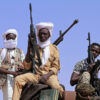
Sudan: Blood on Foreign Powers’ Hands
Sudan’s civil war grinds on. It’s close to three and a half years since the Sudanese Armed Forces (SAF) and the Rapid Support Forces (RSF) militia began their battle for supremacy, and the two forces and their allies continue to slaughter civilians with impunity. As a recent UN report makes clear, the killing is enabled by numerous foreign powers that continue to supply weapons, personnel and logistical support. They have made a civil conflict their proxy war, and their self-interest is sustaining the killing.
ETHIOPIA: ‘Reporting on Abuses Shouldn’t Be Treated as a Threat to National Interest’
CIVICUS discusses renewed conflict and a growing crackdown on independent media in Ethiopia with Yonas Kedir, Editor-in-Chief of the independent news outlet Addis Standard, who was recently abducted and detained by government forces.

Killing of Environmental Defenders Reflects Power Struggle Over World’s Resources
At least 124 land and environmental defenders were killed around the world in 2025 while protecting forests, rivers, farmland and Indigenous territories, according to a new report by Global Witness that warns violence against activists remains widespread even as recorded killings have declined from previous years.
One Man’s Quest to End Female Genital Mutilation (FGM) in Mali
In Mali, an estimated nine out of ten women and girls have undergone female genital mutilation (FGM). And for years, Sidi Haidara, a father and recognized leader in his community, believed the practice was simply part of life.Next Page »





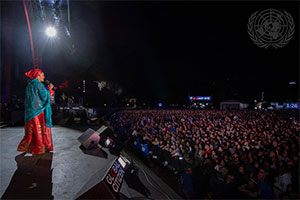 Global Citizen Festival in New York. Credit: UN Photo/Eskinder Debebe
Active citizens are committed to social change because they know that it is achievable. However, major political challenges face active citizens across the world. For example, in authoritarian regimes in Latin America where the hegemonic party has been in power for decades on end, protestors and human rights activists face enormous repression and struggle to materialize their advocacy into concrete results. The same can be said for Africans, where a shift towards elected government in recent decades has yet to translate into an effective voice in decision-making. Now, the Strengthening Citizen Demand for Good Governance, which uses evidence-based approaches – funded by DFID's Governance and Transparency Fund – seeks to raise their voices.
In 2025, the CIVICUS Monitor’s People Power Under Attack report revealed that civic freedoms are severely limited in 122 of 198 countries and territories, and only 7.2% of the global population now lives in countries where civic space is open. Through partnership with the Overseas Development Institute (ODI) and CIVICUS, IPS reporters across the continent will seek to define the extent and limits of state capability, government accountability and the responsiveness of leaders to the needs of citizens.

The Week with IPS

NEXT STOP - SDGs
Tracking global progress towards a sustainable world
Tracking global progress towards a sustainable world
