Languages
Saturday, October 10, 2026



News and Views from the Global South
Featured
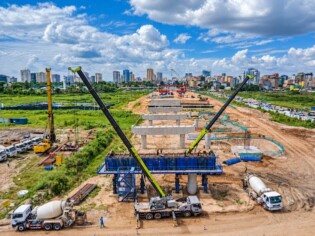
Tanzania’s Biggest City Bets on Elevated Bridge to Dodge Chronic Flooding
Each morning on her way to Kariakoo, Clementina Nyangwine looks out of her commuter bus as it crawls through Jangwani and watches giant foundation piles rising above the muddy Msimbazi valley.
How AI-Powered War Drives the Critical Minerals Race
The demand for critical minerals is accelerating as world powers scramble to stay on top of emerging technologies. Meanwhile, the environment and frontline communities are paying a steep price.
A Rash of Hard-Hitting Questions—Which May Remain Evasive–for Candidates Running for UN Chief
The seven candidates, still in the running for the post of UN Secretary-General (SG), have so far faced a barrage of questions, mostly from delegates and the news media.
Ukrainian Groups Urge WHO to Act on Torture of Captives by Russian Medical Staff
More than 60 Ukrainian organisations have issued an appeal to the World Health Organisation (WHO) to help stop the torture of Ukrainians held in Russian captivity.
Prioritize Multilateralism to Resolve Iran War Deepening Humanitarian Crisis, Says OSF Vice President
Seven months into the Iran War, threats of further military escalation and stalled efforts to reopen the Strait of Hormuz have heightened fears of worsening humanitarian suffering and wider regional instability.
Workers Help Feed the World but Starved of Dignity
A new report reveals widespread labour exploitation among food system workers, warning that keeping the world fed comes at the cost of human dignity.
Sweden’s Far Right Falters
Four years ago, Sweden’s far right became the power behind a right-wing government. This time, it expected further gains and cabinet seats. But voters turned against it. In the 13 September general election, support for the far-right Sweden Democrats fell for the for the first time in the party’s history. Four days later, Prime Minister Ulf Kristersson resigned, leaving the way clear for the centre-left Social Democrats to negotiate a coalition. But the Sweden Democrats’ defeat will prove hollow if the next government maintains the hostility towards migrants that has come to characterise Sweden’s politics.
Climate Change Is Becoming a Pregnancy Hazard Worldwide, Survey Finds
Extreme heat is increasingly threatening pregnant women and newborn babies around the world, with almost all maternal health professionals surveyed across five continents saying they have cared for women or infants whose health was affected by high temperatures.
Renewables, Farmer Aggregation Offer Solutions to Africa’s Post-Harvest Losses
Post-harvest losses, particularly in rural areas, threaten the gains Africa is making in agricultural production and export capacity.
For Pakistan Rising Fistula Cases Make SDG 3 Goal Elusive
“You’re living a life drained of joy,” is how Shehnaz Sher Ali describes her “perpetually wet and stinky” existence. “I wouldn’t wish it on my worst enemy,” says the 35-year-old, who travelled by bus for more than 12 hours with her husband from their village in Rahim Yar Khan, Punjab, changing diapers whenever possible to keep the smell from reaching the fellow passengers.
SUDAN: ‘It’s Shocking to Be Forced into Silence Simply Because You Are a Refugee’
CIVICUS discusses life as a refugee with an exiled Sudanese civil society activist who has asked to remain anonymous for security reasons.

How to Protect Coastal Communities From Tide-Related Loss and Damage in Bangladesh
Villagers rush to the vulnerable spot of the embankment—early warning of the rising tide has alerted them. Together, they save the village from tidal flooding by repairing the vulnerable embankment, which is at risk from the impact of low pressure in July this year. The message is clear: early warnings of the rising tide save lives and property.
New Ocean Report Warns of Rising Seas, Ocean Heat and Acidification
Fatuma Makame learned to farm seaweed in the shallow water where her parents worked. These days, she grows it farther from shore.
BRICS: Growing Ambition, Zero Accountability
At the 18th BRICS Summit, held on 12 and 13 September in New Delhi, India’s Prime Minister Narendra Modi brought together presidents Xi Jinping of China, Vladimir Putin of Russia and Masoud Pezeshkian of Iran, along with Abu Dhabi’s Crown Prince, Sheikh Khaled bin Mohamed bin Zayed, representing the United Arab Emirates (UAE). Around the table sat longstanding rivals such as India and China and, in the case of Iran, Saudi Arabia and the UAE, states on opposite sides of an ongoing war. That the summit produced a joint declaration every member could sign was a modest multilateralist success.
Strategic Blindness at UNGA 81: “Super Intelligence” and “Killer Robots” Take Center Stage as Women’s Rights Take a Back Seat
“Artificial intelligence (AI) must be shaped by humanity, with humanity, and for all humanity... Life-and-death decisions must never be surrendered to machines. Killer robots must have no place in our future.”
Fragmented Policies Hold Back Agroecology Adoption in Africa’s Congo Basin
Agricultural, land, forestry, environmental and trade policies in the Congo Basin remain compartmentalised at country levels, leaving proven agroecological models trapped at pilot stages due to a lack of advisory services, organic inputs, market outlets and sustainable financing.
Overshoot of Paris Agreement and the Looming Super El Niño Drive Urgent Calls for Global Climate Action at UNGA 81
The United Nations 2026 Climate Summit addressed critical strategies to mitigate the compounding impacts of the climate crisis and accelerate progress toward the Sustainable Development Goals (SDGs).
Rohingya Camps: Children in Frontline of Food Rationing Crisis
For Mohammed Dullah, recent cuts in UN food rations for Rohingya and other refugees in Bangladesh are not just spreading hunger but also forcing them to save on basic needs such as schooling and healthcare for his children.
BRAZIL: ‘Resistance Is Intergenerational, and Art Is How Energy Gets Renewed’
CIVICUS discusses the role of art in climate and rights struggles in the Brazilian Amazon with Tom Wheeler, executive director and co-founder of Treesistance. Treesistance is a platform operated by the Netherlands-based Sinchi Foundation that partners with Indigenous communities across four Brazilian states on cultural preservation and forest protection.

Nepal’s Devastating Floods Have Put Women and Girls at Greater Risk
On August 26, 2026, deadly flash floods and landslides ripped through Himalayan towns and villages along Nepal and Tibet’s border, devastating communities. The United Nations estimates that in Nepal’s worst-affected districts of Rasuwa and Nuwakot, 157,050 women and girls are directly or indirectly impacted.
Myanmar: Corporate Complicity in the Spotlight
On 15 September, Norwegian police and security services raided the headquarters of Telenor in Oslo. Authorities accuse the multinational telecoms company, majority owned by the Norwegian state, of aiding and abetting crimes against humanity in Myanmar and breaching sanctions.Next Page »





The Week with IPS

NEXT STOP - SDGs
Tracking global progress towards a sustainable world
Tracking global progress towards a sustainable world
