Languages
Thursday, July 2, 2026



News and Views from the Global South
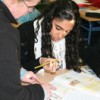
Crisis Hits Spain’s Roma Hard
Daniel introduces himself as a “gypsy and guitarist,” Francisco José wants to become a doctor, Yomara timidly says she likes to cook, and María has no idea what she wants to study.
Tunisia Gears Up to Host World Social Forum
Following in the wake of the wave of revolutions dubbed the ‘Arab Spring’, which originated here nearly two years ago, North Africa is gearing up to host the World Social Forum (WSF) for the first time.Economic Reforms in Cuba Require Decentralisation
The social and economic model that is taking shape in Cuba based on changes gradually being implemented require reforms for strengthening and giving greater autonomy to local government bodies, which began to be renewed in October with the election of new municipal assembly members.China’s Tops in South African Trade
South Africa has experienced a significant shift in trade with a new emphasis on links with developing nations, at the expense of traditional partners in the developed world, according to a leading South African economist.
Critics Brand Climate Talks Another Lost Opportunity
Rich countries came to the U.N. climate talks in Doha intent on delaying needed action on climate change for another three years and a still to be hammered out new global treaty.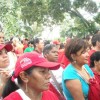
Chávez Names Civilian Heir for Sake of Unity
Nicolás Maduro, the Venezuelan vice president and foreign minister, has been announced by President Hugo Chávez as his political successor. Many analysts view this as a specific call for party unity, and a preference for a civilian over a former military leader.
Developing World to Overshadow the West by 2030, Study Says
A major new long-range report by the U.S. intelligence community suggests that the U.S. economy, currently the world’s largest, could be eclipsed by China’s by 2030.Off the Blacklist Doesn’t Imply Improvement in Human Rights in Colombia
Colombia will be removed from the Inter-American Commission on Human Rights “blacklist” next year. In exchange, the government of Juan Manuel Santos facilitated a visit to the country by a delegation from the Commission.
Haitian Community Radio Reopens After Protests
A community radio station silenced by Haitian authorities is open again thanks to the mobilisation of other stations as well as organisations and associations both inside and outside of Haiti.
Longer Lives, Lower Incomes for Japanese Women
When Hiroko Taguchi retired this past April, at the age of 64, from her job as an insurance sales agent, she joined the rapidly growing ranks of Japan’s aging women who now outnumber their male counterparts.Syria Rebels “Seize Key Aleppo Army Base”
Syrian rebels have captured parts of a large army base in the country's north, just west of the city of Aleppo, activists say.
The Civilian Toll of Israel’s Bombs
When Israeli bombs struck the Abu Khadra complex for civil administration, they also gutted the sixth floor of the Abu Shabaan complex, located ten metres across the road. According to the Palestinian Centre for Human Rights (PCHR), eight Israeli warplane-fired bombs levelled roughly half of the government compound in eastern Gaza City in the early hours of Nov. 21.
Brazilian Firms Bring Water and Power to Angolans
The Kwanza river in the heart of Angola will be a symbol of Brazilian partnership in African development when power stations along the country's main source of water are fully operational.Chávez Names Civilian Heir for Sake of Unity
Nicolás Maduro, the Venezuelan vice president and foreign minister, has been announced by President Hugo Chávez as his political successor. Many analysts view this as a specific call for party unity, and a preference for a civilian over a former military leader.
Q&A: Making Toilets Fashionable
When the founder of the World Toilet Organisation Jack Sim turned 40, he literally began counting how many more days he had to live and felt a sense of urgency to do meaningful things with the remainder of his life.
Chávez Names Civilian Heir for Sake of Unity
Nicolás Maduro, the Venezuelan vice president and foreign minister, has been announced by President Hugo Chávez as his political successor. Many analysts view this as a specific call for party unity, and a preference for a civilian over a former military leader.
Doha Climate Summit Ends With No New CO2 Cuts or Funding
The United Nations climate talks in Doha went a full extra 24 hours and ended without increased cuts in fossil fuel emissions and without financial commitments between 2013 and 2015.Ecobreves – CHILE: Approval of Thermoelectric Plant Sparks Protest
Environmental organizations in Chile have expressed outrage over the ministerial approval granted for the construction of the Punta Alcalde thermoelectric power plant in the municipality of Huasco, 645 km north of Santiago.Ecobreves – HONDURAS: In Search of Greater Transparency in the Extractive Industries
The World Bank will be advising Honduras on the requirements to join the Extractive Industries Transparency Initiative (EITI).Ecobreves – BRAZIL: Researchers Preserve Genes of Threatened Amazon Monkeys
Researchers at the Federal University of Pará in Brazil are collecting and storing genetic material from monkeys in the genus Saimiri, commonly known as squirrel monkeys, to prevent the extinction of a sub-species endemic to the Amazon rainforest.
Peruvian Indigenous Communities Take Charge of Environmental Monitoring
They work with the precision of technicians and the enthusiasm of volunteers. They are indigenous inspectors documenting the damages caused by oil industry activity in three river basins in the Peruvian Amazon region.« Previous Page — Next Page »


The Week with IPS

NEXT STOP - SDGs
Tracking global progress towards a sustainable world
Tracking global progress towards a sustainable world
