Languages
Monday, July 27, 2026



News and Views from the Global South

Livestock – Opportunity and Threat for a Sustainable Latin America
Stockbreeding generates enormous profits in Latin America, but it also has a broad and varied impact on the environment, which means it must urgently be turned into a sustainable, green-friendly, socially accepted and profitable activity.
U.S. and China Formally Join Paris Agreement in Show of Unity
The world’s super-polluters - the United States and China - have formally joined the Paris Agreement on climate change in a symbolic show of unity.
Elephant Census Ramps Up Pressure to Stop Domestic Trade in Ivory
A dramatic decline in Africa’s savanna elephant populations caused by poaching - as exposed by the results of a three-year aerial survey released this week - has piled pressure on reluctant governments to back proposals that would lead to bans on domestic trade in ivory.
At the Nexus of Water and Climate Change
With the clock counting down towards the November climate summit in Marrakech, Morocco, where parties to the climate treaty agreed in Paris will negotiate implementation, it's clear that managing water resources will be a key aspect of any effective deal.
The Future Generations are Losing their Entitlement
The world is demographically lopsided more than ever before: old people are concentrated in the rich countries, and the rest of the world is crowded with the young. Whoever said that the young shall inherit the earth must think again. As nations get more affluent, their populations also get more aged. In an increasingly prosperous world, the future generations are losing entitlement.
Advocating Kashmir
PAKISTAN is soliciting world support for its stance on the current situation in Kashmir. Pakistan’s stance is superior to India’s in terms of law, human rights and the wishes of the majority in the occupied Valley of Kashmir — which happens also to be the majority in India-held Kashmir. The enduring but as yet unexercised right of self-determination of the people of the whole of the former Jammu and Kashmir through a plebiscite is based on resolutions of the UN Security Council.
Yemen’s Children Deserve Better
In Yemen, conflict, violence, and bloodshed are now a daily occurrence. In spite of ongoing human rights violations global media outlets have chosen to take a back seat and remain silent. Why has the grave severity of Yemen’s rising conflict been kept in the shadows rather than exposed as a recurrent headline?
Dire Warnings But Also Hope as IUCN Environmental Congress Opens
A congress billed as the world’s largest ever to focus on the environment has opened to warnings that our planet is at a “tipping point” but also with expressions of hope that governments, civil society and big business are learning to work together.
Rich Countries Should Take Development Goals Seriously Too
The UN’s new Sustainable Development Goals apply to all 193 UN member states, yet one year in some say that rich countries aren’t taking their critical role quite as seriously as they should be.
Rousseff’s Ouster Won’t Clear Up Uncertainty in Brazil
The dismissal of now ex-president Dilma Rousseff brings to a close a turbulent chapter of Brazil’s crisis, but does nothing to clear up the doubts that threaten the political system and the economy of Latin America’s powerhouse.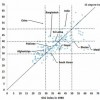
Cross-country Differences in Income Inequality – Where do South Asian Countries Stand?
In recent years, there has been a growing interest among general people, researchers and policymakers in income inequality, its causes, and its effects. The most popular index of income inequality is the 'Gini index', which measures the inequality among levels of income of the people of any country. A Gini coefficient of zero means perfect equality, where everyone has the same income, and a Gini coefficient of 1 (or 100 percent) expresses maximum inequality.
Honduras Still a Death Trap for Environmental Activists Six Months after Berta Cáceres’ Slaying
Chills ran down Tomás Gómez Membreño’s spine when he first heard about the brutal murder of his renowned friend and ally, the Honduran Indigenous leader Berta Cáceres, six months ago this week.
Online learning
THE rapid evolution of the internet has revealed avenues of learning that are challenging the traditional norms of education. Instructional content, previously restricted to the classroom, is now being broadcast at lightning speeds to anywhere from bustling metropolises to rural suburbs. Information that was inaccessible is suddenly present, organised and ready for consumption by anyone who is yearning to learn.
Obama Stresses Climate Change Urgency Ahead of IUCN Congress
U.S. President Barack Obama has stressed the urgency of tackling climate change in a speech to Pacific leaders in his home state of Hawaii.
Bangladesh: Saving our girls
Stabbed by her stalker at the entrance to her school, Suraiya Akter Risha, a student of Willes Little Flower School, Dhaka, succumbed to her injuries last Sunday. The murder adds to a long list of female victims of stalking and other forms of sexual harassment that have been going on unabated in the country for a long time.
Minorities’ seats
PAKISTAN’S bicameral legislature is dominated by feudals and capitalists, with the political parties that represent the working class too weak to reach the legislature. Religious minorities, although also disenfranchised, are unfortunately shy of joining the political struggles of the working class. A few among them attempt to stoke the same sectarianism that makes minorities vulnerable for their own political and economic gains.
Revisiting the Journey to the Sustainable Development Goals
It’s been almost one year since heads of state and government adopted ‘Transforming Our World: The 2030 Agenda for Sustainable Development’ - the ambitious agenda which contains 17 sustainable development goals (SDGs) and 169 targets during a special session of the UN General Assembly on 25 September 2015.
Indigenous People Demand Shared Benefits from Forest Conservation
"Why don’t the authorities put themselves in our shoes?” asked Cándido Mezúa, an indigenous man from Panama, with respect to native peoples’ participation in conservation policies and the sharing of benefits from the protection of forests.G77 Ministerial Meeting to Stress South-South Cooperation
When the 40th annual ministerial meeting of the Group of 77 takes place on September 23, one of the underlying themes will be the importance of South-South cooperation in the implementation of the UN’s Sustainable Development Goals (SDGs).Waiting for a Medal at the Olympics
Bangladesh, once again, returned empty-handed from the Olympics this year, retaining its title of the “most populous country of never having won an Olympic medal”. At the beginning of the Rio Olympics, Bangladesh was one of 75 countries with no Olympic medals.
Of victims and victimhood
THE cruel murder of an 84-year-old Catholic priest in France by two Muslim youths, who slit the fragile man’s throat during a morning mass he was conducting in his serene church, left me numb for days.« Previous Page — Next Page »


The Week with IPS

NEXT STOP - SDGs
Tracking global progress towards a sustainable world
Tracking global progress towards a sustainable world
