Languages
Tuesday, July 28, 2026



News and Views from the Global South

The Time is Ripe to Act against Drought
Let us start with some good news. Sort of. The strongest El Niño in 35 years is coming to an end. [1]
Female education in Bangladesh – State of foreign aid
In today's fast growing world, most nations are fighting to leave a mark of their existence. While some countries like the United States and the United Kingdom have been the front runners for as long as the history books allow us to remember, other countries like Germany and Japan have surprised the world by becoming some of the largest economies in spite of being nearly demolished during the Second World War.
133 Organisations Nominate Syria’s White Helmets for Nobel Peace Prize
Syria’s White Helmets - the volunteers who rescue civilians from collapsed buildings - could be the “most popular” nominee for the Nobel Peace Prize ever, according to human rights group, the Syria Campaign.
Institutional change
THE ‘catch-up’ hypothesis in economics holds that per capita income in poor countries will eventually catch up with the per capita income of rich countries. Although China, some East Asian and Latin American countries have experienced a modicum of ‘catch up’ over the past half a century, a large number of states have been less fortunate. Research into reasons for the failure of ‘catch up’ suggests that poor countries remain poor primarily because their institutions, or systems, are poor. A narrative on how some of Pakistan’s institutions constrain the country’s economic growth follows.
Olympic Games – More Media Show than Sports Event
Brazil’s first gold medal of the Rio de Janeiro Olympics gave it a new multipurpose heroine, Rafaela Silva, whose defeat of the favourites in judo has made her a strong voice against racism and homophobia. Not only is she black and poor, but she just came out as gay.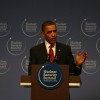
US To Push for UN Security Council Ban on Nuclear Tests
As part of his nuclear legacy, US President Barack Obama is seeking a UN Security Council (UNSC) resolution aimed at banning nuclear tests worldwide.
Humanitarian Crises: Business Called to Take a Lead
With more than 65 million people forced to flee their homes due to violence and armed conflicts, this year’s Wold Humanitarian Day on August 19 will call on all governments and social sectors to work together to tackle this unprecedented human crisis.
THE CHALLENGES AHEAD – Grassroots activism for climate change needed
The ink has hardly dried on the Paris climate agreement (PA) document, and it appears that global attention has moved on to other urgent matters: terrorism, election politics, Brexit, and what have you. But, the Agreement marks only the beginning of a long process to address multiple issues relating to climate change. What are the tasks before us now?
TPPA could be discarded due to US political dynamics
No country was more active in pushing for the Trans Pacific Partnership (TPP). In the five years of negotiations, the United States cajoled, persuaded and pressurised its trade partners take on board its issues and positions.
Breaking the cycle
STUNTING in Pakistan is a tragedy of epic proportions; a tragedy that we can, and must, overcome. Nearly half of Pakistan’s children — 44pc — suffer from stunted growth (National Nutrition Survey 2011). This is the third highest number of stunted children in the world.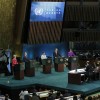
Time for a Woman to Lead the UN
Judging by the latest polls it now seems more likely that the United States will have a female President in 2016, than the United Nations will have a female Secretary-General.
Dhaka Could Be Underwater in a Decade
Like many other fast-growing megacities, the Bangladeshi capital of Dhaka faces severe water and sanitation problems, chiefly the annual flooding during monsoon season due to unplanned urbanisation, destruction of wetlands and poor city governance.
Arable Lands Lost at Unprecedented Rate: 33,000 Hectares… a Day!
Humankind is a witness every single day to a new, unprecedented challenge. One of them is the very fact that the world's arable lands are being lost at 30 to 35 times the historical rate. Each year, 12 million hectares are lost. That means 33,000 hectares a day!
The Economic Partnership Agreement has never made much sense for Tanzania
The EPA issue has once again re-emerged when, in early July, Tanzania informed East African Community( EAC) members and the European Union (EU) that it would not be able to sign the Economic Partnership Agreement (EPA) between European Union (EU) and the six EAC member states.
PERIPHERALLY YOURS: Reviving the Age of Wisdom
The obsession with a section of youths of the country about “dying” for Islam gives rise to the paradoxical question: How can one serve Islam better? By being dead or by being alive and leading a productive life? We fail to comprehend what good can a dead Muslim do to Islam?NGOs’ regulatory framework
IN a country like Pakistan, where the government finds it challenging to deal with the many socio-economic problems faced by its populace, the role of NGOs in contributing to solve and support government policies to address these problems is vital.
Peruvians Say “No!” to Violence Against Women
Peruvians took to the streets en masse to reject violence against women, in what was seen as a major new step in awareness-raising in the country that ranks third in the world in terms of domestic sexual violence.
One Humanity? Millions of Children Tortured, Smuggled, Abused, Enslaved
Children are being smuggled, sexually abused, maimed, killed for their vital organs, recruited as soldiers or otherwise enslaved. Not only: 69 million children under five will die from mostly preventable causes, 167 million will live in poverty, and 263 million are out of school. And 750 million women will have been married as children by 2030.
The Counter Narrative to Terror and Violence is Already Among Us
The French philospher Voltaire once said that “if we believe in absurdities, we shall commit atrocities.” Indiscriminate killing of self and innocent others, ostensibly in the name of some religion, is among the most absurd of beliefs. And rather than ceasing, the spiral of violence appears to know no end. There appears to be no locus, and no focus, beyond random killing.
Ethiopian Food Aid Jammed Up in Djibouti Port
Bags of wheat speed down multiple conveyor belts to be heaved onto trucks lined up during the middle of a blisteringly hot afternoon beside the busy docks of Djibouti Port.
Interview: The UN Security Council and North Korea’s Nuclear Threat
Ambassador Hahn Choong-hee, UN representative of the Republic of Korea, spoke with IPS about the implementation of UN Security Council Resolution 2270, which was unanimously adopted on 2 March 2016.« Previous Page — Next Page »


The Week with IPS

NEXT STOP - SDGs
Tracking global progress towards a sustainable world
Tracking global progress towards a sustainable world
