Languages
Tuesday, July 28, 2026



News and Views from the Global South
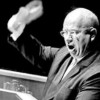
The Day a Soviet Leader Banged His Shoe at the UN
During the height of the Cold War between the United States and the Soviet Union, and particularly in the 1960s, the United Nations was the ideological battle ground where the Americans and the Soviets pummeled each other– metaphorically speaking — either on the floor of the cavernous General Assembly hall or at the horse-shoe table of the Security Council.
Blame It on Cronyism, Not the Free Market
The current condition of global economic inequality should be of concern to all. An Oxfam report published this year titled, An economy for the 1%, revealed that “the richest 1% now have more wealth than the rest of the world combined.” It also said that "62 of the richest people now own more wealth than the bottom half of the world's population. In 2015 it was the 80 richest, in 2014 it was 85 and in 2010, only six years back, it was 388 richest that owned similar wealth”, showing that inequality is actually growing at an increasing rate. This is also made evident by the fact that “the wealth of the poorest half of the world's population has fallen by a trillion dollars since 2010, a drop of 38 percent" while “the wealth of the richest 62 has increased [during the same period] by more than half a trillion dollars to $1.76 trillion.”
Thinking Global? Act Provincial
The least populated, northernmost province in North America even its own citizens dread to go has a per capita GDP of C$58,452 compared with C$3,439.28 for the entire Philippines.
Rigging US-style
Circle the first, first letter of the alphabet in this line. Now write the word ‘noise’ backwards and place a dot over what would be its second letter should it have been written forward.Food Safety Issues Rise in Colombo
This newspaper’s News Desk has been following up on Public Health issues for some time, and their ongoing reports should raise concerns among Colombo residents, both the affluent, and the not-so, because of the declining standards in the monitoring of food establishments, from the humble ‘buth kades’ to the restaurants of five-star hotels.
Team Refugees: Pivotal Moment in Olympic History
For the first time ever, a team of displaced athletes will have their chance to demonstrate their relentless determination and integrity in a bid to leave their own distinct mark on Olympic history.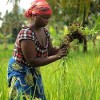
African Farmers Can Feed the World, If Only…
Can African farmers feed the world?. Apparently the answer is “yes.” Bold as it may sound, this statement is based on specific facts: Africa is home to 60-65 per cent of the world’s uncultivated arable land and 10 per cent of renewable freshwater resources, and it has registered a 160 per cent increase in agricultural output over the past 30 years.
The Historic Reversal of Populations
It first happened in Italy in 1995. Five years later it happened in six additional countries, Bulgaria, Germany, Greece, Japan, Portugal and Spain. Today the total number of countries where it has occurred stands at 30, including most members of the European Union. In fifteen years that number is expected to nearly double and include Australia, Canada, China, Russia, South Korea and the United States (Table 1).
Developing Nations Seek Tax Body to Curb Illicit Financial Flows
Despite Western opposition, the 134-member Group of 77 is continuing to pursue a longstanding proposal for an inter-governmental UN-affiliated tax body aimed at combating corporate tax dodging and curbing illicit financial flows, including money laundering and off-shore banking.
The Floating Schools of Chalan Beel
 They don't go to schools, schools come to them.
Currently, some 2,000 underprivileged children are attending classes in 22 floating schools that move across the Chalan Beel in Pabna, Natore and Sirajganj districts.
They don't go to schools, schools come to them.
Currently, some 2,000 underprivileged children are attending classes in 22 floating schools that move across the Chalan Beel in Pabna, Natore and Sirajganj districts.

Indigenous Communities Risk Lives in Struggle for Self-determination in Education
Indigenous peoples around the world continue to struggle for self-determination over their education, as highlighted by recent protests against proposed education reforms in Oaxaca, Mexico, which have left at least six people dead.
Sustainable Development in Africa Will Not Be Achieved Without Women’s Full Participation
In some parts of the world, the proverbial “glass ceiling” is shattering. As Theresa May and, most likely, Hillary Clinton join Angela Merkel at the leadership of three major world powers, women’s leadership in politics is on the ascent.
Pan African Parliament Endorses Ban on FGM
After years of wrangling and debates among African leaders, the movement to end female genital mutilation (FGM) is gaining real momentum, with a new action plan signed this week by Pan African Parliament (PAP) representatives and the U.N. Population Fund (UNFPA) to end FGM as well as underage marriage.
Need for a Factual Assessment
The Muslims make 14.2 percent of India's 1.25 billion people. But, 25 percent of India's 370,000 beggars are Muslims. The newly released data by researchers at the University of California, Davis, and the London School of Economics, published in the journal Human Nature, also show that the Muslim population inside Indian jails is rising. For example, Maharashtra jails have 31.09 percent Muslim prisoners against a state average of 19.06 percent. Arthur Koestler famously writes that statistics don't bleed, but it's the detail which counts. What counts in this instance is that the plight of the second largest Muslim population in the world after Indonesia is nothing but dismal.
The Right to Not Disappear
It goes something like this: there’s a murder in the name of ‘honour’ in a village somewhere in Pakistan. The story is reported and journalists are inspired to look for more such instances to cover. They disperse in all directions and no matter where they go searching, they return with more such murder cases to dump on the ‘honour’ killing pile.
“Non-lethal” Pellet Guns Maim Hundreds in Kashmiri Protests
Hospitals in Kashmir’s summer capital are packed to capacity these days, their wards overflowing with pellet gun victims injured during violent clashes with government forces.
The Devil in Development
The word “development” - eliciting as it does grandiloquent notions of progress - has become, at least in Bangladesh, something of a red herring. It is used as a catch-all phrase to justify just about anything — from eviction of slum-dwellers to make way for high-rise housing projects to forceful grabbing of ancestral lands to build eco-parks and tourism spots, from rampant deforestation of our woodlands to unapologetic pollution of our rivers, from undemocratic and top-down imposition of anti-people projects to suppression of dissent through violence both sponsored or otherwise. It matters little that such so-called development only exacerbates the extreme vulnerabilities of people already on the margins, destroys scarce natural resources and intensifies the ever-widening gap between the haves and the have-nots; that it does precisely the opposite of what “development”—real, pro-people development—ought to do. If one protests these actions as unjust, undemocratic or inequitable, one can be easily dismissed as being “anti-development”, and by extension, “unpatriotic”, making it ever more difficult to have any sort of constructive conversation about Bangladesh's development priorities (or the lack thereof).
Right to Education Still Elusive for Native People in Latin America
Education, the most powerful instrument in the struggle against exclusion and discrimination, is still elusive for indigenous people in Latin America who remain the most disadvantaged segment of the population despite their wide presence in the region.
Climate-Smart Agriculture for Drought-Stricken Madagascar
Mirantsoa Faniry Rakotomalala is different from most farmers in the Greater South of Madagascar, who are devastated after losing an estimated 80 percent of their crops during the recent May/June harvesting season to the ongoing drought here, said to be the most severe in 35 years.Pope Refuses to Equate Islam with Violence, Terrorism
He spoke with much apparent deliberation when Pope Francis last Sunday, on his return trip from Poland, said to reporters, “I don’t think it is right to equate Islam with violence.”
Threat Perceptions
Here — in alphabetical order — are six countries that have considerable involvement in Pakistan: Afghanistan, India, Saudi Arabia, the United Arab Emirates, the United Kingdom and the United States.« Previous Page — Next Page »


The Week with IPS

NEXT STOP - SDGs
Tracking global progress towards a sustainable world
Tracking global progress towards a sustainable world
