Languages
Saturday, November 7, 2026



News and Views from the Global South
Opinion

Equipped by US & Israeli Firms, Police in Botswana Search Phones for Sources
Oratile Dikologang was naked when police officers pulled black plastic over his head during his detention in April 2020. It was difficult to breathe, but the interrogation continued, he told CPJ in a recent phone interview.
Bridging the Digital Divide Will Save Our Planet
Data, analysis and information are essential building blocks in our race to save humanity from the clear and present risks posed by the climate crisis.
How to Assess the Willingness of US to Suspend Patent Protection on Vaccines?
The news of the Biden Administration's willingness to lift intellectual property rights protections in the case of the Covid-19 pandemic has sent the world into turmoil, even though in recent days this willingness had become increasingly airy.
CORRECTED VERSION: Struggle for the Future of Food
Producers and consumers seem helpless as food all over the world comes under fast growing corporate control. Such changes have also been worsening environmental collapse, social dislocation and the human condition.
The Illusion of Digital Inclusion in the Post-COVID World
We are living through a decisive moment. The COVID-19 pandemic’s devasting impact is reaching every corner of the world. As we look back at this period, we will see history divided into a pre-COVID and a post-COVID world.
Africa Goes Digital
In rebuilding after COVID-19, policymakers must invest in innovative technology to leapfrog obstacles to inclusive development. Africa has enjoyed strong economic growth for most of the 21st century, mainly because of robust global demand for primary commodities.
How West African Leaders Can Tackle Youth and Gender Inequities
Recently, both Republics of Benin and Chad held their 2021 national elections. These countries are among thirteen countries on the continent billed to elect new political leaders in 2021 alone. This is a good opportunity to improve conditions on the continent. Indeed, the COVID-19 pandemic has magnified other issues on the continent like youth unemployment that better leadership could help improve.
High-Dose Vitamin D Supplements Significantly Reduce ICU Admissions & COVID-19 Deaths
There is considerable evidence that vitamin D reduces the risk and severity of COVID-19 (Mercola 2020 ; Wimalawansa, 2020). More than 50 clinical studies have published confirming that high doses of vitamin D administered early in persons with COVID-19 significantly reduce complications and the need for ICU admissions.
Coping with the USA-China Conflict – Strategic Procrastination
For several years, a fast growing and assertive China has been challenging the USA’s global dominance. China’s GDP, taking into account differences in purchasing power, is now greater than that of the USA; its military spending has been expanding rapidly and exceeds by wide margins that of other countries except the USA with which it is catching up; it is the manufacturing power house of the world; it is quickly moving up the technological ladder; and it is the key trading partner for an increasing number of countries. All this is creating tensions with the USA and its key allies.
Unlearning During a Lockdown
Children all over the world are having tough times while coping with the consequences of the pandemic but the circumstances affecting them in the Philippines are even more daunting.
COVID-19 Vaccine Rollout Kicks Off in Africa’s Most Populous Country
Since the COVID-19 vaccination began in the US in mid-December 2020, Africa had been looking forward to its turn. For Nigeria, that time came on 2nd March 2021 when the first batch of 3.9 million doses of AstraZeneca’s COVID-19 vaccine arrived in the country from the Serum Institute of India.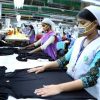
The Garment Industry Needs More Women Leaders
If you enter a garment factory in India, or any part of the world for that matter, you will see that the workforce is starkly female. The Indian textile and garment industry employs 45 million people, out of which more than 60 percent are women. This makes it the biggest formal employer of women in a country where 80 percent of them are not engaged in paid work. While that might paint a rosy picture of women’s empowerment at the first glance, a closer look reveals something different.
UN Women Launches New Programme to Foster Economic Participation in Care Industry
The lockdowns and illnesses brought on by the COVID-19 pandemic have dramatically increased the need to care for children, the elderly and the sick. And in societies where gender inequality and biased norms persist, most of this burden has fallen on women, many of whom have had to leave their regular jobs with no idea of when they can return.
Said Zahari: Unsung Mandela of Press Freedom
Have you ever heard of a workers’ strike or similar labour action for press freedom? And how long do you think it lasted? A day? A week? A month? And where and when do you think this happened? Workers strike for press freedom Six decades ago, in 1961, Said Zahari, the editor of the Malay language daily, Utusan Melayu, led a strike of journalists and other employees. The protracted strike, in both Malaysia and Singapore today, was for press freedom rather than employee welfare.
A Year Later, COVID-19 Continues to Show the Fragility of Food Security
More than a year after the start of the COVID-19 pandemic, food and nutrition security continues to show its fragility.
Online Violence: Weaponization of Deeply Rooted Misogyny, Sexism & Abuse of Power
Every time a woman journalist receives threats of physical and sexual violence, cyber attacks and surveillence, doxxing, public humiliation, damage to her professional & personal credibility, the driving forces behind these intents are deeply rooted misogyny, sexism and abuse of power.
Human Rights Watch: A Threshold Crossed
Human Rights Watch’s 27 April report, A Threshold Crossed: Israeli Authorities and the Crimes of Apartheid and Persecution, could also have been entitled Better Late Than Never.
Internet Restrictions Harm the Press & Public Alike
When Myanmar’s military seized power from the elected government in February, one of its first actions was to further squeeze the already restricted free flow of information in the country. It obstructed news stations, temporarily shuttered phone and internet access, and blocked social media platforms.
A Free & Accessible Vaccine is Just out of Reach for Palestinians
We were able to keep the coronavirus at bay for five months in Gaza, the densely populated Palestinian strip of land surrounded by Israel that I call home. But the Coronavirus doesn’t respect walls or artificial borders. While preparations were made for the pandemic to inevitably breach a blockade so few Palestinians can, we waited for it to come for us. And it did.
World Press Freedom in an age of remoteness
Edmund Burke called the press the fourth estate, the fourth pillar of democracy, with an oversight role on the remaining three pillars – the legislature, executive and the judiciary. In an ideal world, this fourth estate would have unimpeded access to the other three pillars so that the citizenry could be kept informed at all times. This freedom was conceived to be so sacrosanct that many countries have included it as a fundamental right, e.g., the US Constitution enshrined it as the very first amendment.
Press Freedom Vital in the Fight Against the Pandemic
Access to accurate information is vitally important during the pandemic, so that people can understand how to protect themselves and their families, and to hold their governments to account for their response to the health emergency.« Previous Page — Next Page »





The views expressed in these articles are those of the authors and do not necessarily represent the views of, and should not be attributed to, IPS-Inter Press Service

The Week with IPS

NEXT STOP - SDGs
Tracking global progress towards a sustainable world
Tracking global progress towards a sustainable world
