Languages
Friday, November 6, 2026



News and Views from the Global South
Opinion

Wanted: Transparency & Accountability in Pandemic-Related Spending
Governments around the world are playing a crucial role in providing lifelines to people and firms to help combat the pandemic and its economic fallout. To support the effectiveness of these efforts, it is important that such spending be subject to adequate transparency and accountability.
Nepal is the New COVID-19 Hotspot: The Cure is Citizen Engagement
If you live in Nepal, a quick survey of friends and family will quickly prove how rapidly Covid-19 infection rates have spiked. For instance, out of 50 people we called last week, more than half had been infected, with the rest reporting that their extended families or colleagues had tested positive.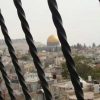
Jerusalem: A Flashpoint For Conflict Or Microcosm Of Peace?
Regardless of how the current and future violent conflicts between Israel and the Palestinians in Jerusalem will end, there will be no Israeli-Palestinian peace unless East Jerusalem becomes the capital of a Palestinian state while the city remains united.
China’s Firms Gain a Foothold in South America as Energy Providers
Over the past decade, state-owned enterprises (SOEs) from China have carved out a niche as owners and operators of electric utilities in South American countries through acquisitions of energy grids. As SOEs shift from their previous role as mostly builders to investors in large energy assets, policymakers in South America and in Washington should consider the implications of having these companies at the helm of such services.
– Successful Crop Innovation Is Mitigating Climate Crisis Impact in Africa –
On the occasion of World Environment Day, 5 June 2021, drawing from IPS’s bank of features and opinion editorials published this year, we are re-publishing one article a day, for the next two weeks. The original article was published on February 17 2021

When Battling Covid-19 Becomes a National Policy Disaster
We went to the Kanatte cemetery, Sri Lanka’s largest, where most of us, residents of the capital city, would end up sooner or later. But it was deserted, and so we had time for a leisurely chat with some of the helpful staff there, albeit after admiring some of the grave sites and remaining beautiful trees.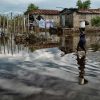
Climate Crisis: Elephants in the Room are Getting Nastier
The year 2020 will forever be notorious for the COVID-19 pandemic but it might also be known by historians for a precipitous rise in second order climate change consequences -- a new elephant in the room.
Put People Before Profits for Progress
Millions of people are expected to die due to delayed and unaffordable access to COVID-19 tests, treatment, personal protective equipment and vaccines. Urgent cooperation is desperately needed to save lives and livelihoods for all.
Women Leading Somalia’s Health System
Somalia is one of the most complex regions of the world, with threats and political instability, extreme weather conditions, movement of internally displaced people (IDPs), decades of conflict, poverty-related deprivation, poor health and communicable diseases that are killing people. There is a constant risk of gender violence making women, children and members of minority groups particularly vulnerable, and more so during displacement or while seeking work. Three decades of civil war and instability have weakened Somalia’s health system and contributed to it having some of the lowest health indicators in the world. The COVID-19 pandemic has added yet another strain on its tremendously fragile infrastructure presenting unexpected challenges and dilemmas.
Africa’s Worsening Climate: Here’s How the United States can Help Africa
Recently, I participated in a Congressional hearing on the “Effects of climate change in Africa”, before the House Foreign Affairs Subcommittee on Africa, Global Health, Global Human Rights, and Internal Organizations, chaired by Congresswoman, Karen Bass.
COVID-19 Vaccination: The Barriers to Achieving Global Herd Immunity
The global community is conducting a rapid vaccination program against the SARS.Cov-2 virus, using several vaccines, authorised for emergency use. To date, the percentages of adults vaccinated vary between less than 2% to over 90% in different countries.
Where are the Women? How Pandemic Decisions are Ingraining Global Gender Bias
There are teams of experts around the world right now tackling the coronavirus pandemic, providing pathways to put an end to this deadly global scourge and charting the course for recovery.
Will the UN hold Myanmar’s Military Accountable for Its Crimes against Children?
In one particularly bloody day in March, Myanmar’s security forces shot and killed at least ten children, some as young as 6, in violent crackdowns against peaceful protests. Since the military seized control over the country three months ago, more than 50 children have been killed, countless others injured, and more than 900 children and young people arbitrarily detained across the country.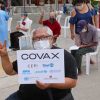
Russia’s Sputnik Diplomacy
While Western countries were busy with their own vaccination campaigns, Russia has filled the leadership vacuum in developing countries. Amid the West’s scramble for vaccines, a trickle of news flies under the radar. Argentina becomes the first country in South America to produce Russia’s Sputnik V vaccine. The first shipment of Sputnik V is promised to Peru by May.
Reimagining Education with Imagination
The month of May marks mental health awareness month or mental health awareness week in several countries around the world. Many people will be reading posts and blogs about the importance of getting more sunshine and exercise to avoid the blues, about ways to deal with the stress of the pandemic, about dealing with everyday challenges that disrupt our striving for happiness.
It Takes a Community to Defeat COVID-19
The media is awash with the devastating news of deaths and sufferings due to COVID-19 coming out of India. What most media outlets overlook is the way Indian communities are rallying to save lives, reduce sufferings and stop the current wave of the pandemic.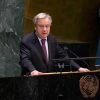
The UN’s Guterres, an Incumbent With Strong Backing by Europe, Is Bound to Win Another Term
It was all over in one crucial week. Barring an unforeseen hitch, António Guterres is the clear winner of a second, five-year term as secretary-general of the United Nations, beginning on Jan.1, 2022. This was not a surprise: he had no major competition and the process moved faster than expected.
India Under Siege From Covid-19: The Worst Yet to Come
The Coronavirus infections and deaths in India recorded a daily high on Monday, 10 May, with 366,161 new infections and 3,754 deaths as reported by the Indian health ministry, taking India's total tally to 22.66 million with 246,116 deaths. Experts have raised a flag stating India's actual figures could be far higher than what is currently being reported.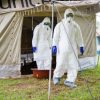
One Health Approach Key to Tackling Africa’s Challenges
The COVID-19 pandemic has shown us that global health challenges cannot be solved only by health sector interventions.
Pakistanis in Italy: Against All Odds
We met 22-year old Ali B. in a park in Rome’s city center on a rather cold and windy April evening. We could not share a meal, or even a coffee, as all restaurants were shut due to continuing COVID-19 restrictions. He had travelled down from Cerveteri (a small town about 50km north of Rome) where he works for an old couple. They provide boarding and lodging as well as a decent salary and social security benefits. In return, he has to cook for them and look after the kitchen.
US Support for Vaccine Waiver Welcome, but More Needed
Thanks to President Biden, the US now supports a suspension of intellectual property (IP) rights to increase vaccine supplies. However, without vaccine developers sharing tacit technical knowledge for safe vaccine mass production, it will be difficult to rapidly scale up vaccine output.« Previous Page — Next Page »





The views expressed in these articles are those of the authors and do not necessarily represent the views of, and should not be attributed to, IPS-Inter Press Service

The Week with IPS

NEXT STOP - SDGs
Tracking global progress towards a sustainable world
Tracking global progress towards a sustainable world
