Languages
Friday, November 6, 2026



News and Views from the Global South
Opinion
Agroecology Under Threat
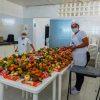
This week*, the Committee on World Food Security (CFS) is expected to endorse recommendations on agroecological and other innovative approaches for sustainable food systems, after an intense period of negotiation involving governments, UN agencies and institutions, Indigenous People’s organizations, civil society, and the private sector.
Naomi Osaka’s Bravery can be a Teachable Moment about Mental Health
Recently, Naomi Osaka, the number 2 ranked women’s tennis player in the world, said she would not participate in the press conference at the French Open (Rolland-Garros) because she wanted to protect her mental health.
Bridging the Gaps Between Climate Action & Biodiversity Preservation
With the climate negotiations getting more and more intense in the light of ensuring meaningful achievements in the upcoming COP- 26 summit in Edinburgh, an event that is key to move forward the pathway towards a net zero future started in Paris, this year World Environment Day on June 5 assumes an even more emblematic meaning.
Why Investing in Women Is Key to Achieving the Sustainable Development Goals
Last year, the Asia-Pacific region recorded its worst economic performance in decades. With the pandemic far from over, the region’s recovery is slow, fragile and highly uneven both across and within countries. As the region struggles to recover, how can countries rebuild their economies and revive their development?
2021: The Year that Matters for the Poorest People on the Planet
This year is being described as pivotal for climate change. That’s not only because we’re reaching a point of no return when it comes to the rise in global temperature, it’s because the 26th UN Climate Change Conference of the Parties – commonly known as COP26 – is due to take place in November in Glasgow.
Africa’s Forgotten Crisis
A few weeks ago, I traveled with the UN High Commissioner for Refugees Filippo Grandi to the Modale refugee site in the Nord-Ubangi province of the Democratic Republic of the Congo (DRC). What we witnessed there was a profound humanitarian crisis that has left 4.7 million children and youth in need of urgent, life-saving, life-changing educational support.
Pandemic Relief Policies Need More Resources, Better Design
Pandemic relief measures in developing countries have been limited by modest resources, fear of financial market discipline and policy mimicry. COVID-19 has triggered not only an international public health emergency, but also a global economic crisis, setting back decades of uneven progress, especially in developing countries.
Motorcycle Diaries with a Twist
Four women, two motorbikes, 64 districts and a journey of a lifetime, this is the story of Dr. Sakia Haque from Bangladesh. In November 2016, Dr Haque co-founded “Travelettes of Bangladesh - Bhromon Konya,” a women's only group, with the motto of “empowering women through travelling.” This platform is not just an ordinary online travel group, but it is a platform of connection, sisterhood and networking of almost 60,000 girls and women in Bangladesh that empowers them by teaching them to raise their voices and encourages them to step out of their comfort zones and to “go see the world”.
The Killings in Gaza and Two Jewish Philosophers’ Hope for a Better World
I hear about casualties and numbers, but cannot perceive the faces, the human beings behind them. A week ago, eleven days of havoc ended after at least 243 people, including more than 100 women and children, had been killed in the Gaza Strip and 12 people, including two children, in Israel. An open, gravely infected wound which continuous to bleed, causing never ending human suffering.
It’s Time to Reimagine Our Relationship with Nature
Our natural earth is dying. It is on the brink of collapse. Due to human impacts the planet is losing species – its biodiversity – at a rate so alarming it’s said to be comparable to the 5th mass extinction 65 million years ago, bringing the era of the dinosaurs to an end. Just 15% of the world’s forests remain intact, and only 3% of the world’s oceans are free from human pressures.
Are There Clinically Meaningful Differences Between anti-COVID-19 Vaccines?
Despite claims by the industry and some politicians, there are no clinically meaningful differences among the variety of vaccines approved under emergency use authorisation (EUA).
Why Stakeholder Coalitions Could Be Key to the Glasgow Climate Summit’s Success
The past few weeks brought a burst of optimism on the climate front. It began on April 18 with the US-China announcement on climate cooperation. This was followed in quick succession by the EU Parliament’s vote to cut emissions 55% by 2030, the UK’s promise of a 78% cut by 2035, Japan nearly doubling their commitment from 26% to 46% based on 2013 levels and US President Biden’s pledge of a 50-52% reduction, also by 2030 (compared with 2005 levels).
The Issue is Exploitation, not Migration
“There’s no other option but to return,” said Chitrasen in January 2021, when asked if he would migrate back to the city. The previous year’s pandemic-induced lockdown had left migrant workers stranded in cities and stripped of all their savings. An entire year later, as the second wave of COVID-19 engulfs India, many migrant workers find themselves confronted by a similar situation.
To Beat Covid, Beat HIV, & Beat Inequality, Find the Money
In this time of intersecting crises – the Covid crisis, the HIV crisis, the inequality crisis, and more – progress on all these crises is being blocked by another crisis: finance.
People Power: Why Mobilisations Matter Even in a Pandemic
It has been one year since the police murder of George Floyd, an outrage that resonated around the world. The killing forced people to the streets, in the USA and on every inhabited continent, to demand respect for Black lives and Black rights, proving that protest was essential even during the pandemic.
How the US is Obstructing Security Council Resolutions on Palestine
Over the past 75 years, there have been many UN Security Council (UNSC) resolutions acknowledging Israel’s violations of international law, including a Resolution under Chapter VI of the UN Charter, that could have addressed, if implemented, the plight of the Palestinians.
Not Without My Hijab: Why Representation in Sports Matter
In 2016, when Bosnian-American professional basketball player, Indira Kaljo got in touch with Asma Elbadawi because she had been forced to give up playing basketball after she started wearing the hijab, they decided to take it up with the International Federation of Basketball (FIBA), the sports governing body to change its rules on headgear.
Wards Without Water
Malawian healthcare workers are facing challenges from all sides. More than half of healthcare facilities in Malawi are without handwashing facilities, almost two thirds have no decent toilets and almost one fifth do not have clean water on site.
Developing Countries Desperately Need COVID-19 Financing
Failure to sufficiently accelerate comprehensive efforts to contain COVID-19 contagion has greatly worsened the catastrophe in developing countries. Grossly inadequate financing of relief, recovery and reform efforts has also further set back progress, including sustainable development.
Why Our Best Defence Against Future Pandemics is Data
Although the World Health Organization’s (WHO) mission to discover its origins has proven inconclusive, the Covid-19 pandemic has nonetheless clearly highlighted the need for better care, attention, and investment in animal health systems.
Five Ways to Measure the Effects of a Crisis Like COVID-19 on Women
Social issues and crises tend to affect women more severely than men. This is why terms like “gender mainstreaming policies”, “gender-responsive interventions” and “gender-based budgeting” have become more popular in public policy discussions in recent years.« Previous Page — Next Page »





The views expressed in these articles are those of the authors and do not necessarily represent the views of, and should not be attributed to, IPS-Inter Press Service

The Week with IPS

NEXT STOP - SDGs
Tracking global progress towards a sustainable world
Tracking global progress towards a sustainable world
