Languages
Friday, November 6, 2026



News and Views from the Global South
Opinion

Letter from Rome – Italy at the Crossroads
Italy, as other countries, has been struggling to balance the health and economic challenges posed by COVID-19. Controlling the spread of the virus implied restrictions on economic activity, on school and college attendance, and on personal movement. It also had to deal with the economic and social implications of a fall of almost 10% in GDP. This has been hard for a country which, even before the pandemic, was one of the slowest growing economies in Europe, with unemployment, especially among young people in the South of the country, at alarming levels.
The Real Price of Marriage in South Sudan
August of this year will mark the one-year anniversary of the end of South Sudan’s civil war, yet recent surges of violence suggest that peace is far from being realized. These attacks by armed groups include instances of sexual violence against women and girls.
To Improve Global Health Security, We Must Not Abandon Tackling Existing Epidemics
As world leaders come together in the UK for the G7, the global response to COVID-19 and how we can build a better defence system against infection is at the forefront of discussions. Whilst we applaud the incredible global efforts in tackling COVID-19 and support calls for vaccines to be shared equitably across the world, we also urge G7 leaders not to abandon efforts to tackle existing epidemics such as neglected tropical diseases (NTDs), HIV/AIDs, malaria, TB and polio.
Why Mixed Messages Could Turn Boris Johnson’s Glasgow Climate Summit Dream into a Nightmare
How are preparations for the Glasgow Climate Summit in November proceeding? Currently, we are more than halfway through three weeks of virtual preparatory negotiations taking place in June. These online talks are challenging in their own right, just as many had feared (see: ‘Should the 2021 Climate Summit in Glasgow Still Take Place?’).
A Staggering 160 Million Are Victims of Child Labour
Among the many daunting issues leaders of the G7 will have to discuss in their upcoming summit in idyllic Cornwall on June 11-13, child labour won’t be on the official agenda.
Preventing Hunger While Building Peace
Acute hunger is expected to soar in over 20 countries in the next few months, warns a recent report on global “hunger hotspots” from the UN’s Food and Agriculture Organization (FAO) and the World Food Programme (WFP). An estimated 34 million people are “one step away from starvation”, pushed to the brink by climate shocks, conflict, and the Covid-19 pandemic.
Investing in Lives & Livelihoods of India’s Women Crucial to Nation’s Full Recovery
Thousands of Indians have been affected by the latest COVID-19 outbreak. Not only those suffering from the disease, but also those who care for them.
From Climate Change to Covid, Are We Ready to Deal with Disasters?
In the last 20 years, disasters affected over 4 billion people. At global level we witness on average one sweeping disaster a day, the majority of which are floods and storms. From the Covid-19 pandemic to climate change, calamities are taking new shapes and sizes, infiltrating every dimension of society. From the emotional to the political, how do we deal with disasters? How can we create a whole-of-society approach to disaster risk reduction?
Inclusivity Is My Key to Success
In three cycles I spent all together more than 15 years in Rome, at the Permanent Representation of Hungary to the Food and Agriculture Organization of the UN (FAO) and between my last two assignments in Rome my responsibilities in Budapest included FAO related issues. This made it possible for me to witness the development of this organization under the leadership of four Directors-General. Edouard Saouma, Jacques Diouf, Jose Graziano da Silva and Qu Dongyu. This long association and “historic” view of FAO would definitely help me in fulfilling the role of the Independent Chairperson of the Council of FAO (ICC). As conventional wisdom suggests, in order to make good decisions for the future we need to know, understand and learn from the past. The Independent External Evaluation, commissioned by the FAO Council in 2004, was an important milestone in this regard. It was followed by inclusive discussions among FAO Members about the recommendations and finally an Immediate Plan of Action was adopted by the FAO Conference. It was the most significant reform in FAO and I had the privilege to contribute to this process.
Nigeria’s Twitter Ban Is Part of a Larger Attack on Civil Society
Four years ago, Omoregie* and his friends were arrested without cause and taken into custody. When they got to the station, Omoregie watched as the police began to beat his friends. Afraid, he began to discreetly tweet about the attacks as they took place.
Scream of the World: Volcanos and Earthquakes
In February the killing of the Italian ambassador, Luca Attanasio, in the vicinity of the Virunga National Park in eastern Democratic Republic of the Congo, did for a short while put the global spotlight on this troubled area, where warfare, poverty and general insecurity generate immense human suffering.
The 21st Century Nuclear Arms Race
A new report by the International Campaign to Abolish Nuclear Weapons (ICAN)—focusing on nuclear weapons spending-- following on the Bulletin of the Atomic Scientists recent decision that their Doomsday Clock, should be set as close as it has ever been to nuclear catastrophe. should serve as a wake up calls for humanity.
Time to End Generational Injustice with a ‘Global Blue New Deal’ to Protect Oceans
Increasingly, youth are rising up to declare that they've had enough of the cyclical exploitation of the environment that jeopardizes their own future.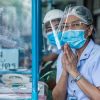
G7 Summit: Time to put Women Front & Centre of the Global Economic Recovery
The leaders of the G7 group of nations will soon gather in Cornwall, United Kingdom, (June 11-13) to devise plans to ‘build back better’ from the COVID-19 pandemic. The summit takes place in the wake of a crisis that has both revealed and further exacerbated existing economic and social inequalities, including gender inequalities.
Paltry International Support for Spending Needs Sets South Further Back
With the pandemic setting back past, modest and uneven progress, huge disparities in containing COVID-19 and financing government efforts are widening the North-South gap and other inequalities once again.
Why We Need More Women in Power
What is the first thing that comes to your mind when you read the words, women and power? The accepted wisdom is that women can be powerful, but not without the constant reference to their gender - which is often based on a set of unconscious biases towards them. Is she competent enough, effective, articulate without being too assertive or too aggressive. Is she a straightjacket, is she too emotional, will her family life impact her work or vice versa. Is she smart enough to camouflage her intelligence, is she ready for a key position, is it worth making her powerful?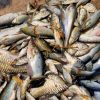
The Ocean’s Silent Killer: Breaking Down Overfishing
You don’t have to look too hard to find some news network or media outlet talking about water pollution, plastic waste, CO2 emissions, and climate change.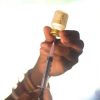
India’s COVID-19 Vaccine Drive Is Excluding Millions of Citizens
In May, the Ministry of Health and Family Welfare (MoHFW) uploaded a Standard Operating Procedure (SOP) related to ‘COVID-19 Vaccination of Persons without prescribed Identity Cards through CoWIN’ on its website.
Fresh Air, Clean Water
You want to breathe fresh air and have access to clean water? I guess you do, just like all of us. As populations in the so-called developed countries, we love to go for holidays in places where on high mountains you get to breathe deeply and enjoy the fresh air, where the oceans or lakes are clean and refreshing. And how do we arrive there? Mostly by airplanes or cars, polluting the air whilst travelling to the desired destinations, causing harm to people and the planet. Interestingly, many people today, calculate their flight’s CO2 footprint and pay a certain amount of money to invest in renewable energy projects, in order to feel better about their travelling and to receive tax deductibility (depending on regulations of their country).
The Pandemic Should Not Leave Developing Countries Without a Voice (or a Vote)
Requiring in-person voting to elect the governing bodies of UN agencies may exclude the countries most affected by travel restrictions derived from the pandemic
From Non-aligned to One Aligned
June 4, 2021 marks 30 years since the killings of an undisclosed number of Chinese protestors at Beijing’s Tiananmen Square. For many years, the Chinese government and its ruling Chinese Communist Party (CCP), with characteristic understatement, called it the ‘June Fourth incident’.« Previous Page — Next Page »





The views expressed in these articles are those of the authors and do not necessarily represent the views of, and should not be attributed to, IPS-Inter Press Service

The Week with IPS

NEXT STOP - SDGs
Tracking global progress towards a sustainable world
Tracking global progress towards a sustainable world
