Languages
Sunday, September 20, 2026



News and Views from the Global South
Conferences

Global Disability Summit Galvanizes Education Support for Crisis-Impacted Children with Disabilities
Of the nearly 234 million children and adolescents of school age affected by crises, 85 million are already out of school. At least 20 percent of them—or 17 million—are children living with disabilities.
Tanzanian Speaker Calls for Urgent Investment in Youth to Harness Demographic Dividend
Speaker of the Tanzanian Parliament and President of the Inter-Parliamentary Union (IPU), Tulia Akson, has called for bold and immediate investments in young people to unlock the demographic dividend and accelerate sustainable development across Africa and Asia.
COP16 Agrees to Raise Funds to Protect Biodiversity
The second round of the UN Biodiversity Conference, COP16, concluded in the early hours of Friday, February 28 in Rome, with an agreement to raise the funds needed to protect biodiversity.
CARICOM Leaders Take Steps to Tackle Crime, Climate, Trade and Food Crises
CARICOM leaders wrapped up a crucial meeting on February 21, reaffirming their commitment to tackling pressing regional challenges with unity and resolve. From crime and security to education, trade and climate change, the leaders highlighted the need for decisive action amid global uncertainties.
Malala: ‘Honest Conversations on Girls’ Education Start by Exposing the Worst Violations’
“She was at her brilliant best, speaking fearlessly and boldly about the treatment of women by the Afghan Taliban, robbing an entire generation of girls their future, and how they want to erase them from society,” said educationist and one of the speakers, Baela Raza Jamil, referring to the speech by Nobel Laureate and education activist Malala Yousafzai.
UNCCD COP16 Spotlights Drought But Fails to Agree on a Legally Binding Protocol
The 16th meeting of the Conference of the Parties to the UN Convention to Combat Desertification (UNCCD COP 16) concluded early hours of Saturday with a renewed focus on building drought resilience globally. However, the COP also failed to agree on bringing a legally binding drought protocol. Like the biodiversity and climate change COPs held earlier in the year, COP16 also failed to finish in time and ended by postponing several key decisions to COP17 scheduled to be held in 2026.
Pacific Community Calls Out Urgency of Climate Loss and Damage Finance for Frontline Island Nations
Advancing development of the new Climate Loss and Damage Fund was a key call by Pacific Island nations at the COP29 United Nations Climate Change Conference being held in Azerbaijan in November. For Pacific Island Countries and Territories, the fund represents a critical step towards addressing what they consider a gross climate injustice: despite contributing less than 0.03 percent of global greenhouse gas (GHG) emissions, they bear the brunt of climate change's devastating impacts.
UNCCD COP16 Raises Hopes for Ambitious Global Land Action
While many delegates at the 16th meeting of the Conference of the Parties to the UN Convention to Combat Desertification (UNCCD COP16) hope that this could be the convention’s own Paris moment—referring to the historic Paris agreement inked by UNFCCC signatories—however, this hedges heavily on the UN parties’ seriousness to combat drought, desertification and land degradation.
Explainer: Why COP29 Baku Outcome is a Bad Deal for Poor, Vulnerable Nations
The culmination of bitter, difficult, and challenging climate negotiations concluded with an announcement from the COP29 Presidency of Azerbaijan of the "agreement of the Baku Finance Goal—a new commitment to channel USD1.3 trillion of climate finance to the developing world each year by 2035." This is on top of the USD 300 billion that the developed world is to extend to developing nations annually by 2035.
Brazil Vows to Make COP30 a Catalyst for Climate Action and Biodiversity Celebration
As Brazil gears up to host COP30 in Belém next year, Moisés Savian, the country's Secretary of Land Governance, Territorial and Socio Environmental Development, outlined the event's significance in showcasing Brazil's environmental policies and fostering global collaboration.

It’s a Deal—Wealthy Nations Pledge Not to Build New Unabated Coal-Power Plants
Of all fossil fuels, coal has had the most serious and long-term effects on global warming. When burnt, coal releases more carbon dioxide than oil and gas, producing an estimated 39 percent of the global carbon dioxide emissions. Yet, coal is still the number one energy source, providing nearly 40 percent of the world’s electricity.

Qatar Committed to Achieving Nationally Determined Contributions by 2030
As global leaders gather at COP29 to address the urgent challenges posed by climate change, Saad Abdulla Al-Hitmi, Director of the Climate Change Department at the Government of Qatar, highlighted the nation’s ambitious goals in an interview with IPS, stressing its commitment to balancing environmental stewardship with economic growth.
Mercury Pollution: A Global Threat to Oceans and Communities
Mercury pollution from burning coal is contaminating our oceans and seafood, threatening global health.
Methane Mitigation at COP-29—Pathways to Climate Action
Methane emissions have emerged as a focal point of discussion as global leaders congregate at COP29 in Baku to tackle the escalating climate crisis.
From the Biodiversity COP16 to the Climate COP29: Building Equitable Accountability, Alignment, and Adequacy on Finance
The United States just went through its most consequential election. While the outcome raises questions about what the re-election of Trump means for U.S. engagement in global climate talks moving forward (in view of his previous stunt), the game is still on, with or without him. Despite the challenges, local communities, cities, states, private actors, and the public more broadly have embarked on an unstoppable journey—upholding the spirit of the Paris Agreement.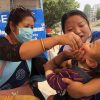
Make Health Top of Climate Negotiations Agenda—Global Climate & Health Alliance
Climate change and its impact on public health hasn't made the top of the agenda even at a forum like the UN Climate Conference, but is should, say the health community. Understanding the gap, more than 100 organizations from across the international health and climate community came together as the Global Climate and Health Alliance and have called wealthy countries to protect people's health by committing to provide climate finance in the order of a trillion dollars annually, in addition to global action with leadership from the highest emitting countries to end the fossil fuel era.
UNDP’s Sustainable Energy Director Calls For Innovative Financial Solutions for Adaptation, Mitigation
Riad Meddeb, Director of the Sustainable Energy Hub at the United Nations Development Programme (UNDP), stressed the urgency of finding innovative financial solutions during COP29.
UNEP: Nations Must Step Up Adaptation—Starting with Bold Finance Action at COP 29
The United Nations Environment Programme’s (UNEP) 2024 Adaptation Gap Report has warned that adaptation actions are not keeping pace with the surging demands of a warming planet. Released ahead of the COP29 climate conference in Baku, Azerbaijan, the report—titled Come Hell and High Water—projected a bleak future where vulnerable communities bear the brunt of climate-induced hardships.
Arab Region Leaders, Experts Gather to Find Solutions to Water Scarcity, Sustainable Development
The Arab region is among the most water-scarce areas globally, as nearly 392 million people live in countries facing water scarcity or absolute water scarcity. So dire is the situation that, of the 22 Arab countries, 19 fall below the annual threshold for water scarcity in renewable resources, defined as 1,000 cubic meters per person.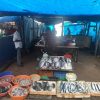
Voices from the Margins: Small-Scale Fishers Demand Rights, Recognition at COP16
Small-scale fishers play a fundamental role in feeding people—they use sustainable methods of catching and processing fish products and are a significant force in the employment and livelihoods of millions of people internationally—yet, until now, they have been excluded from climate and biodiversity conferences.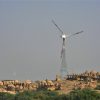
Is India Phasing Out Fossil Fuels Fast Enough To Achieve Its Emission Targets?
While India continues to rely heavily on coal, the south Asian economic giant is also aggressively pushing renewable energy production, especially after the costs of renewable energy production have fallen drastically in recent years around the world.« Previous Page — Next Page »


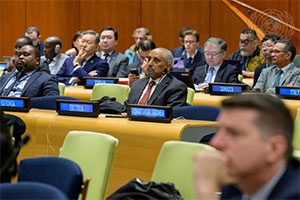 General Assembly Meets to Hear Briefing on UN80 Initiative. Credit: UN Photo/Manuel Elías
Global development conferences are continuing to produce critical frameworks for South-South cooperation and multilateral reform. In January of 2024, the 3rd Global South Nexus (GSN) International Conference was held in Odisha, India, with its theme being “Creating Responsible Professionals for Advancing SDGs: Inputs from Global North and South.” The 2025 UN SDG Report provided a midpoint assessment of the 2030 Agenda, with only 35% of targets on track and 18% having reversed. The 2025 UN Climate Change Conference (COP30) in Belém, Brazil, agreed to mobilize $1.3 trillion annually for climate action by 2035, operationalize the loss and damage fund, triple adaptation finance, and launched the Belém Mission to 1.5°C. In 2025, the Partnership for Economic Policy (PEP) convened its annual Policy Conference in Nairobi, Kenya, addressing the issue of “Financing and Inclusivity in Green Energy Transition in the Global South.” As the Global South advocates increasingly for a South-South framework alongside North-South cooperation, international conferences on sustainability aim to bridge economic and social divides between developed and developing countries in achieving the UN SDGs. Furthermore, to mark the UN’s 80th anniversary, the UN80 Initiative was launched to reshape how the UN system works so that every mandate, dollar, and decision creates greater impact for the global system.

The Week with IPS

NEXT STOP - SDGs
Tracking global progress towards a sustainable world
Tracking global progress towards a sustainable world
