Languages
Saturday, September 19, 2026



News and Views from the Global South
Conferences
Spotlight on Landlocked Developing Countries Ahead of Third UN Conference
Landlocked developing countries face a unique set of challenges. Without coastal ports, they rely on transit nations, causing higher trade costs and delays.
Protect Women’s Rights, Especially in a Time of Equality Backlash, Say Activists
Discriminatory laws and the absence of legal protections impact more than 2.5 billion women and girls worldwide in various ways. Legal reform is paramount to securing gender equality, and the world cannot afford to roll back on decades of progress in women’s rights.
Bonn Climate Talks: Why World Needs to go Further, Faster, and Fairer
This 62nd meeting of the Subsidiary Bodies (SB62) from June 16 to 26, 2025 revealed the persistent complexities and political tensions that continue to challenge multilateral climate governance.
Multi-Year Drought Gives Birth to Extremist Violence, Girls Most Vulnerable
While droughts creep in stealthily, their impacts are often more devastating and far-reaching than any other disaster. Inter-community conflict, extremist violence, and violence and injustice against vulnerable girls and women happen at the intersection of climate-induced droughts and drought-impoverished communities.
FFD4 Must Deliver for the World’s Most Vulnerable Nations
Five years from the 2030 deadline for the Sustainable Development Goals (SDGs), we face a development emergency. The promise to eradicate poverty, combat climate change, and build a sustainable future for all is slipping away. The SDG financing gap has ballooned to over $4 trillion annually—a crisis compounded by declining aid, rising trade barriers, and a fragile global economy.
How Many Developing Countries Are Forging Paths to Climate Accountability at SB62
A packed conference room buzzing with the energy of over 300 national experts, negotiators, and implementers discussed their submissions of the First Biennial Transparency Reports (BTRs) during the 62nd session of the Subsidiary Body for Implementation (SB62) negotiations taking place in Bonn, Germany.
Time to Redesign Global Development Finance
Can the Fourth International Conference on Financing for Development (FFD4) be a turning point? The stakes are high. The international financial system—so important to each and every one of us—feels out of reach and resistant to change, because it is deeply entrenched in unjust power imbalances that keep it in place. We deserve better.
Climate and Health: Urgent Need for Adaptation Strategies in Africa
In recent years, there has been growing evidence of how climate change is impacting human health in several ways.
Tanzania Champions Aquatic Foods at UN Ocean Conference in Nice
With less than six harvest seasons left to meet the Sustainable Development Goals (SDGs), the urgency to find transformative solutions to end hunger, protect the oceans, and build climate resilience dominated the ninth panel session at the 2025 United Nations Ocean Conference in Nice, France.
Ocean Action Boosted in Africa as Biodiversity Leaders Call for Urgent Synergy, Funding Reform
As the curtains draw on the UN Ocean Conference, a flurry of voluntary commitments and political declarations has injected fresh impetus into global efforts to conserve marine biodiversity. With the world’s oceans facing unprecedented threats, high-level biodiversity officials and negotiators are sounding the alarm and calling for renewed momentum—and funding—to deliver on long-standing promises.
Atoll Nation of Tuvalu Faces Climate Existential Crisis, Frustration With Slow Funding
Prime Minister of Tuvalu, Feleti Teo, describes himself as an optimist—despite the existential crisis his atoll nation faces with climate change-induced sea level rise and frustration with existing international financial mechanisms to fund adaptation and mitigation.
‘A Wake-Up Call from the Womb’—Indigenous People Rally for a Binding Plastics Treaty
As the sun peeked through the French Riviera clouds and a dozen reporters sipped orange juice aboard the WWF Panda Boat docked at Port Lympia, Frankie Orona, a Native American rights advocate from the Society of Native Nations in San Antonio, Texas, stunned the room into a moment of absolute stillness.
‘Ocean Health Is Inseparable From Human Health, Climate Stability’—UN Chief Urges Swift Action, Partnership for Ocean Conference
“When we poison the ocean, we poison ourselves,” UN Secretary-General António Guterres told reporters on the second day of the UN Ocean Conference (UNOC3).
Oceans at Risk: Report Warns Global Fossil Fuel Expansion Threatens Marine Biodiversity
A newly released report by Earth Insight in collaboration with 16 environmental organizations has sounded a global alarm on the unchecked expansion of offshore oil and gas projects into some of the most biologically rich and ecologically sensitive marine environments on the planet.
The 2025 World Social Summit Must Not Be a Missed Opportunity
Rumors circulating at UN Headquarters suggest there is little appetite for ambition at the Second World Summit for Social Development, set to take place in Doha on 4-6 November 2025. Diplomats and insiders whisper of “summit fatigue” after a packed calendar of global gatherings—the 2023 SDG Summit, the 2024 Summit of the Future, and the upcoming June 2025 Fourth International Conference on Financing for Development. Compounding this fatigue is the chilling rise of anti-rights rhetoric and political resistance from some governments, casting a shadow over multilateral efforts. For some, just getting any multilateral agreement is good enough. As a result, the Zero Draft of the Social Summit Political Declaration lacks the ambition required to confront the multiple social crises our world faces.
UNOC3: Bringing Ocean Education and Science to the Global Agenda
A greater understanding and appreciation of the world’s oceans is needed to protect them. As the global community prepares to convene for the ocean conference, they must also prepare to invest in scientific efforts and education that will bolster their joint efforts.
Sights Set on Highest Ambition as World Rows Through Toughest Ocean Crisis
Participants from over 100 countries will leave the 10th Our Ocean Conference in Busan, the Republic of Korea, with stark reminders that with sea levels rising dangerously, coastal regions and low-lying areas globally, particularly densely populated areas, are threatened.
Global Community in Busan to Define Sustainable Future for Life Under Water
“As the son of a haenyeo, a traditional Korean female diver, I grew up by the sea, often watching the ocean with my mother. Captivated by the beauty and majesty of the sea, I chose to study marine science and have devoted my entire career to the ocean,” said Do-hyung Kang, Minister of the Ministry of Oceans and Fisheries of the Republic of Korea.
Reflections on CGIAR’s Week-Long Discussions on Food System Science
More than 13,600 participants from around the world registered for the inaugural CGIAR Science Week at the UN Complex, Nairobi, April 7-12, 2025. Dr. Ismahane Elouafi, the organization’s Executive Managing Director, said, “This is a testament that people are thirsty for science and for good news.”
How to Put the ‘Sexy’ Back into Agriculture – Thoughts From CGIAR Science Week
This week presented a beacon of hope for young people so that the “girl from the South and the boy, of course” could stay in the developing world, Dr Ismahane Elouafi, Executive Managing Director of CGIAR, said during a press conference on the final day of the CGIAR Science Week.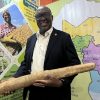
Farmers Need Science Solutions in Their Hands Sooner Than Later
Climate change is outpacing science and farmers are paying the price. Agricultural research innovations need to reach farmers before it is too late.« Previous Page — Next Page »


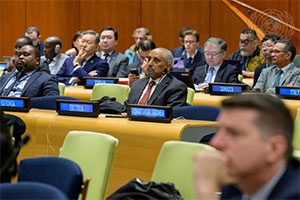 General Assembly Meets to Hear Briefing on UN80 Initiative. Credit: UN Photo/Manuel Elías
Global development conferences are continuing to produce critical frameworks for South-South cooperation and multilateral reform. In January of 2024, the 3rd Global South Nexus (GSN) International Conference was held in Odisha, India, with its theme being “Creating Responsible Professionals for Advancing SDGs: Inputs from Global North and South.” The 2025 UN SDG Report provided a midpoint assessment of the 2030 Agenda, with only 35% of targets on track and 18% having reversed. The 2025 UN Climate Change Conference (COP30) in Belém, Brazil, agreed to mobilize $1.3 trillion annually for climate action by 2035, operationalize the loss and damage fund, triple adaptation finance, and launched the Belém Mission to 1.5°C. In 2025, the Partnership for Economic Policy (PEP) convened its annual Policy Conference in Nairobi, Kenya, addressing the issue of “Financing and Inclusivity in Green Energy Transition in the Global South.” As the Global South advocates increasingly for a South-South framework alongside North-South cooperation, international conferences on sustainability aim to bridge economic and social divides between developed and developing countries in achieving the UN SDGs. Furthermore, to mark the UN’s 80th anniversary, the UN80 Initiative was launched to reshape how the UN system works so that every mandate, dollar, and decision creates greater impact for the global system.

The Week with IPS

NEXT STOP - SDGs
Tracking global progress towards a sustainable world
Tracking global progress towards a sustainable world
