Languages
Sunday, November 15, 2026



News and Views from the Global South
Civil Society

Islamic Organization Promotes Cultural Rapprochement Between US & Muslim World
The Organization of Islamic Cooperation (OIC), by virtue of its position of being the second largest international organization outside the UN system with 57 member countries comprising one fifth of the world population and covering Asia, Africa, Europe and the Americas, is indeed an important actor in dealing with rapprochement between cultures, in particular rapprochement between the Muslim World and its international partners like the USA.
Secretary-General Talks Myanmar, Trump Ahead of General Assembly
In an environment full of major threats, countries must work together towards peace and stability, the Secretary-General said ahead of the General Assembly.
Towards a Resource Efficient and Pollution Free Asia-Pacific
Senior government officials from across Asia and the Pacific will meet in Bangkok this week for the first-ever Asia-Pacific Ministerial Summit on the Environment. The high-level meeting is co-convened by the United Nations Economic and Social Commission for Asia and the Pacific (UN ESCAP) and UN Environment and is a unique opportunity for the region’s environment leaders to discuss how they can work together towards a resource efficient and pollution-free Asia-Pacific.
Partnerships Key to Implementing 2030 Development Agenda
The UN’s 2030 Agenda highlights the strong commitment to ending poverty in all its forms and dimensions, including by eradicating extreme poverty by 2030. It also emphasizes the determination to end hunger and to achieve food security as a matter of priority and to end all forms of malnutrition.
Internet Shutdowns in Africa Stifling Press Freedom
“The internet for journalism is now like the air you breathe,” said Befeqadu Hailu, an Ethiopian journalist and a member of the Zone 9 blogger collective who was arrested in April 2014 and charged with terrorism. “Without the internet, modern journalism means nothing.” Yet, the internet is something that journalists in multiple African countries are often forced to do without.
A Hostage to Parliament, Temer Sacrifices Indigenous Rights to Save Himself
Brazilians now have new reasons to yearn for and at the same time fear the parliamentary system of government. It facilitates quick solutions to political crises such as the one that is currently affecting the country, but it also further empowers reactionary forces and has led to backsliding on gains such as indigenous rights.
Mauritanians Go to Polls for Controversial Referendum Vote
While voters in Venezuela overwhelmingly rejected President Nicolás Maduro’s plan to amend the constitution recently, similar tensions and a clash between protesters and state authorities appears to be brewing across the Atlantic in the West African nation of Mauritania.
Latin America Discusses How to Make Environmental Rights a Reality
The final declaration of the Earth Summit held in Rio de Janeiro in 1992 stated that “Environmental issues are best handled with the participation of all concerned citizens.” However, this rarely happens in Latin America and the Caribbean.
Gender Equality? It’s Still a Man’s World
Gender inequality is the greatest moral and social issue of our time -- and the world’s most critical economic challenge. If half of the global population cannot fulfill their human potential, the world’s economic growth will falter.
Climate Change Brings Migration from the Dry Corridor to Nicaragua’s Caribbean Coast
If the impact of drought and poverty in the municipalities of the so-called Dry Corridor in Nicaragua continues pushing the agricultural frontier towards the Caribbean coast, by the year 2050 this area will have lost all its forests and nature reserves, experts predict.
Central America Fights Climate Change with Minimal Foreign Aid
Despite the fact that Central America is one of the regions most vulnerable to climate change, it has half-empty coffers when it comes to funding efforts against the phenomenon, in part because it receives mere crumbs in foreign aid to face the impacts of the rise in temperatures.
Will Governments Support Access to Information Driving Development?
In an Information Society, access, and the ability to apply and re-use information is at the heart of individual fulfilment and social participation. Long before the idea of an Information Society came into use, libraries connected people to this, connecting them with literature and learning, and allowing them to improve their lives, and those of their families and communities.
Migrant Contributions to Development: Creating a “New Positive Narrative”
Despite the “undeniable” benefits of migration, barriers including public misconceptions continue to hinder positive development outcomes, participants said during a series of thematic consultations here on safe, orderly, and regular migration.
The Unnoticed Demise of Democracy
Politicians are so busy fighting for their jobs, they hardly seem to notice that they risk going out of business. Democracy is on the wane, yet the problem is nowhere in Parliaments. Common to all is a progressive loss of vision, of long term planning and solutions, with politics used just for power.
Costa Rica’s Caribbean Coast Pools Efforts Against Climate Change
Jonathan Barrantes walks between the rows of shoots, naming one by one each species in the tree nursery that he manages, in the south of Costa Rica’s Caribbean coastal region. There are fruit trees, ceibas that will take decades to grow to full size. and timber species for forestry plantations.
Lawmakers in Europe Want the UN to Debate a Parliamentary Assembly. When Will Governments Follow?
Earlier this month, the European Parliament adopted its annual recommendations on the European Union’s policy at the upcoming session of the United Nations General Assembly that begins in September.
How to Achieve Universal Goals, Strategically
Discussion around the 2030 Agenda for Sustainable Development, a list of 17 goals listed by the UN, was all the buzz in the conference rooms of UN headquarters this week.
Not Just Numbers: Migrants Tell Their Stories
 Every single day, print and online media and TV broadcasters show images and footage of migrants and refugees adrift, salvage teams rescuing their corpses--alive or dead, from fragile boats that are often deliberately sunk by human traffickers near the coasts of a given country. Their dramas are counted –and told-- quasi exclusively in cold figures.

Civil Society on SDG Engagement: “We Are Not Guests”
Showing up in record numbers, civil society groups are urging greater inclusion and accountability in sustainable development processes at a UN high level meeting.
Communities Step Up to Help Save Jamaica’s Forests
According to the United Nations Food and Agriculture Organization (FAO), 31.1 percent or about 337,000 hectares of Jamaica is forested. Of this, 26.1 percent or 88,000 is classified as primary forest, the most biodiverse and carbon-dense form of forest.
Governments Support Trump’s Aim to Block Central American Migrants
Trying to make it into the United States as an undocumented migrant is not such an attractive option anymore for Moris Peña, a Salvadoran who was deported from that country in 2014.« Previous Page — Next Page »


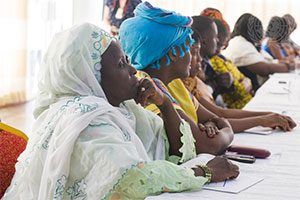 Representatives of Civil Society, Sierra Leone. Credit: UN Photo/Eskinder Debebe
Civil society faces mounting threats worldwide, even as it remains essential for democratic accountability, especially in countries struggling with economic instability and social inequality. However, at the same time, nations with weak democratic governance structures also systemically suppress the power of civil society. Human rights activists across the Global South frequently challenge issues such as political persecution and gender oppression, but in return face state-sanctioned punishment for their advocacy. Imprisonment and exile are common mechanisms of punishment that seek to erode the strength of civil society. The 2026 World Press Freedom Index has reached its lowest level in 25 years, with more than half of the world’s countries now falling into the "difficult" or “very serious” category for press freedom. IPS seeks to highlight the work of civil society across the Global South as well as the challenges that they face.
Updated by Yilan Batista and Shuli Wong August 2026

The Week with IPS

NEXT STOP - SDGs
Tracking global progress towards a sustainable world
Tracking global progress towards a sustainable world
