Languages
Sunday, November 15, 2026



News and Views from the Global South
Civil Society

Time Stands Still for Nepal’s Conflict Victims
“Reconstruction and reconciliation require finances and physical structure, but the families of the victims of the conflict first and foremost need their integrity protected. Physical and financial compensation mean little without justice,” wrote Suman Adhikari nearly 11 years ago, during a ceasefire in Nepal’s Maoist insurgency.
Chilean President’s Apology to the Mapuche People Considered “Insufficient”
Chilean President Michelle Bachelet’s formal apology to the country’s Mapuche Indians, for the “mistakes and atrocities” committed against them by the Chilean state, is seen by indigenous and social activists in the central region of Araucanía – the heartland of the Mapuche people - as falling short.
Why Is International Human Rights Law Such an Easy Target?
"Earlier this month, Britain’s Prime Minister called for human rights laws to be overturned if they were to "get in the way" in the fight against terrorism. Specifically, Theresa May said there was a need "to restrict the freedom and movement of terrorist suspects when we have enough evidence to know they are a threat, but not evidence to prosecute them in full in court."
“Torture Works” — in All the Wrong Ways
“Torture works” might rank among the most sweeping generalisations ever uttered, one brutal in its disregard of the pain and suffering created by this abhorrent practice. Indeed, torture works, but to all the wrong ends.
Men Who Commit Femicide Lose Rights Over Their Children in Argentina
In January 2008, Rosana Galliano was shot to death in Exaltación de la Cruz, a rural municipality 80 km from Argentina’s capital, Buenos Aires. Her ex-husband, José Arce, who was sentenced to life in prison, had hired hitmen to kill her.
Large Landowners Jeopardise Indigenous Revival in Brazil
The attack with guns and machetes that left at least 10 Gamela indigenous people wounded, in the northeastern state of Maranhão, highlighted the growing threats against the resurgence and survival of native people in Brazil.
Why the G7 Must Fund Health & Nutrition
The G7 Summit, held annually among the leaders of the world’s most powerful economies (Canada, France, Germany, Italy, Japan, the United Kingdom, the United States, and the EU), plays an important role in shaping responses to global challenges—theoretically at least.
Gateway Portals and the Quest for Sustainable Urbanization
On a busy Friday afternoon, the number 1 subway train heading north through Manhattan’s Westside comes out of a dark tunnel --and if one takes a minute to release oneself from communication devices—one can catch sight of the approaching 125th street in the distance, the crosswalk buzzing with yellow cabs.
Survivors of the El Mozote Massacre Have New Hopes for Justice in El Salvador
Except for a house with its walls riddled with holes made by bursts of machine gun fire, nobody would say that the quiet Salvadoran village of El Mozote was the scene of one of the worst massacres in Latin America, just 35 years ago.
Reflections on 2017 World Day for Cultural Diversity for Dialogue and Development
More than 7 billion people live on this planet spread among 7 continents, 194 states of the United Nations (UN) and numerous other non-self-governing territories. The world is made up of a mosaic of people belonging to different cultural and religious backgrounds. Our planet has been a cultural melting pot since time immemorial.
Punishment for Human Rights Abusers Is Irrevocable Achievement for Argentine Society
What at first was terrible news that outraged a large proportion of Argentine society, who see the conviction and imprisonment of dictatorship-era human rights violators as an irrevocable achievement for democracy, became a cause for celebration a week later.
Poor Rural Communities in Mexico Receive a Boost to Support Themselves
Jilder Morales, a small farmer in Mexico, looks proudly at the young avocado trees that are already over one metre high on her ejido - or communal - land, which already have small green fruit.
When It Comes to Fracking, Argentina Dreams Big
Since a US Energy Information Administration (EIA) report announced in 2011 that Argentina had some of the world’s biggest shale oil and gas reserves, the dream of prosperity has been on the minds of many people in this South American nation where nearly a third of the population lives in poverty.
In France, ‘Us and Them’ Amid Elections
Launched in the run-up to the French presidential elections, a daring exhibition in Paris is sparking dialogue about the origins and nature of racism, both in Europe and elsewhere.
Social Forum Calls for Fight Against Corruption, to Defend the Amazon
Corruption has penetrated the Amazon rainforest like an illness that infects everything, said Ruben Siqueira, coordinator of the Pastoral Land Commission (CPT), during the VIII Panamazonic Social Forum (FOSPA), which brought together in the Peruvian Amazon jungle representatives of civil society from eight Amazon basin countries.
Reflections on World Press Freedom Day
This year’s theme for the 2017 World Press Freedom Day “Critical Minds for Critical Times: Media’s role in advancing peaceful, just and inclusive societies” is one of the most important days honouring press freedom.
A Free and Diverse Media is Essential to Protecting Democracy in the 21st Century
Images of protestors flooding the streets – whether in Caracas, Bucharest, Istanbul or Washington DC – send a powerful message to those in power, especially when they are plastered across newspaper front pages.
Protection of Journalists Fails in Latin America
Mexican journalist Cecilio Pineda Brito covered drug trafficking issues in a region of the southern state of Guerrero where criminal groups are extremely powerful.
The UN Needs to Bring Parliamentarians on Board
In pursuit of the Agenda 2030 the UN is playing an increasingly important role. Its Charter was declared in the name of “We, the Peoples.“ Elected representatives, however, who are interested in the affairs of the UN and its entities will discover that there are hardly any arrangements in place that would allow them to be involved.
New Generation Rallies to Climate Cause in Trinidad
As two environmental activist groups in Trinidad and Tobago powered by young volunteers prepare to ramp up their climate change and sustainability activism, they are also contemplating their own sustainability and how they can become viable over the long-term.
No Trace of the Nicaraguan Interoceanic Canal
Less than three years from the projected completion in Nicaragua of a canal running from the Caribbean Sea to the Pacific Ocean, there is no trace of progress on the mega-project.« Previous Page — Next Page »


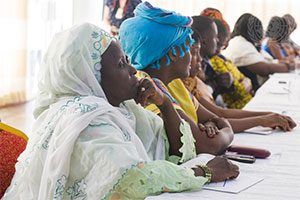 Representatives of Civil Society, Sierra Leone. Credit: UN Photo/Eskinder Debebe
Civil society faces mounting threats worldwide, even as it remains essential for democratic accountability, especially in countries struggling with economic instability and social inequality. However, at the same time, nations with weak democratic governance structures also systemically suppress the power of civil society. Human rights activists across the Global South frequently challenge issues such as political persecution and gender oppression, but in return face state-sanctioned punishment for their advocacy. Imprisonment and exile are common mechanisms of punishment that seek to erode the strength of civil society. The 2026 World Press Freedom Index has reached its lowest level in 25 years, with more than half of the world’s countries now falling into the "difficult" or “very serious” category for press freedom. IPS seeks to highlight the work of civil society across the Global South as well as the challenges that they face.
Updated by Yilan Batista and Shuli Wong August 2026

The Week with IPS

NEXT STOP - SDGs
Tracking global progress towards a sustainable world
Tracking global progress towards a sustainable world
