Languages
Wednesday, November 25, 2026



News and Views from the Global South
Civil Society
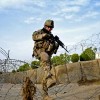
U.N. Tally Excluded Most Afghan Civilian Deaths in Night Raids
A July United Nations report asserting that only 30 civilians died in targeted raids in Afghanistan during the first six months of 2011 reflected only a very small fraction of night raids in which civilians were killed, according to officials of the independent Afghan commission which had co-produced the 2010 report on civilian casualties with the U.N. Mission.
Civil Society Groups Call for Action to Curb Land Grabbing
Civil society organisations are calling on governments in developing countries to stop leasing and selling out land to transnational corporations because it leads to land degradation and food insecurity.Permanent People’s Tribunal Sets Up Shop in Mexico
"We have a duty to show what the reality is, and we will do so with complete independence," said French judge Philippe Texier, a member of the Permanent People’s Tribunal, which has opened a chapter in Mexico.
SPAIN: Detained Immigrants “Are Treated Like Criminals”
"It was very tough, like being in prison," says 29-year-old Algerian immigrant Sid Hamed Bouziane, in slow Spanish, about his 28-day stay at the Immigrant Detention Centre, or CIE, in the southern Spanish city of Málaga.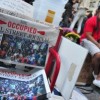
U.S.: Not Just a Protest, But a Little Utopia
The Occupy Wall Street (OWS) movement has withstood political pressure, bad weather, police violence, and over a thousand arrests, and is continuing to grow in New York City a month in.DR CONGO: No Hope for Free and Fair Elections
With six weeks to go before the presidential and parliamentary elections in the Democratic Republic of Congo, civil society organisations say the elections will not be fair, as many doubt the ability of the country’s electoral authorities to ensure transparency.
Q&A: ‘Soil is Key to Global Warming, Food Security’
Luc Gnacadja, in his second three-year term as executive secretary, United Nations Convention to Combat Desertification (UNCCD), is widely seen as delivering on his commitment to manage the world's drylands.Rights Groups Demand General Assembly Action on Syria
A coalition of 29 international human rights organisations is appealing to the 193-member General Assembly to act "immediately" to help halt the unbridled violence in Syria which has claimed the lives of over 3,000 people, mostly civilians, since the political protests began last March.Greek Strike Resumes Ahead of Austerity Vote
Thousands of Greeks, furious at the government's austerity measures, gathered outside parliament in the capital Athens, as the second day of a general strike and mass protests began.Media Called to Arms in Green Battle
In a "call to arms" in this northern Italian town, environmentalists are urging the international media to help disseminate ideas and solutions that could reduce carbon emissions, stop land-grabbing by wealthy countries and stem the tide of environmental refugees.
SOUTH KOREA: Drylands Meet Deserts Gender
Delegates to the United Nations Convention to Combat Desertification’s (UNCCD) meeting underway in this South Korean city are convinced that women, though affected most by desertification, hold the key to addressing hunger through land regeneration.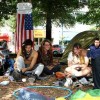
Occupy Movement Heats Up U.S. South
As the Occupy Movement spreads like wildfire across the United States and around the world, protests in the U.S. South are facing unique challenges.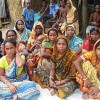
BANGLADESH: Reducing Poverty Hinges on Microcredit – Yunus
Reducing poverty in Bangladesh will depend critically on sustaining the successes of the country’s microcredit (MC) programmes, says Muhammad Yunus, the economist who shared the 2006 Nobel peace prize with his creation, Grameen Bank.
MEXICO: Government Frustrates Dialogue with Peace Movement
"I feel bad. They led me on with false hopes," complained María Herrera, one of the pillars of the Mexican peace movement led by writer Javier Sicilia, hours after the activists' second meeting with President Felipe Calderón.
Young Gather to Show Their Power
With young people spearheading the revolutionary movements in the Middle East and other regions, the seventh Youth Forum taking place here this week has particular relevance, participants say.
Qatar Launches New Global Award to Promote Education
The internationally-renowned Nobel Prizes have been awarded annually for superlative achievements in physics, chemistry, medicine, literature and peace.Occupy Wall Street Protests March on Midtown, and the World
Activists from the Occupy Wall Street movement in New York City flooded Times Square on Saturday as part of a global day of action, with protesters packing the sidewalks and some streets as far as the eye could see in every direction, centered on the plaza where the famous ball drops on New Year's Eve.
PAPUA NEW GUINEA: Women Call the Shots on Mega Copper Mine
Whether the world’s largest open-cut mine on this island territory of Papua New Guinea (PNG) will resume copper and gold production, after being mothballed for 22 years, will depend on how satisfied matrilineal landowners are with the proposals.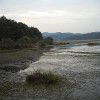
SOUTH KOREA: Preventing Desertification Better Than Cure
"Humanity is the only desert-making species and we’ve been degrading usable land at one percent per year," says Luc Gnacadja, executive secretary of United Nations Convention to Combat Desertification (UNCCD).Western Sanctions Look Fussy in Burma
On the face of it, the sudden release of political prisoners in Burma would appear a triumph for the sanctions regime imposed on the Southeast Asian nation by Western governments.Conference Renews Eroded Efforts to Combat Desertification
Degradation of land is the world's quiet crisis, undercutting food production, increasing water scarcity, impoverishing hundreds of millions of people and affecting two billion overall. Nearly 20 million square kilometres of the earth's arable lands – an area twice the size of Canada – have already been degraded.« Previous Page — Next Page »


 Representatives of Civil Society, Sierra Leone. Credit: UN Photo/Eskinder Debebe
Civil society faces mounting threats worldwide, even as it remains essential for democratic accountability, especially in countries struggling with economic instability and social inequality. However, at the same time, nations with weak democratic governance structures also systemically suppress the power of civil society. Human rights activists across the Global South frequently challenge issues such as political persecution and gender oppression, but in return face state-sanctioned punishment for their advocacy. Imprisonment and exile are common mechanisms of punishment that seek to erode the strength of civil society. The 2026 World Press Freedom Index has reached its lowest level in 25 years, with more than half of the world’s countries now falling into the "difficult" or “very serious” category for press freedom. IPS seeks to highlight the work of civil society across the Global South as well as the challenges that they face.
Updated by Yilan Batista and Shuli Wong August 2026

The Week with IPS

NEXT STOP - SDGs
Tracking global progress towards a sustainable world
