Languages
Tuesday, September 29, 2026



News and Views from the Global South
Civil Society
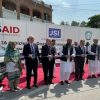
Afghan Refugees, Among Others, Feel the Impact of USAID Funding Freeze
“I was shocked when told by a security guard that the clinic has been closed down. I, along with my relatives, used to visit the clinic for free checkups,” Jamila Begum, 22, an Afghan woman, told IPS.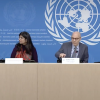
Bangladesh: UN Human Rights Denounces Former Government’s Violations Against Protestors
A new report from the UN Human Rights Office confirms that Bangladesh’s former government coordinated and committed human rights violations against its civilians to suppress the protest movement in July last year, with the high commissioner calling for justice and serious reform to end the cycle of violence and retribution.
Development Effectiveness & the Quality of Financing: Towards a More Holistic Approach at Seville
When world leaders gather in Seville for the 4th International Conference on Financing for Development (FfD4) in June, they will be meeting at a pivotal moment: one defined by mounting systemic risks, a multiplication of crises, and proliferation and fragmentation of development co-operation actors and funds.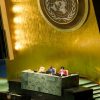
US Pullout Gives Upper Hand to Human Rights Abusers Worldwide
When some of the world’s “authoritarian and repressive regimes” were elected as members of the UN Human Rights Council (HRC) --including Cuba, China, Russia, Kazakhstan and the Democratic Republic of Congo (DRC) -- a US Congressman Dana Rohrabacher infamously remarked: “The inmates have taken over the asylum, I don’t plan to give the lunatics any more American tax dollars to play with.”
Legal Amendments in Iraq Threaten Rights of Women and Girls
Efforts to end child marriage in Iraq are facing a serious threat, with the Iraqi Council of Representatives’ approval of amendments to Iraq’s Personal Status Law raising grave concerns that it risks permitting child marriage for girls.
Not an Option. A Call for Action
A global alert is not an option. It requires global action. Over the past three years, the number of crisis-impacted school-aged children in need of urgent quality education support has grown by an alarming 35 million, according to Education Cannot Wait’s new Global Estimates Report.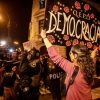
What is Not Good for Democracy in Peru is Not Good for Women
"We are facing a deeply conservative government that is opening the doors to all kinds of setbacks. We have a failed state with a democracy that is no longer a democracy," said Gina Vargas, a Peruvian feminist internationally recognized for her contributions to women's rights.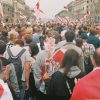
Belarus: Brutal Repression Continues Post Presidential Election, Say Human Rights Groups
In the months leading up to presidential elections at the end of January, Belarus’s authoritarian leader Alexander Lukashenko ordered the release of hundreds of political prisoners. Some observers saw this as a sign that the man who had led the former Soviet state for the last three decades could be planning a relaxation of his regime’s brutal repressions in return for a lessening of Western sanctions.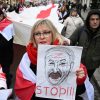
Belarus: A Sham Election That Fools No One
Alexander Lukashenko will soon begin his seventh term as president of Belarus. The official result of the 26 January election gave him 86.8 per cent of the vote, following an election held in a climate of fear. Only token opposition candidates were allowed, most of who came out in support of Lukashenko. Anyone who might have offered a credible challenge is in jail or in exile.
Ending FGM Requires Strengthening Partnerships and Advocacy Efforts
February 6 is the International Day of Zero Tolerance for Female Genital Mutilation (FGM). A practice deemed a gross violation of human rights, tragically the practice persists across multiple countries in Africa, the Middle East, and Asia. Over 230 million women and girls alive today have been subjected to this gruesome practice, and experts warn that at least 27 million more could endure this by 2030.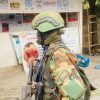
Goma: What Have We Done to God to Deserve All This?
Zawadi Delphine is a soldier's wife and mother of three. She and her family live in Camp Katindo, east of the city of Goma, the provincial capital of North Kivu. Recalling what happened on the night of Sunday, January 26, 2025, she says that her husband had come from the front, north of the city of Goma, visibly angry and in a hurry. Without telling her what was really going on, he had told her that they would only meet again by "divine grace."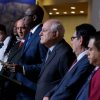
U.S. White House Executive Order Raises Concerns for Its Support to the UN
A new executive order from the United States White House calls for withdrawing support from major UN entities and a review of all international intergovernmental organizations which the United States is a member of. The U.S.’s orders against the UN Palestine Refugee Agency also do not bode well for ongoing ceasefire negotiations in Gaza.
‘Reconciliation Will Require Robust Transitional Justice and Accountability Mechanisms’
CIVICUS discusses the ongoing conflict in Ethiopia’s Amhara region with Hone Mandefro, advocacy director at the Amhara Association of America, and Henok Ashagray, PhD candidate and project officer at the Centre for Human Rights at the University of Pretoria.
Pakistan: Freedom of Expression at Stake With New Cybercrime Law
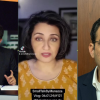
“I may not be able to continue hosting my show because the content I put up will most certainly land me in prison,” said senior correspondent Azaz Syed who works for a private TV channel, but who also has his own private online digital channel. He was referring to the recent amendment in the already existing cybercrime law, terming it a “wild” law which has been instituted to grapple with fake news among other online harms.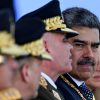
Venezuela: The Democratic Transition That Wasn’t
Venezuela stands at a critical juncture as Nicolás Maduro begins a controversial third term as president. His 10 January inauguration, following a post-election period marked by widespread protests against election fraud and heightened repression, represents a significant setback for democratic aspirations in a country devastated by years of economic collapse and political oppression. Maduro’s confirmation at the helm is the latest chapter in a decades-long process that has transformed Venezuela from a beacon of leftist democratic aspirations into a full-blown authoritarian regime, where the last shred of legitimacy – popular election – has now vanished.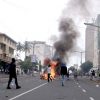
Mozambique: Two Presidents, One Divided Nation
No illusions: Mozambique remains in crisis, despite the inauguration of Daniel Chapo as president and the establishment of a new parliament. While the widespread allegations of massive electoral fraud during the elections on 9 October 2024 were the immediate trigger for the unrest, the protests revealed deeply entrenched socio-economic and political grievances.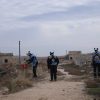
Hidden Danger: How War Remnants Threaten Syrian Lives
When 42-year-old Amina al-Hassan's family returned home after the fall of the Bashar al-Assad regime, her son stood on a landmine. Hassan, from Kafranbel in southern Idlib countryside, sits beside her son's bed in the hospital after his leg was amputated following the explosion on agricultural land near their home.
‘Areas Essential to the Global Climate Are Being Threatened by Economic Projects’
CIVICUS discusses activism against oil auctions in the Democratic Republic of the Congo (DRC) with François Kamate, founder and coordinator of the young environmental volunteer movement Extinction Rebellion Rutshuru.

Safeguarding Civil Society – a New Global Initiative Could Become a Game-Changer
Across the world, civil society faces increasing pressure—from restrictive laws on civil society operations to digital surveillance, funding restrictions, and direct attacks on human rights defenders. In response, a global civil society coalition is stepping up. The newly launched European Union System for an Enabling Environment for Civil Society (EU SEE) spans 86 countries, equipping civil society actors, governments and other stakeholders with the data, tools, and resources needed to anticipate and respond in real time to shifts in the enabling environment—ensuring that civil society can thrive, freely express itself, and actively shape its context.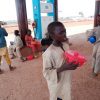
Malnutrition in Nigeria Rises Alarmingly, Urgent Action Needed
In June 2024, 26-year-old Zainab Abdul noticed her two-year-old daughter growing pale, losing weight, and battling diarrhea. She wasn’t surprised. Since jihadist-linked bandits had forced them out of their village in Kadadaba, Zamfara State, in northwestern Nigeria, her family had been living in a refugee camp with limited access to food.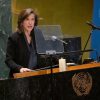
Antisemitism On The Rise Among Younger Generations
The United Nations (UN) held the annual Holocaust Memorial Ceremony on January 27 with the theme "Holocaust Remembrance for Dignity and Human Rights". This year - 2025 - marks the 80 year anniversary of the end of World War II and the liberation of Nazi concentration camps that resulted in the deaths of over 6 million Jews. This event included testimonies from Holocaust survivors, underscoring the importance of understanding and remembrance. With Holocaust denial and attacks on Jews on the rise, it is important to take meaningful steps as a society to combat racism and antisemitism.« Previous Page — Next Page »


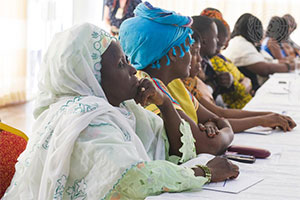 Representatives of Civil Society, Sierra Leone. Credit: UN Photo/Eskinder Debebe
Civil society faces mounting threats worldwide, even as it remains essential for democratic accountability, especially in countries struggling with economic instability and social inequality. However, at the same time, nations with weak democratic governance structures also systemically suppress the power of civil society. Human rights activists across the Global South frequently challenge issues such as political persecution and gender oppression, but in return face state-sanctioned punishment for their advocacy. Imprisonment and exile are common mechanisms of punishment that seek to erode the strength of civil society. The 2026 World Press Freedom Index has reached its lowest level in 25 years, with more than half of the world’s countries now falling into the "difficult" or “very serious” category for press freedom. IPS seeks to highlight the work of civil society across the Global South as well as the challenges that they face.
Updated by Yilan Batista and Shuli Wong August 2026

The Week with IPS

NEXT STOP - SDGs
Tracking global progress towards a sustainable world
Tracking global progress towards a sustainable world
