Languages
Thursday, November 26, 2026



News and Views from the Global South
Civil Society
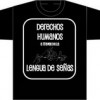
Deaf Ecuadoreans Stand Up for Identity, Rights
Ximena Carrera discovered a new world at the university. After years of experts who had ruled out the use of hearing aids, she finally tried them -- and her life completely changed. That is what she now hopes will happen for many more hearing-impaired Ecuadoreans.
Q&A: Cuba’s GM Maize Debate Opens Up
The cultivation in several Cuban provinces of genetically modified maize, obtained by the Centre for Genetic Engineering and Biotechnology, endangers biodiversity and contradicts the government's own agricultural production plan, warns Cuban agro-ecologist Fernando Funes-Monzote.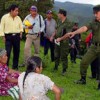
MEXICO: Native Women Raped by Soldiers Find Justice at Regional Court
"I dream of returning to my community and for everything to be normal again, although that won't be easy," Valentina Rosendo, one of two indigenous women who found justice at the Inter-American Court of Human Rights, told IPS.Free Trade Threatens Affordable HIV Treatment
With India's role as 'pharmacy to the developing world' seriously threatened by a free trade agreement to be signed with the European Union in December, the fate of cheap or free antiretroviral treatment for people living with HIV and AIDS hangs in balance.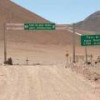
ARGENTINA-CHILE: Citizens Want a Voice in Andean Tunnel Plan
Agua Negra Pass today is an unpaved road that connects Argentina and Chile at 4,800 metres above sea level. But it is only open in the southern hemisphere summer months -- December to March -- and then only to lightweight vehicles.INDIA: Indian Schools Will Spare the Rod, and the Child
Child rights activists hope that the arrest of the principal of one of India's elite public schools for caning a student and possibly abetting his suicide will serve to put an end to the widespread practice of corporeal punishment in this country's educational institutions.Wolf Back at Swiss Doors
Wolves have resettled in Switzerland. Their appetite for sheep and even cattle has sparked fierce debates in the mountain republic. Nature conservation organisations demand the implementation of herd-protection measures. However, alp farmers are sceptical about their practicability and costs.DEVELOPMENT: Fate of Millions Hangs on Global Fund Pledges
Sibongile Mavimbela has been living with HIV for the past 12 years; she has been on antiretrovirals for the past seven. But the mother of two fears the supply of free ARVs could dry up in the near future if contributions to the Global Fund on HIV/AIDS, TB and Malaria fall short of the $20 billion needed to meet development targets.
UN Delegations Seek to Boost Reconciliation in Honduras
The cause of dialogue and reconciliation in Honduras has received a boost from visits by two United Nations delegations, here to test the waters in preparation for talks to resolve political and social conflicts triggered by the coup that ousted former president Manuel Zelaya in June 2009.DR CONGO: Mapping Road Towards Ending Impunity
Rights defenders in the Democratic Republic of Congo are encouraged by the publication of a report detailing grave violations of human rights in the DRC. The report, covering more than 600 incidents in the ten years between March 1993 and June 2003, has drawn criticism from several governments in the region.MEXICO: Freedom of Information Laws a Model; Not So the Practice
Mexico has suffered a setback in terms of government transparency and access to public information, according to Thomas Blanton and Kate Doyle, experts with the Washington-based National Security Archive (NSA).Europe Offers Tax Benefits for Illegal Settlements
Organisations raising funds to benefit the Israeli army and illegal settlements in the West Bank enjoy tax-exempt status in Europe, an IPS investigation has shown.FBI Raids Seen as Political Retribution
Recent raids by federal agents on the homes and offices of peace activists are being viewed by civil libertarians and civil society groups as further proof that the U.S. is morphing into a "surveillance state" where the right to privacy and other constitutional protections are being quietly whittled away.
LATIN AMERICA: Peru Urges Regional Alliance Against Drug Trade
The nations of Latin America must ally themselves -- regardless of their roles as drug producers, consumers or transit routes -- in a full-force fight against drug trafficking, says Peru, which plans to lead the way.MALAWI: Village Chief Leads Fight For Maternal Health
In Ntcheu, a rural district in central Malawi, villagers have taken the fight against the country's high maternal mortality rate into their own hands. They have almost eradicated maternal deaths in the area by urging pregnant women to give birth in hospitals, under medical supervision.DEVELOPMENT-AFRICA: Tax Could be The Way Out of Aid Dependence
Many African countries struggle with debt and finding money for national budgets because they fail to recognise taxation as a sustainable source of funding. Moreover, multinational companies are too easily given tax breaks while siphoning off money through illegal tax evasion.DEVELOPMENT: Obama Lays Out Vision, Details Still Blurry
Following U.S. President Barack Obama's introduction of his long-awaited Global Development Policy at the United Nations on Wednesday, exactly one year after he told member states that he would return with a plan to make the Millennium Development Goals (MDGs) a reality, questions remain over how it will be executed.
LATIN AMERICA: Five Million Women Have Fallen Prey to Trafficking Networks
The fight against human trafficking in Latin America is ineffective and has led to the emergence of intra-regional markets for the trade, according to experts and activists meeting this Hjek in this Mexican city.
CUBA: Men’s Group Champions “Diverse Masculinities”
Men representing an array of sexual identifications have organised in Cuba to defend sexual rights and promote respect for "other masculinities," with the belief that greater visibility is needed to achieve true social change and acceptance.
Climate Justice Treks from Cochabamba to Cancun
The "people's" climate agenda that the Bolivian government and civil society produced at an April conference in Cochabamba has made its way to the official United Nations negotiating table. But its inclusion in a binding climate treaty is unlikely, say activists.U.S.: FBI Chastised for Spying on Activists
The Federal Bureau of Investigation (FBI) improperly spied on U.S. activists involved in First Amendment-protected activities and mischaracterised nonviolent civil disobedience as terrorism, which placed innocent activists on terror watch lists, the American Civil Liberties Union (ACLU) charged Tuesday in response to a new report by the Justice Department's Inspector General.« Previous Page — Next Page »


 Representatives of Civil Society, Sierra Leone. Credit: UN Photo/Eskinder Debebe
Civil society faces mounting threats worldwide, even as it remains essential for democratic accountability, especially in countries struggling with economic instability and social inequality. However, at the same time, nations with weak democratic governance structures also systemically suppress the power of civil society. Human rights activists across the Global South frequently challenge issues such as political persecution and gender oppression, but in return face state-sanctioned punishment for their advocacy. Imprisonment and exile are common mechanisms of punishment that seek to erode the strength of civil society. The 2026 World Press Freedom Index has reached its lowest level in 25 years, with more than half of the world’s countries now falling into the "difficult" or “very serious” category for press freedom. IPS seeks to highlight the work of civil society across the Global South as well as the challenges that they face.
Updated by Yilan Batista and Shuli Wong August 2026

The Week with IPS

NEXT STOP - SDGs
Tracking global progress towards a sustainable world
