Languages
Sunday, November 29, 2026



News and Views from the Global South
Civil Society

Q&A: 'GCAP Is About Political Engagement'
Rights activist Irfan Mufti, currently working as campaign manager for the Global Call to Action against Poverty (GCAP), is confident that this year will see the movement influencing national budgets as well as the policies of institutions such as the International Monetary Fund (IMF) and the World Bank.CENTRAL AMERICA: Little Enthusiasm Over Anti-Poverty Campaign
The enthusiasm among social groups in Mexico and Central America for the Global Call to Action against Poverty (GCAP) is not reflected by the general public, which has displayed scant interest in this week's event.LATIN AMERICA: Historic Chance to Get Rid of Hunger
High economic growth rates, political will and laws aimed at ensuring the right to food will not be enough to eradicate hunger in Latin America by 2025, according to the United Nations Food and Agriculture Organisation (FAO), which calls for ongoing investment, improved coordination of programmes and support for family farming.SOUTH AMERICA: Call Against Poverty Takes Aim at Inequality
More than two years after the launch of the Global Call to Action Against Poverty (GCAP), social movements in South America are putting the accent on the fight against social inequality and criticism of the neoliberal economic model, which they see as hindering development.MIDEAST: Palestinians Prepare to Stand Up for What Matters
While the international community concentrates on final status negotiations between the Palestinian government and Israel, the Palestinian people plan to stand up Oct. 17 to show the world what really matters to them.LEBANON: What A 'Safe' Cluster Bomb Did
The explosion ripped through the tiny garden in rural south Lebanon, hurling Naemah Ghazi to the ground. The shrapnel from the bomb sliced through her legs, and she rapidly lost consciousness. "There was a lot of blood," her mother Khadija recalls. "All her body was bleeding."
ENVIRONMENT-ICELAND: Hay Restores Eroded Land
Icelandic farmers have found a successful way of repairing erosion escarpments: they blow cut-up hay at them.AUSTRALIA: Activists Slam Neo-Colonialism in the Pacific
Activists attending an international solidarity forum in Melbourne have been speaking out against what they regard as neo-colonial practices in the South Pacific region.AFGHANISTAN: Battling the Taliban With Soviet-Era Weapons
In the dry Afghan heat a small band of hopeful soldiers, vying to become elite commandos, swiftly falls into line as drill instructor Lt. Abdul Hussein barks orders during a physical fitness exam.HEALTH-ASIA: Nutrition Is Key to AIDS Treatment Say Experts
People living with HIV and AIDS in two corners of Asia may benefit from a campaign that seeks to broaden public policy responses to the syndrome. Central to this new drive is to make nutrition programmes a part of treatment, say experts.CHINA: Communist Congress to Reaffirm One-Party Rule
The Chinese Communist Party may have toyed with the idea of experimenting with Nordic-style democratic socialism but next week’s key 17th party congress is expected to steer the country firmly towards a future of one-party rule.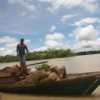
ENVIRONMENT-COLOMBIA: The Unusual Wealth of the Choco
"Let's go to the sea, let's go to the sea," one hears a nervous voice say every so often in the fishing village of Bahía Solano, on the Colombian Pacific coast. A package has been seen floating and boats are going after a not-so-traditional catch: cocaine thrown out by fleeing drug traffickers.RIGHTS-COLOMBIA: Defying Threats, Thousands Take to the Streets
Arbitrary arrests, menacing warnings from the army and harsh crackdowns on protesters did not daunt the tens of thousands of Colombians who took to the streets over the last three days to protest against the rightwing government of Álvaro Uribe.CLIMATE CHANGE: Nobel Prize Recognises Scientific Community
Climate change is linked to world peace because the effects of global warming can threaten stability and harmony in the world, according to Rajendra Pachauri, one of thousands of international scientists who are to share the Nobel Peace Prize with former U.S. Vice President Al Gore.RIGHTS: Indigenous Congress Demands Teeth for UN Declaration
Indigenous leaders are holding a regional congress in Bolivia to discuss strategies to oblige governments to take on board as state policy the Declaration on the Rights of Indigenous People, adopted by the United Nations General Assembly on Sept. 13.FILM-BRAZIL: Elite Unit – Heroes or Anti-Heroes?
The recently released film "Tropa de Elite" (Elite Squad) has sparked unprecedented debate in Brazil about the role and actions of the security forces as they combat drug trafficking mafias in shantytowns.RIGHTS-EL SALVADOR: Amnesty a ‘Monument to Impunity’ Say Activists
Human rights activists in El Salvador said they were "indignant over and ashamed of" the government’s presentation to the Inter-American Commission on Human Rights (IACHR) this week, which described the country’s peace process as a success and the amnesty law as a "contribution to national reconciliation."GERMANY: Doubts Rise over Afghan Intervention
German non-governmental organisations operating in Afghanistan are urging the government to reduce its military focus in favour of development and civil cooperation.CUBA: Social Beefs, Proposals Voiced in Widespread Debates
Like Pandora’s box, the popular debates promoted by acting Cuban President Raúl Castro have brought to light countless problems that affect the daily lives of Cubans, who are now hoping to see their proposals for solutions on the official agenda in the short or medium term.RIGHTS: Peruvian Government Accused of Poor Track Record
The Peruvian government will be asked to explain Friday to the Inter-American Commission on Human Rights (IACHR) decrees that human rights groups say are aimed at clamping down on social protest, and what it has done to protect the rights of uncontacted indigenous peoples.DEATH PENALTY: Guarded Optimism for Moratorium Vote
Celebrities, campaigners and leading human rights organisations gathered here to celebrate the World Day Against the Death Penalty on Wednesday expressed cautious optimism about a global moratorium on executions expected to be voted on by the U.N. General Assembly in the coming weeks.« Previous Page — Next Page »


 Representatives of Civil Society, Sierra Leone. Credit: UN Photo/Eskinder Debebe
Civil society faces mounting threats worldwide, even as it remains essential for democratic accountability, especially in countries struggling with economic instability and social inequality. However, at the same time, nations with weak democratic governance structures also systemically suppress the power of civil society. Human rights activists across the Global South frequently challenge issues such as political persecution and gender oppression, but in return face state-sanctioned punishment for their advocacy. Imprisonment and exile are common mechanisms of punishment that seek to erode the strength of civil society. The 2026 World Press Freedom Index has reached its lowest level in 25 years, with more than half of the world’s countries now falling into the "difficult" or “very serious” category for press freedom. IPS seeks to highlight the work of civil society across the Global South as well as the challenges that they face.
Updated by Yilan Batista and Shuli Wong August 2026

The Week with IPS

NEXT STOP - SDGs
Tracking global progress towards a sustainable world
