Languages
Monday, October 26, 2026



News and Views from the Global South
Education

COVID-19: Why We Must Reset Our Thinking
Covid-19 is the most significant event since the Second World War. It changes everything. It brings great sadness to many of us as we lose loved ones, as we see people losing their jobs, and as we see people around the world suffering immensely.
Women Taking Charge during COVID-19
As the COVID-19 mayhem carries on in most countries, the role of mothers, daughters, and female caregivers have been affected the most. Besides looking after the household and home schooling children, they are also working on the front lines, actively or passively caring for their respective communities.
COVID-19: The Digital Divide Grows Wider Amid Global Lockdown
The digital divide has become more pronounced than ever amid the global coronavirus lockdown, but experts are concerned that in the current circumstances this divide, where over 46 percent of the world's population remain without technology or internet access, could grow wider -- particularly among women.Time for the World Bank and IMF to Be the Solution, Not the Problem
The World Bank and the International Monetary Fund (IMF) have a historic opportunity to help stabilize a world reeling from COVID-19. Doing so will require the institutions to change course and aggressively support poor countries’ ability to invest broadly in the government services their populations need.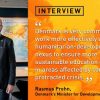
The Power of Education in Emergencies: Interview with Denmark’s Minister of Development Cooperation Rasmus Prehn
Denmark is Education Cannot Wait’s (ECW) third largest donor, with US$79.1 million in contributions to date. In this insightful interview with Denmark’s Minister for Development Cooperation, Rasmus Prehn, we explore the importance of girls’ education and gender equality, the humanitarian-development nexus, expanded engagement with the private sector, education in emergency response to the COVID-19 pandemic and more. A former high school teacher, with a master’s degree in social science, Minister Prehn has been a member of Danish Parliament since 2005, and was named Minister for Development Cooperation on June 27, 2019. Minister Prehn is the former chairman of the Danish Research, Education and Further Education Committee, a tireless advocate for education in emergencies, and a true champion for achievement of the Sustainable Development Goals, especially SDG4: inclusive and equitable, quality education for all.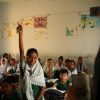
The COVID-19 Pandemic and the Reinvention of the Spirit of Solidarity and Cooperation
An invisible adversary has thrown the world – Global South and Global North alike – into disarray. The psychosocial and economic consequences of the COVID-19 crisis will remain with us long after it has been overcome. There will be no anti-viral return to the pre-coronavirus status quo, nor can we afford to idly wait for a viral transformation of our world. The future is not inevitable, abstract promise – it will depend on our collective readiness to forge it, or to be forged by it.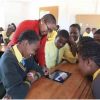
How South Africa can Address Digital Inequalities in E-learning
South Africa’s education system is complex, with historical inequalities dating back to apartheid. Most of the country’s pupils come from disadvantaged backgrounds. Language is an issue; most pupils do not speak English as a mother tongue, yet English dominates in many classrooms. And, as the COVID-19 crisis has showed, there’s a huge digital divide at play.
Thandika Mkandawire, Pan-Africanist Par Excellence
Thandika Mkandawire (1940-2020) had a wicked sense of humour. But he was so considerate that he often made himself the butt of his jokes which typically had a moral. When others struggled to pronounce his surname, he would help them out, “Me kinda weary”.
Children under Lockdown get a ‘Learning Passport’
Soon schools in Timor-Leste, Ukraine, and Kosovo, where some 6.5 million children are currently at home, will hopefully start teaching their children once again -- albeit online.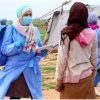
Collaboration Can Help Eradicate COVID-19
Since the founding of the United Nations in 1945, space for multilateral policy development and commitment has grown. Its growth in the global health field augurs well as we find ways to mitigate the spread of the novel coronavirus.
Global Leaders Must Prioritise Children’s Wellbeing amid Coronavirus Pandemic – UN
United Nations Secretary General António Guterres on Thursday pleaded with global leaders and families to ensure the protection of the world's children, millions of whom he says are vulnerable to a myriad of threats as a result of the shutdown arising from the global coronavirus pandemic.
The Fierce Urgency of Now
We are living in a crisis unprecedented since World War II: COVID-19. The pandemic brutally sweeps across the globe, where we already face a massive global learning crisis and multiple brutal humanitarian crises. How much more can those left furthest behind in forced displacement and armed conflicts take?
U.N. Releases Report on Socio-economic Effects of Coronavirus
As the number of coronavirus cases continues to grow, concerns are simultaneously growing about the current and long-term effects this will have on certain demographics -- specifically, women, the youth, migrant workers, and many employees around the world.
The Fierce Urgency of Now – ECW Allocates $15M in Emergency Funds
The Education Cannot Wait Global Fund (ECW) allocates a total of US$15 million in an initial series of emergency grants for the rapid delivery of holistic education services to protect and support vulnerable children and youth hit by the COVID-19 pandemic in 16 countries/emergency contexts. These girls and boys are already impacted by armed conflicts, forced displacement, natural disasters and protracted crises. An additional series of grants to support the response in other crisis-affected countries will be released shortly and reach partners in-country in the coming days.
Surviving Domestic Violence in times of Covid19
“I come from Baglung District, a part of Dhawalagiri Zone in Nepal. My house overlooks the river. Do you know, our district is known for the suspension bridges?”, her eyes glimmer for a fraction of a second and then she breathes a heavy sigh! Her right hand is still wrapped in a scarf, while with the other she pats her 17-month-old. “If I ever get a chance I will take you to my village, we have a lot of medicinal plants.” She pauses while tears roll down as she continues our Facetime session. “I was 16 when I had my first child and I was 17 when my arm was broken by my mother-in-law.”
Education Cannot Wait Interviews Henrietta H. Fore, Unicef Executive Director
Henrietta H. Fore became UNICEF’s seventh Executive Director on 1 January 2018. She has worked to champion economic development, education, health, humanitarian assistance and disaster relief in a public service, private sector and non-profit leadership career that spans more than four decades.
COVID-19 and Education in Emergencies
Armed conflicts, forced displacement, climate change induced disasters and protracted crises have disrupted the education of 75 million children and youth globally. And that number is growing in an unprecedented way with the spread of COVID-19. Education has been hit particularly hard by the COVID-19 pandemic with 1.53 billion learners out of school and 184 country-wide school closures, impacting 87.6% of the world’s total enrolled learners. Drop-out rates across the globe are likely to rise as a result of this massive disruption to education access.
A Story of Triumphs and Tribulations: Implementing Services for Autism in Bangladesh
A few days ago, a friend said to me that my focus on autism, although rather successful, had “sucked out all energy from other critical areas of social need in Bangladesh.” My friend wanted to know if I would be interested in expanding my visibility and successful approach to autism, to other issues that have apparently been left by the wayside due to everyone’s eagerness to work on an issue popular with the Prime Minister’s daughter!
COVID-19 in the Time of Insecurity
Humankind has outlived multiple pandemics in the course of world history. The kingdoms and states of Central and Western Europe abolished the institution of serfdom once it had become clear that medieval rule in the aftermath of devastating pestilence would founder without ending the dependency and servitude that characterized the Dark Ages. The vulnerability of entire nations to the risk of total collapse in the absence of widespread access to the most basic healthcare in the Spanish Flu spurred governments to build the public health systems that have made the progress and development of the last hundred years possible. If the past is prologue, then continuity and survival command that we change.
Why Empowering National Human Rights Institutions Helps on the Quest for Healthy Earth?
We are living in a critical time. As we face existential environmental challenges from climate crises to the mass extinction of species, it is difficult sometimes to see solutions and new ideas. This is why we all need to celebrate and give visibility to creative and courageous efforts of people and organizations striving towards a healthy planet for all.
Never Give up on Women’s Rights – Edna Ismail
For Dr Edna Adan Ismail maternal health and midwifery is deeply personal. In an interview with Women Deliver Young Leader Musu Bakoto Sawo, Ismail recalls her mother’s devasting experiences which impacted on her own life’s choices.« Previous Page — Next Page »





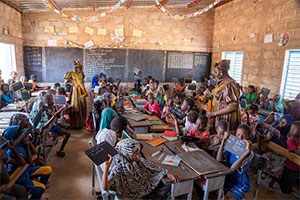 Two teachers work in a classroom in Forces Vives School in Dori, Burkina Faso. Credit: UNICEF/UNI978361
Safe and uninterrupted education is a fundamental right for all children. Education is paramount to global development, as it has been proven that investing in education – especially for girls and children – contributes significantly to economic growth and prosperity. Although more than 1 billion children go to school, many are subjected to conditions that are not conducive to a proper learning environment, including makeshift facilities, a lack of supplies, violence in classrooms, inadequate sanitation, untrained instructors, and widespread school closures. Since 2015, there have been immense gains in education with an increase of 109 million children in school. However, as of 2023, 272 million children are still out of school.
High poverty levels in developing countries also impede children’s access to a proper education. For example, from the early to mid 2000s, Sub-Saharan African nations witnessed a dramatic decline in trained teachers due to inadequate funding in the education sector. Furthermore, major cuts to United States international aid threaten an estimated 23 million additional children's access to education, as USAID‑funded school programmes across Africa and Asia face closure.
Various other factors contribute to the decline of education, notably hunger, which has increased as conflict and climate change interfere with global food production and dissemination. Meanwhile, certain social and cultural practices also impede children’s access to education, with gender inequality, discrimination, child labour, and child marriages preventing millions of children from attending school. Economic conditions such as the inaccessibility of higher education also affect disenfranchised communities across the world. In extreme situations, such as warfare where educational facilities are destroyed in their totality, notably in Gaza and Sudan, entire generations of children might grow up without access to education. Rebuilding educational infrastructure is a long and arduous process, especially when violence persists across generations, and this significantly stunts the development of societal prosperity and stability.
IPS is dedicated to telling the shocking truths about worldwide education through impassioned opinion pieces and comprehensive articles, highlighting global issues that impede worldwide education and the courses of action being taken by organizations such as UNICEF and Education Cannot Wait.

The Week with IPS

NEXT STOP - SDGs
Tracking global progress towards a sustainable world
Tracking global progress towards a sustainable world
