Languages
Sunday, November 8, 2026



News and Views from the Global South
Education
SRI LANKA: Catching Itself Young
When Sri Lanka extended the age of retirement for government workers from 55 to 57 years it defied criticism that the island’s public sector was overstaffed and needed serious downsizing.MIDEAST: Not School Time Yet for Bedouin Girls
For mother of five Shimaa al-Aasam, providing her children with the opportunity to complete their education despite a severe lack of classrooms in their Bedouin community is of prime importance.
U.S.: Ten Years Later, Still Equating Terrorism with Islam
Karen Keyworth is frustrated by the racial profiling and ignorance frequently displayed towards Muslims and Arabs in the United States after 9/11.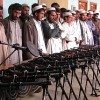
PAKISTAN: 9/11 Legacy – An AK-47 in Every Home
The United States-led war-on terror, unleashed on Afghanistan in the wake of the 9/11 attacks, has utterly destabilised the neighbouring Pashtun-dominated tribal areas of Pakistan and reduced them to a state of utter lawlessness.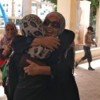
LIBYA: New Chapter Opens After Gaddafi
Libyan children will go back to school without Muammar Gaddafi’s ubiquitous presence, despite a lack of new books.‘EU Needs to Tell Itself More About Development’
There is increasing political will now for a globalised strategy for the European Union to raise awareness about development, experts say. But at the same time, the European budget for education on development issues remains strikingly low.ISRAEL: Children Facing Deportation Find Friends
After Israel’s Interior Ministry attempted to deport the first migrant workers’ child educated in the Israeli school system, human rights groups are calling on the Israeli government to develop a clear immigration policy and an official protocol that will minimise the psychological impact of detaining and deporting young children.ARGENTINA: Child Allowance Restores Families’ Ties with Schools
Conditional cash transfers to poor families with children in Argentina "have had a very positive impact," says an enthusiastic Graciela Dulcich, the principal of a primary school in a poor neighbourhood on the outskirts of Buenos Aires.
CHILE: “We Are Prepared to Give Our Lives for Education”
As students and teachers continue their massive protests in the streets of Chile's cities, one of the most extreme methods of demanding higher-quality, free public education is the hunger strike being undertaken by 28 youngsters at secondary schools across the country, four of whom have not taken food for nearly 40 days.HAITI: Martelly Still Unable to Appoint New PM
Almost three months since he was sworn in as the country’s president, Michel J. Martelly has already attempted to appoint two prime ministers to guide his government. Bernard Gousse, a minister of justice under the Gérard Latortue dictatorship (2004-2006) and businessman Daniel Rouzier, were both rejected by Haitian lawmakers.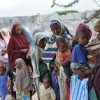
SOMALIA: Massive School Dropouts As Famine Continues
Jamaal Abdi, an eight-year-old boy at the Badbaado camp on the outskirts of Mogadishu, would like to have an education. He has his own dreams for the future.
MIDEAST: Work Has Come to This
It's a weekday morning, the beach is yet to fill with crowds seeking a break from the heat, but already the odd-jobbers are at work selling toys, clothes and food along the coast.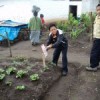
School Gardens Promote Learning While Fighting Hunger
"Yesterday I planted 20 broccoli plants at home. God willing, they will grow and we will be able to eat them," said 12-year-old Juan Francisco Ordóñez, a student at a school in San Cristóbal Totonicapán where a school garden has been established in an attempt to alleviate hunger.
MIDEAST: In Prison, and Denied Education
Access to education for Palestinian prisoners in Israeli jails is getting worse as international organisations remain unwilling or unable to intervene. Secondary- school students here completed their exams in June, and received their results by end of July. However, the 1,800 Palestinian prisoners who were supposed to complete their exams were not permitted to do so by the Israeli Prison Service.
LIBYA: Where Resistance to Gaddafi Runs High
Recent victories in Libya’s western mountains have led to a brief reprieve from violence and local fighters and civilians are slowly trying to piece their lives back together.
EDUCATION-CHILE: Protests Demand Deeper Reforms of Unequal System
The problems plaguing Chile's education system are not unknown in the rest of Latin America, but are especially complex in this long, narrow country sandwiched between the Andes mountains and the Pacific ocean.ECUADOR: Big Bucks from China Drive Domestic Development
Ecuador sees the loans it has agreed with China as "good news," because they are long-term, and all that is required in return is "oil, and not the horrendous adjustments imposed by the IMF (International Monetary Fund)," leftwing Ecuadorian President Rafael Correa told analysts critical of the size and high interest rates of the loans.
SWAZILAND: Impossible for Children to Access Public Information
Many public officials in Swaziland do not think that access to information is a public right, but rather a privilege – which can be withdrawn at anytime.MOROCCO: Students Seek Training, Not Teaching
Despite 12 years of reform, Morocco's universities continue to fall short of expectations, with students complaining that the training they get does not meet the demands of the job market.
War Increasingly Spills Over into Classrooms
The most pressing global challenge to children's rights may be the increasing number of military attacks on schools in war zones, according to a Human Rights Watch report released Wednesday.
SOUTH SUDAN: Time to Start Learning
Being educated during the country’s civil war was almost impossible. But Victoria Maja wanted to become a doctor, and in order to do so she had to leave South Sudan and live and study in the north. She was one of the lucky ones.« Previous Page — Next Page »





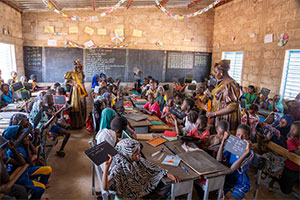 Two teachers work in a classroom in Forces Vives School in Dori, Burkina Faso. Credit: UNICEF/UNI978361
Safe and uninterrupted education is a fundamental right for all children. Education is paramount to global development, as it has been proven that investing in education – especially for girls and children – contributes significantly to economic growth and prosperity. Although more than 1 billion children go to school, many are subjected to conditions that are not conducive to a proper learning environment, including makeshift facilities, a lack of supplies, violence in classrooms, inadequate sanitation, untrained instructors, and widespread school closures. Since 2015, there have been immense gains in education with an increase of 109 million children in school. However, as of 2023, 272 million children are still out of school.
High poverty levels in developing countries also impede children’s access to a proper education. For example, from the early to mid 2000s, Sub-Saharan African nations witnessed a dramatic decline in trained teachers due to inadequate funding in the education sector. Furthermore, major cuts to United States international aid threaten an estimated 23 million additional children's access to education, as USAID‑funded school programmes across Africa and Asia face closure.
Various other factors contribute to the decline of education, notably hunger, which has increased as conflict and climate change interfere with global food production and dissemination. Meanwhile, certain social and cultural practices also impede children’s access to education, with gender inequality, discrimination, child labour, and child marriages preventing millions of children from attending school. Economic conditions such as the inaccessibility of higher education also affect disenfranchised communities across the world. In extreme situations, such as warfare where educational facilities are destroyed in their totality, notably in Gaza and Sudan, entire generations of children might grow up without access to education. Rebuilding educational infrastructure is a long and arduous process, especially when violence persists across generations, and this significantly stunts the development of societal prosperity and stability.
IPS is dedicated to telling the shocking truths about worldwide education through impassioned opinion pieces and comprehensive articles, highlighting global issues that impede worldwide education and the courses of action being taken by organizations such as UNICEF and Education Cannot Wait.

The Week with IPS

NEXT STOP - SDGs
Tracking global progress towards a sustainable world
Tracking global progress towards a sustainable world
