Languages
Thursday, October 8, 2026



News and Views from the Global South
Energy

Addressing Climate Change Through Sustainable Development
Climate change impacts are already upon us. Sea levels are rising, glaciers and ice are melting. People in poor countries are struggling to cope and adapt. Even developed countries are facing adverse consequences, taxing their own adaptive capacities to increased flooding, drought and fires. We cannot afford to wait.
“Paris Is Not the End of a Climate Change Process but a Beginning”
Chilean President Michelle Bachelet says the climate summit in Paris “is not the end of a process but a beginning,” and that it will produce “an agreement that, although insufficient with respect to the original goal, shows that people believe it is better to move ahead than to stand still.”
Asia Wants Paris Climate Talks to Tackle Historic Emissions and Make Some Real Change
On a late Friday afternoon as choking smog descended on the Indian Capital, Francois Richier, the French ambassador to India , took some hard questions from scores of journalists about the upcoming climate change talks in Paris this month.
Solar Power Keeps the Midnight Oil Burning at the University of Dodoma
Power cuts wreak havoc on most lives, but when you have an exam the next day and you have to do well, without light to study by you are stuck. But those dark days in the dorm may soon be over.
Opinion: Risks? What Risks?
We humans are acutely aware of risks. From our earliest times, the risks we faced were from hunger, predatory animals, extreme environmental conditions and, as our numbers grew, from other human tribes.
Uruguay Puts High Priority on Renewable Energies
Uruguay is modifying its energy mix with the aim of achieving carbon neutrality by 2030, by means of a strategy that bolsters non-conventional clean energy sources through public-private partnerships and new investment. A majority of this South American country’s energy already comes from renewable sources.
Opinion: China’s New South-South Funds – a Global Game Changer?
South-South cooperation is usually seen as a poor second fiddle to North-South aid in the world of development assistance. Indeed, developing countries’ policy makers themselves insist that South-South cooperation can only supplement but not replace North-South cooperation.
African Experts Say the Continent Must Address Livestock Methane Emissions
Increasing calls for Africa to reduce methane emissions from livestock continue to be met with controversy, and livestock scientists say methane is a forgotten short-term climate pollutant with significant global warming potential that Africa cannot continue to overlook.
Leading Powers to Double Renewable Energy Supply by 2030
Eight of the world’s leading economies will double their renewable energy supply by 2030 if they live up to their pledges to contribute to curbing global warming, which will be included in the new climate treaty.
Zimbabwe’s Mega Dam Project Could Flounder in the Face of Climate Change
Zimbabwe's planned Batoka Gorge power project on the Zambezi River is expected to generate 2,400 megawatts (MW) of electricity, upward from an initial 1,600 MW, but the worsening power cuts that are being blamed on low water levels have renewed concerns about the effects of climate change on mega dams.
Central America Seeks Recognition of Its Vulnerability to Climate Change
For decades, the countries of Central America have borne the heavy impact of extreme climate phenomena like hurricanes and severe drought. Now, six of them are demanding that the entire planet recognise their climate vulnerability.
Brazil’s Megaprojects, a Short-lived Dream
Working as a musician in a military band is the dream of 21-year-old Jackson Coutinho, since hopes that a petrochemical complex would drive the industrialisation of this Brazilian city near Rio de Janeiro have gone up in smoke.
Cuba’s Extra-Heavy Crude Awaits Technology and Investment
Cuba's oil industry only exploits five percent of the petroleum found in onshore and offshore deposits due to a lack of foreign capital and technology to develop oilfields like Varadero 1000, the country's biggest oil operation until now.
Itaborai, a City of White Elephants and Empty Offices
Itaboraí still recalls its origins as a sprawling city that sprang up along a highway, not far from Rio de Janeiro. But a few years ago big modern buildings began to sprout all over this city in southeast Brazil, whose offices and shops are almost all empty today.
Pakistan: Looking to Hydropower to Assure More Reliable Electricity
“We are lucky a local dam will give us cheap and uninterrupted power supply. Currently, we remain without electricity for 14-16 hours every day,” Muhammad Shafique, a schoolteacher in Upper Dir, told IPS.
Toasting to a More Sustainable Planet with Argentine Wine
The region of Cuyo in west-central Argentina is famous for its vineyards. But it is one of the areas in the country hit hardest by the effects of climate change, such as desertification and the melting of mountain top snow. And local winegrowers have come up with their own way to fight global warming.
Before Renewable Power Plant is Completed, Geothermal Overtakes Hydro in Kenya
In its quest to generate more reliable, climate-friendly electric energy, Kenya has become the first country in the world to make use of temporary geothermal wellheads, which are currently injecting an extra 56 megawatts into the national grid.
OPINION: Time to Reform the Global Casino
The year 2015 highlights the global shift from traditional money-based, gross domestic product (GDP)-measured economic growth to the new models of sustainable, inclusive human development embodied in the United Nations Sustainable Development Goals (SDGs) ratified by its 193 member nations.Opinion: Five Key Takeaways from India’s New Climate Plan
Last week, India announced its new climate plan, also known as its Intended Nationally Determined Contribution, or INDC. As the world’s third-largest emitter and a country that’s highly vulnerable to the impacts of climate change, it is encouraging to witness India investing in actions to tackle climate change while addressing poverty, food security and access to healthcare and education.
Shale Drives Uncertain New Geoeconomics of Oil
The emergence of fracking has modified the global market for fossil fuels. But the plunge in oil prices has diluted the effect, in a struggle that experts in the United States believe conventional producers could win in the next decade.
Brazil’s Expanded Climate Targets Frustrate Environmentalists
Brazil’s greenhouse gas emissions reduction programme, hailed as bold, has nevertheless left environmentalists frustrated at its lack of ambition in key aspects.« Previous Page — Next Page »





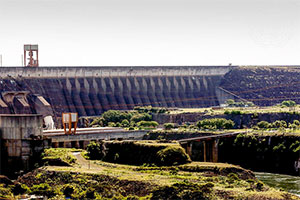 UN Power Plant, Paraguay. Credit: UN Photo/Evan Schneider
Energy has posed a great challenge for economies around the world. As global energy consumption skyrockets throughout the years, so does the need for sustainable solutions. The Sustainable Development Goals are essential in providing people with access to safe, affordable, and sustainable energy sources that minimize harm on the planet. Progress towards these goals opens the door for an advancement in modernization for communities on a global level and allows for a potential mitigation of tensions between nations.
The UN’s Summit of the Future in 2024 offered new initiatives that are being taken to achieve these goals, including a decreased reliance on fossil fuels, a switch to renewable energy sources, and improved climate financing.
IPS is well positioned to provide relevant, insightful, and compelling analysis of recent updates and measures being taken around the world to achieve a cleaner future.

The Week with IPS

NEXT STOP - SDGs
Tracking global progress towards a sustainable world
Tracking global progress towards a sustainable world
