Languages
Sunday, October 25, 2026



News and Views from the Global South
Energy

OPINION: Why Nuclear Disarmament Could Still Be the Most Important Thing There Is
At the height of the Cold War the world’s total arsenal of nuclear weapons, counted as explosive potential, may have amounted to three million Hiroshima bombs. The United States alone possessed 1.6 million Hiroshimas’ worth of destructive capacity.
The Future of the Planet and the Irresponsibility of Governments
Less than a week after everybody celebrated the historical agreement on Nov. 17 between the United States and China on reduction of CO2 emissions, a very cold shower has come from India.
A Game-Changing Week on Climate Change
- In recent days, two major developments have injected new life into international action on climate change.
Shale Oil Fuels Indigenous Conflict in Argentina
The boom in unconventional fossil fuels has revived indigenous conflicts in southwest Argentina. Twenty-two Mapuche communities who live on top of Vaca Muerta, the geological formation where the reserves are located, complain that they were not consulted about the use of their ancestral lands, both “above and below ground.”
Iranians Keep Hope Alive for Final Nuclear Deal
In the United States, the negotiations aimed at a final deal between world powers and Iran over its nuclear programme—in a crucial phase this week—are far from the minds of average people. But for many Iranians, the talks hold the promise of a better future.
G20 Seeks to Streamline Private Investment in Infrastructure
Industrialised countries have agreed to collaborate on a new programme aimed at funnelling significant private-sector investment into global infrastructure projects, particularly in developing countries.
Will New Climate Treaty Be a Thriller, or Shaggy Dog Story?
This December, 195 nations plus the European Union will meet in Lima for two weeks for the crucial U.N. Conference of the Parties on Climate Change, known as COP 20. The hope in Lima is to produce the first complete draft of a new global climate agreement.
Why Are G20 Governments Subsidising Dangerous Climate Change?
Just a week after the Intergovernmental Panel on Climate Change (IPCC) gave its starkest warning yet that the vast majority of existing oil, gas and coal reserves need to be kept in the ground, a new report reveals that governments are flagrantly ignoring these warnings and continuing to subsidise exploration for fossil fuels.
A Fair Climate Treaty or None at All, Jamaica Warns
As the clock counts down to the last major climate change meeting of the year, before countries must agree on a definitive new treaty in 2015, a senior United Nations official says members of the Alliance of Small Island Developing States (AOSIS) “need to be innovative and think outside the box” if they hope to make progress on key issues.
Responding to Climate Change from the Grassroots Up
As concern mounts over food security, two community groups are on a drive to mobilise average people across Antigua and Barbuda to mitigate and adapt in the wake of global climate change, which is affecting local weather patterns and by extension, agricultural production.
U.N. Favours Changeover from Landlocked to ‘Land-linked’
Some 440 million people are living in 32 countries that are among the world’s poorest, most of them least developed, and geographically isolated from world markets not only because they have very few commodities to export, but also because they have no direct territorial access to the sea.
Dirty Energy, Dirty Tactics
“Greenhouse gas emissions from human activity are higher than ever, and we're seeing more and more extreme weather and climate events….We can't prevent a large scale disaster if we don't heed this kind of hard science.”
OPINION: The Pentagon Comes Up Short on Climate
The Pentagon recently released a new report sounding the alarm on the national security threats posed by climate change. Like previous reports on the subject, this one makes clear that Department of Defence (DoD) planners believe that global warming will seriously challenge our nation’s military forces.

Better Water Management Needed to Eradicate Poverty
It demands repetition: water is a precondition for all life. It keeps us alive – literally – while being a prerequisite for or integral part of most of our daily activities. Think hospitals without water, think farms, energy producers, industries, schools and homes without our most needed resource. All sectors, without exception, are dependent on water.
OPINION: Towards an Inclusive and Sustainable Future for Industrial Development
As representatives of the United Nations Industrial Development Organization (UNIDO), we are sometimes asked whether industrial development is still relevant to a world which many observers have claimed over the past decades to have entered the “post-industrial age”. Our answer is always an emphatic “yes”, shaped both by the evidence of history and current events.
St. Vincent Takes to Heart Hard Lessons on Climate Change
Glenda Williams has lived in the Pastures community in eastern St. Vincent all her life. She's seen the area flooded by storms on multiple occasions.
Resolving Key Nuclear Issue Turns on Iran-Russia Deal
U.S. and Iranian negotiators are working on a compromise approach to the issue of Iran’s uranium enrichment capabilities, which the Barack Obama administration has said in the past Iran was refusing to make concessions on.
Bougainville Voices Say ‘No’ to Mining
The viability of reopening the controversial Panguna copper mine in the remote mountains of Central Bougainville, an autonomous region in the east of Papua New Guinea, has been the focus of discussions led by local political leaders and foreign mining interests over the past four years.
Good Twins or Evil Twins? U.S., China Could Tip the Climate Balance
China and the United States are responsible for 35 percent of global carbon emissions but could do their part to keep climate change to less than two degrees C by adopting best energy efficiency standards, a new analysis shows.
“Yeil” – The New Energy Buzzword in Argentina
In Argentina they call it “yeil”, the hispanicised version of “shale”. But while these unconventional gas and oil reserves are seen by many as offering a means to development and a route towards energy self-sufficiency, others believe the term should fall into disuse because the global trend is towards clean, renewable sources of energy.
OPINION: Where Governments Fail, It’s Up to the People to Rise
Pomerania in northern Poland is famous for its unpolluted environment, fertile soils and historic heritage. So far, these valuable farmlands have been free from heavy industry but that situation might change as a shadow looms over the lives of Pomeranians.« Previous Page — Next Page »





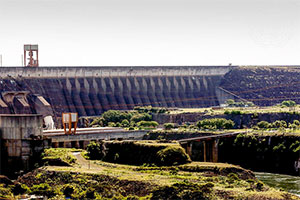 UN Power Plant, Paraguay. Credit: UN Photo/Evan Schneider
Energy has posed a great challenge for economies around the world. As global energy consumption skyrockets throughout the years, so does the need for sustainable solutions. The Sustainable Development Goals are essential in providing people with access to safe, affordable, and sustainable energy sources that minimize harm on the planet. Progress towards these goals opens the door for an advancement in modernization for communities on a global level and allows for a potential mitigation of tensions between nations.
The UN’s Summit of the Future in 2024 offered new initiatives that are being taken to achieve these goals, including a decreased reliance on fossil fuels, a switch to renewable energy sources, and improved climate financing.
IPS is well positioned to provide relevant, insightful, and compelling analysis of recent updates and measures being taken around the world to achieve a cleaner future.

The Week with IPS

NEXT STOP - SDGs
Tracking global progress towards a sustainable world
Tracking global progress towards a sustainable world
