Languages
Thursday, October 8, 2026



News and Views from the Global South
Energy

Leaking Pipeline Offers Warning on Keystone XL Proposal
Environmental groups are sounding alarms about conflicting reports on the size and seriousness of an oil spill that took place late last week in the southern U.S. state of Arkansas.
World Bank Aims to End Extreme Poverty by 2030
World Bank President Jim Kim has unveiled a series of new institutional goals aimed at ending extreme poverty by 2030 and focusing on the promotion of “shared prosperity” – increasing the incomes of the poorest 40 percent in each country while placing increased focus on dealing with climate change.
P5+1 Coalition Fraying on Eve of Second Almaty Talks with Iran
On the eve of its second round of talks with Iran on curbing its nuclear programme in Almaty, Kazakhstan, the so-called P5+1 (U.S., Britain, France, China, and Russia plus Germany) is showing signs of growing disunity, according to the European Union’s former top foreign policy official.
U.S. Unveils Major New Proposal to Cut Vehicle Emissions
Environmentalists and public health advocates are lauding a key, long-awaited proposal put forward by President Barack Obama’s administration that would require cleaner gasoline and more effective technologies on vehicles, cutting various harmful emissions by 40 to 80 percent.
OP-ED: Falling Gasoline Use Means U.S. Can Just Say No to New Pipelines and Food-to-Fuel
Freeing America from its dependence on oil from unstable parts of the world is an admirable goal, but many of the proposed solutions - including the push for more home-grown biofuels and for the construction of the new Keystone XL pipeline to transport Canadian tar sands oil to refineries on the U.S. Gulf Coast - are harmful and simply unnecessary.
“Crowdfunding” Gives Boost to Renewables in U.S.
A U.S. company called Mosaic has unveiled a new way for citizens to use the Internet to invest in specific solar energy projects around the country.
Subsidies Play “Significant Role” in Climate Change, IMF Says
The International Monetary Fund (IMF) is urging national governments around the world to roll back or eliminate subsidies on petroleum-based energy sources, estimating that this alone could result in a 13-percent decline in global carbon dioxide emissions.Nuclear Safety Plan Has Ukrainians Worried
A 300 million euro loan to improve nuclear safety in the Ukraine has been attacked by environmental groups who say it will instead be used to keep ageing reactors working well beyond their planned lifespans – increasing the risks of a nuclear accident - while doing nothing to address serious issues with the country’s energy intensity.Iranian People Caught in Crossfire of Dueling Messages
Since Barack Obama became president of the United States, messages marking the Iranian New Year – Norouz - celebrated at the onset of spring have become yearly affairs. So have responses given by Iran’s Leader Ayatollah Ali Khamenei from the city of Mashhad where he makes a yearly pilgrimage to visit the shrine of Shi’i Islam’s eighth imam, Imam Reza.
Group Warns of “Natural Resources Giveaway” in Latin America
Researchers have unveiled new data warning that governments in Latin America are infringing on the rights of their indigenous populations in a bid to fuel development through the extraction of natural resources.Concerns Mount as U.S. Plans Major Natural Gas Exports
Environmentalists and others here are reacting with concern to a surprise announcement on Monday of a major deal that would see U.S. natural gas exported to the United Kingdom, marking the first time that such sales have been permitted.
Tug-of-War Over Nuclear Future
Pushed and pulled in opposite directions, the future of Japan’s energy plans in the wake of the accident at the Fukushima Daiichi nuclear power plant two years ago is emerging as a fight between national economic advancement and what anti-nuke activists call “the lives of the people”.
India Playing Risky Games at Nuclear Parks
Bhagwat Singh Gohil frets for the future of his bountiful orchards in Mithi Virdi village in western Gujarat state’s coastal district Bhavnagar. “After contending with droughts, rough seas and earthquakes we are staring at the possibility of a man-made disaster in the shape of a nuclear power park.”
Water Crisis Hitting Food, Energy – And Everything Else
How much water does it take to turn on a light? It took 10,000 litres to make your jeans. Another three big bathtubs of water was needed for your two-eggs-toast-coffee breakfast this morning.China Muscles into Kyrgyzstan’s Energy Market, Fueling Suspicion
China is financing the construction of Kyrgyzstan’s first major oil refinery, and excitement is building in Bishkek that the facility could enable the Central Asian nation to break Russia’s fuel-supply monopoly.U.S. Urged to Reject New World Bank Focus on Large Infrastructure
A group of environmentalists, gender activists and international finance watchdogs are calling on the U.S. government to support calls for the World Bank to step back from a new programmatic focus on large-scale infrastructure, which critics say does little to help alleviate poverty.
Visions of a Sustainable, Pollution-Free New York by 2030
As usual, midtown Manhattan is packed with whisper-quiet cars and trams while thousands walk the streets listening to the birds of spring sing amongst the gleaming, grime-free skyscrapers in the crystal-clear morning air.
Dependent on Venezuela’s Oil Diplomacy
Venezuela’s economic challenges, more than the uncertainty over who will succeed late president Hugo Chávez, could threaten the oil diplomacy he practiced in the region.
Russia to Get Venezuelan Oil for a Few Cents a Barrel
Russian state oil firm Rosneft and Venezuela's PDVSA (Petróleos de Venezuela S.A.) have agreed to form a partnership to exploit an oilfield with estimated reserves of 40 billion barrels, strengthening the alliance between the two countries.
Obama Proposes Major New Renewables Research
President Barack Obama on Friday unveiled a broad new proposal to step up U.S. research into renewable energy technologies, particularly in transportation, which is responsible for around 70 percent of the United States’ oil use.
Latin America and Caribbean Won’t Lose Oil Aid from Venezuela
Venezuela will keep in place the regional energy integration policies promoted by the late president Hugo Chávez if he is succeeded by acting president Nicolás Maduro, experts on regional relations told IPS.« Previous Page — Next Page »





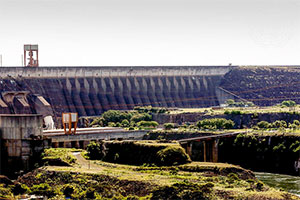 UN Power Plant, Paraguay. Credit: UN Photo/Evan Schneider
Energy has posed a great challenge for economies around the world. As global energy consumption skyrockets throughout the years, so does the need for sustainable solutions. The Sustainable Development Goals are essential in providing people with access to safe, affordable, and sustainable energy sources that minimize harm on the planet. Progress towards these goals opens the door for an advancement in modernization for communities on a global level and allows for a potential mitigation of tensions between nations.
The UN’s Summit of the Future in 2024 offered new initiatives that are being taken to achieve these goals, including a decreased reliance on fossil fuels, a switch to renewable energy sources, and improved climate financing.
IPS is well positioned to provide relevant, insightful, and compelling analysis of recent updates and measures being taken around the world to achieve a cleaner future.

The Week with IPS

NEXT STOP - SDGs
Tracking global progress towards a sustainable world
Tracking global progress towards a sustainable world
